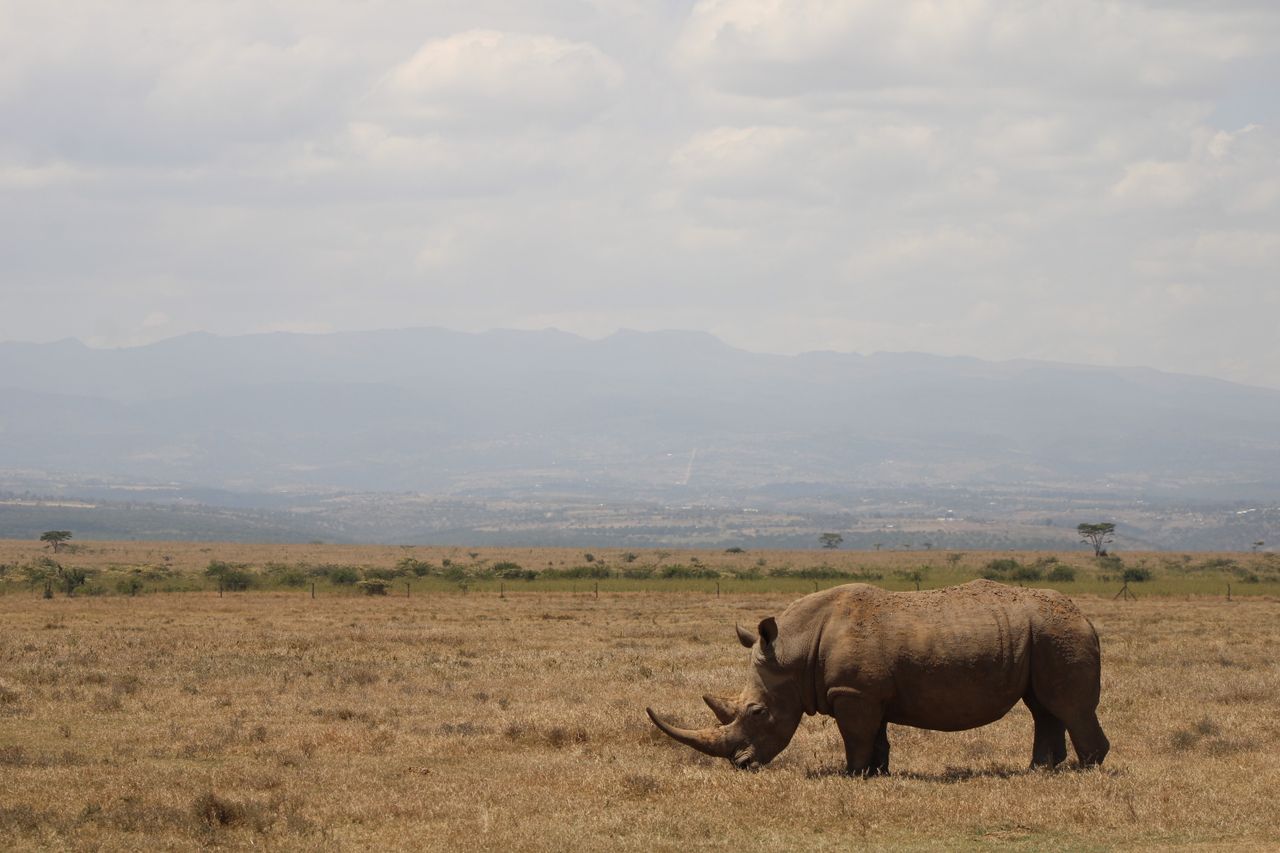
Laikipia is the high plateau north-west of Mount Kenya, and it is where Kenya’s private conservation model works best. Instead of one big national park, the region is a patchwork of conservancies and ranches that share wildlife, rhino security and, in several cases, a single open ecosystem. The payoff for visitors is a different kind of safari: fewer vehicles, night drives, walking with armed rangers, and horseback or camel trips that are not permitted in KWS parks. A Laikipia safari pairs well with the Masai Mara or Samburu, and works as a standalone 3 to 5 nights.
Laikipia at a Glance
| Conservancy | Best for | Walks / horses / night drives | Access |
|---|---|---|---|
| Ol Pejeta | Northern white rhinos, black rhino, chimps | Night drives, rhino and lion tracking | Public gate near Nanyuki |
| Lewa | Rhino, Grevy’s zebra, walking safaris | Walks, night drives, horses and camels via lodges | Lodge guests plus pre-booked day visits |
| Borana | Horseback riding, rhino tracking on foot | Riding, walks, night drives | Lodge guests, borders Lewa |
| Loisaba | Big views, camel safaris, sleep-outs | Walks, camel safaris, night drives | Lodge guests, own airstrip |
| Segera | Private, design-led stays, giraffe and elephant | Walks and drives via the retreat | Retreat guests, own airstrip |
| Ngare Ndare Forest | Canopy walk, waterfall pools, elephants | Guided walks and hikes | Day entry from Nanyuki |
Ol Pejeta: The Accessible One
Ol Pejeta is the only Laikipia conservancy that works well for independent travellers. It holds Najin and Fatu, the last two northern white rhinos alive, the largest black rhino population in East Africa, lions, elephants, Grevy’s zebra and the Sweetwaters chimpanzee sanctuary. Gate entry is approximately USD 90 per non-resident adult as of 2026. The conservancy runs night game drives, which are rare in Kenya, and guided lion tracking with its research team. Our dedicated page covers the rhino enclosure visit, chimps and logistics in depth.
For a bed on site, Sweetwaters Serena Camp is the established tented option, set beside a waterhole where rhino and elephant drink at dusk. It is bookable on Booking.com and used by most small groups; see our Nanyuki where to stay guide for budget and town alternatives.
Lewa Wildlife Conservancy: Rhinos and Walking
Lewa lies east of Nanyuki on the Laikipia and Meru edge, about 250km² of fenced, privately run land. It began as a rhino sanctuary and today protects a meaningful share of Kenya’s black and white rhino, along with one of the largest populations of endangered Grevy’s zebra. Lewa is also part of the 2013 extension of the Mount Kenya World Heritage Site. Lewa is a working conservation business first, so it is lodge-led rather than gate-led.
- Walking safaris: guided bush walks with armed rangers, typically two hours, are the main draw. Lodges charge extra, roughly USD 85 per person at the camps we checked.
- Night drives: offered by lodges, commonly around USD 120 per person with a two-person minimum. They are your best chance at aardvark, bushbabies, genets and leopard.
- Horse and camel safaris: two-hour rides cost around USD 120 per person at the camps that run them.
- Conservancy fee: published guides list about USD 126 per adult per night for overnight guests and about USD 198 for non-resident day visitors. These come from secondary sources, so confirm with Lewa when booking. Day visits need pre-booking.
Lewa also hosts a marathon each year, usually mid-year, whose proceeds fund conservation and community projects.
Borana: Horseback and Rhino on Foot
Borana borders Lewa and is a family-owned conservancy of roughly 14,000 hectares with a strong horseback tradition. Guests ride among zebra, giraffe and eland, and can track black rhino on foot with rangers. Night drives and walks round out the activities. It suits confident riders and anyone who prefers a more personal, less commercial feel. See the activity list at Borana.
Loisaba and Segera: Big Landscapes, Private Stays
Loisaba covers about 58,000 acres on the Laikipia escarpment, with views over the Ewaso Ng’iro basin toward Samburu. Walks, night drives and camel safaris are the signature activities, and Loisaba’s Star Beds let guests sleep on raised platforms under the sky. A mandatory daily conservancy fee of around KES 5,000 per adult is charged on top of the lodge rate as of 2026. See Loisaba.
Segera is a private retreat and conservancy of roughly 50,000 acres on the Laikipia plateau, known for its art-led design, giraffe, elephant and Big Five presence, and a strong sustainability focus. Both Loisaba and Segera have airstrips, and most guests fly in from Nairobi or the Mara.
We do not list individual lodge prices beyond the above because most Laikipia camps sell direct or through operators with seasonal rates; verify them on the lodge websites.
Ngare Ndare Forest: Canopy Walk Between Mount Kenya and the Plains
Ngare Ndare is a community-run forest reserve on the northern slope of Mount Kenya, and it is the cheapest, most flexible add-on to a Nanyuki-based trip. A 450m canopy walkway, turquoise waterfall pools and a forest corridor used by elephants moving between Mount Kenya and Laikipia make it a good half-day. Expect entry in the range of USD 30 to 40 per non-resident adult as of 2026, with a ranger-guide fee on top; operators quote different numbers, so confirm when booking. It rounds out a trip that has a rest day from game drives or an acclimatisation day before climbing Mount Kenya.
Night Drives, Walks and Horseback: What Is Actually Allowed
KWS-managed parks ban off-road driving, night drives and walking. Private conservancies set their own rules, which is why Laikipia suits travellers who have already done a Mara trip:
- Night drives with spotlights: best at Ol Pejeta, Lewa, Loisaba and Borana. Book at the lodge on arrival day.
- Guided walks: two-hour bush walks at Lewa, Borana, Loisaba and Segera, always with an armed ranger. Minimum age is often 12 to 16.
- Horseback and camel: Borana for horses, Loisaba for camels, Lewa through its camps.
- Rhino tracking on foot: Borana and Lewa, subject to rhino location and ranger judgement.
Nanyuki: The Gateway
Nanyuki sits on the equator and has the airstrip, supermarkets, fuel and ATMs most Laikipia trips need. Drive from Nairobi via Thika, Nyeri and Naro Moru (about 3.5 to 4 hours), or fly Wilson Airport to Nanyuki airstrip with Safarilink or AirKenya. Day trips to Ol Pejeta and Ngare Ndare from town are easy, and you can book Nanyuki tours and conservancy day trips in advance. For hotels from budget to lodge, read where to stay in Nanyuki.
Costs and Planning
Laikipia is not a budget safari. Camps on Lewa, Loisaba and Segera run from roughly USD 500 to well over USD 1,000 per person per night, with conservancy fees on top. Ol Pejeta and Nanyuki town stays are the value route. Budget 3 nights as a minimum: one for Ol Pejeta, two for a private conservancy. Check KWS and conservancy notices for the latest rules at Kenya Wildlife Service and see the Laikipia Wildlife Forum for conservancy context.
For quieter alternatives to the Mara beyond Laikipia, see our 6 underrated places for wildlife in Kenya.