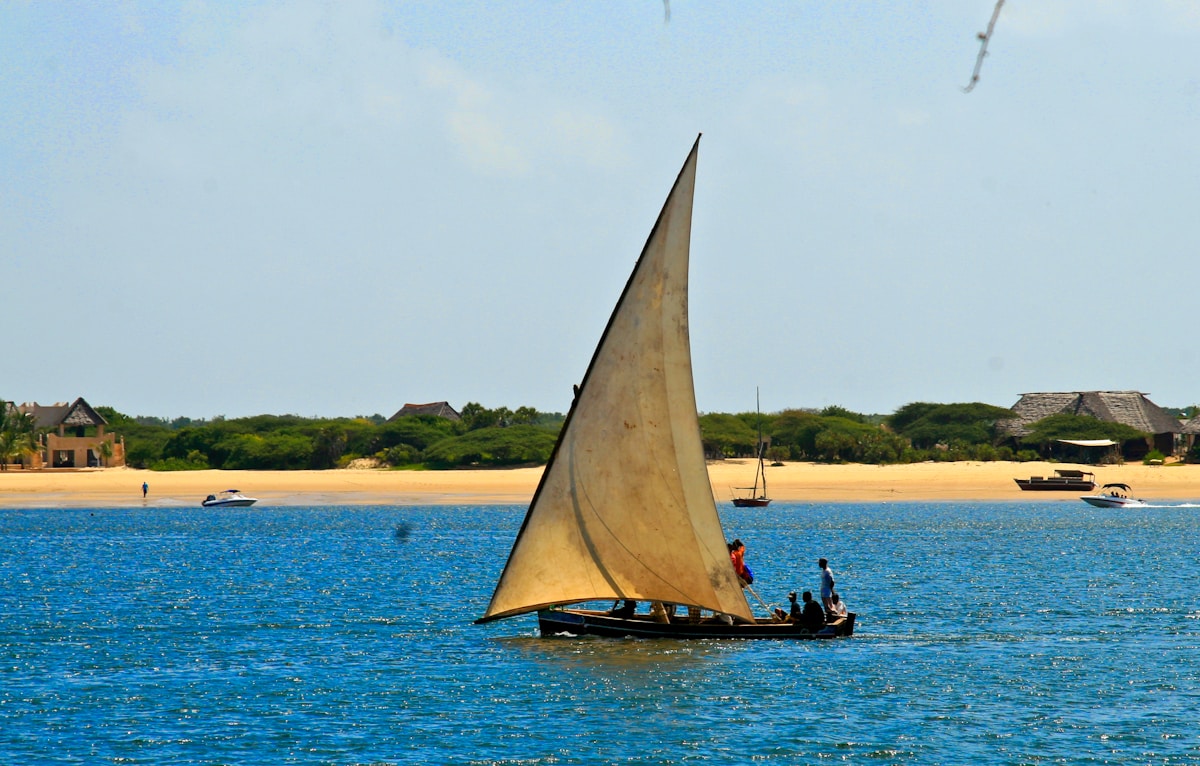
Lamu rewards slow travel. The island moves at the pace of donkeys and dhows, and the most satisfying experiences are unhurried ones - sitting on a rooftop at dusk watching the fishing boats come in, walking the narrow Old Town streets with no particular destination, or anchoring offshore in a traditional sailing dhow.
Lamu Old Town (UNESCO World Heritage Site)
Lamu Old Town was inscribed as a UNESCO World Heritage Site in 2001. It’s the oldest and best-preserved Swahili settlement in East Africa, with over 23 mosques, a 19th-century fort, and hundreds of buildings featuring the carved wooden doors, coral-plaster interiors, and narrow-alley layout characteristic of Swahili stone town architecture.
The Old Town is entirely walkable in a couple of hours, but the experience is better if you allow a full morning to wander without a map. There are no directional signs, and getting briefly lost is part of the experience - Lamu Town is small enough that you’ll always reach the waterfront by heading east.
Key points to look for: Lamu Fort (built by the Omani Sultan of Zanzibar 1810–1821, entry free with museum ticket), the Riyadha Mosque (the most important mosque on the island, founded 1900, non-Muslim visitors should ask permission before entering), the German Post Office (one of the oldest German colonial structures in East Africa, 1888), and the Swahili House Museum (a restored Swahili house open to visitors for approximately KES 200).
Lamu Museum
Entry: Approx USD 5 non-resident adults / KES 500 resident adults (as of 2026) Opening hours: 8am–6pm daily Location: Waterfront, Lamu Old Town
The Lamu Museum in the waterfront building has one of the best collections of Swahili artefacts in East Africa. The upper floors hold the museum’s most celebrated items: two ceremonial Siwa horns, the oldest known musical instruments of this type in sub-Saharan Africa, dating to the 17th century. The maritime section covers Lamu’s dhow-building tradition, including a working model of a large Jahazi (ocean-going dhow). Allow 1–1.5 hours.
Shela Beach
Shela Beach stretches 14km south from Shela Village into an uninhabited dune system. For a broader overview of the Lamu archipelago including Manda and Pate Islands, see our Lamu archipelago guide. The beach is wide, clean, and backed by coastal dunes rather than development. Swimming is best in the morning at high tide - the sand flats at low tide expose rock and seagrass. Walk south from Shela for 30 minutes to reach sections that see almost no foot traffic. The village of Shela itself has a distinctive mosque with a notable tall cylindrical minaret visible from across the channel.
Dhow Sailing Trips
Lamu’s defining experience is a trip on a traditional Lamu sailing dhow. Multiple operators at the Old Town waterfront hire out full-day and half-day dhow trips with crew.
Full-day trips (approximately USD 80–150 for a private hire, 2–8 people) typically include sailing to Manda Island, a snorkelling stop over the coral reef, lunch on the beach, and an afternoon return on the tide. The exact itinerary depends on wind conditions - good dhow captains work with the wind rather than fighting it. You can also book Lamu dhow trips and activities through online operators before you arrive.
Sunset trips (approximately USD 20–40 pp) are shorter - 2 hours of sailing along the channel as the sun sets over the mangroves. This is the most efficient option if you only have an evening free.
Book at the waterfront jetty or through your hotel. Agree the price and exact itinerary before departure.
Search hotels in Lamu on Booking.com
Manda Island Day Trip
Manda Island sits directly across the channel from Lamu Town. A boat taxi takes 5 minutes (approximately USD 2–3). Manda has several points of interest:
Takwa Ruins - a deserted Swahili town abandoned in the 17th century, set in mangrove forest. Entry approximately KES 500 (as of 2026). The ruins include a large mosque, residential houses, and a pillar tomb. The site is overgrown in places, which adds to the atmosphere. A guide (available at the boat landing) helps identify the different building functions.
Manda Toto Island - a small island further beyond Manda with good snorkelling on shallow coral reefs. Accessible by dhow on the full-day circuit above.
The Majlis Resort private beach - not accessible unless you’re a guest, but the approach by dhow is scenic.
Swahili Culture Immersion
The best cultural experience in Lamu is simply engaging with daily life: watching dhows being built in the boatyards near the south of Old Town (the Lamu-style dhow is still handcrafted here using techniques unchanged for centuries), visiting the donkey sanctuary on the northern edge of Old Town (donkeys are the primary freight animals on the island and the sanctuary treats injured animals), and attending Friday noon prayers at the Riyadha Mosque if you’re visiting during a festival period (the Maulidi festival, celebrating the Prophet’s birthday, draws thousands of visitors to Lamu).
Practical Notes
Dress code: Lamu is a conservative Muslim town. Both men and women should dress modestly in Old Town - covered shoulders and below-the-knee clothing. Swimwear is appropriate at Shela Beach but not in the town. Respecting this is important.
Cash: Bring sufficient KES or USD. ATMs are unreliable and the one in Old Town often runs out.
Weather: April and May see the long rains and the sea becomes rough - dhow trips are not recommended. November sees the short rains but they’re lighter and dhow trips generally run.
Photography: Ask permission before photographing people. Many Lamu residents are comfortable with photographs but it’s respectful to ask, particularly around mosques.
For accommodation options on the island, see our Lamu hotels guide. For the full Lamu city overview, see the Lamu city guide. For the Lamu archipelago and nearby islands, see our Lamu archipelago guide. For combining Lamu with Mombasa or the rest of the Kenya coast, our Kenya coast guide covers the full itinerary options.