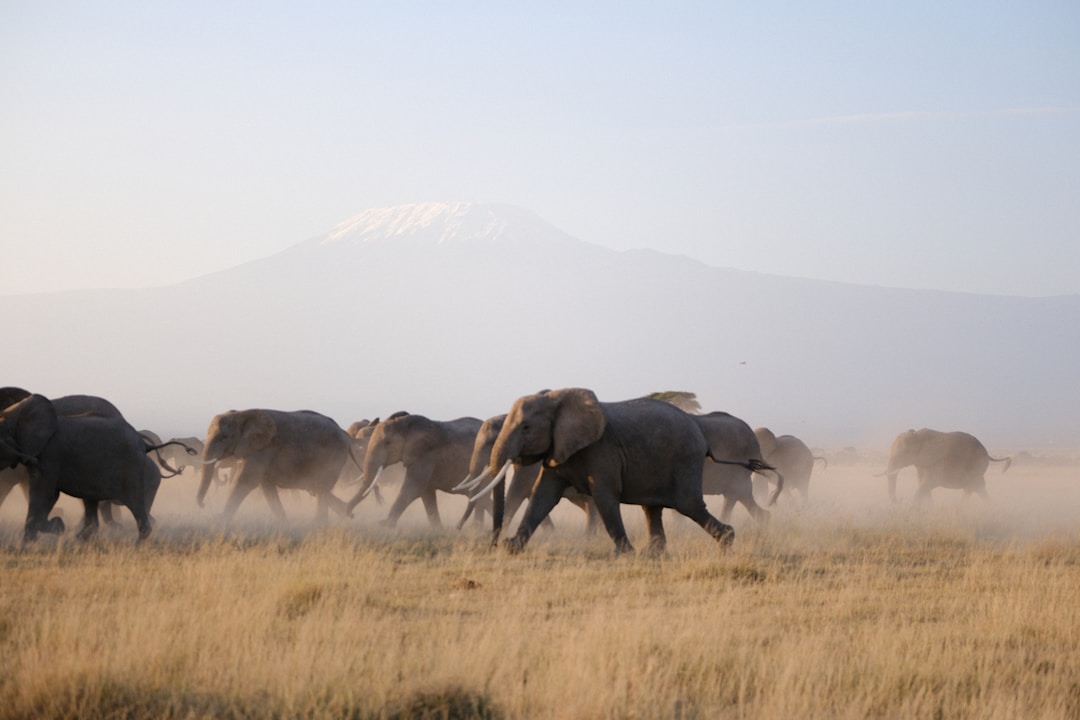
Amboseli National Park in southern Kenya is the most reliable place on earth to photograph African elephants with Africa’s highest mountain as a backdrop. The park covers 392 square kilometres in the shadow of Kilimanjaro, which straddles the Kenya-Tanzania border 45km to the south. On clear mornings - most common in October and November, and again in February - the mountain is visible from almost any point in the park with its glaciers and snow fields catching the early light.
Amboseli’s elephant population is one of the most thoroughly researched wildlife populations in the world. Cynthia Moss’s Amboseli Elephant Research Project has monitored individual elephants and family units continuously since 1972, and many of the park’s approximately 1,600 elephants are known by name and family history. This long-term habituation to researchers’ vehicles means Amboseli elephants are unusually comfortable around safari vehicles, allowing closer observation than is typical in many other parks.
Park Fees and Logistics
Entry fees: Non-resident adults pay approximately USD 90 per person per day as of 2026. Children aged 3-17 pay approximately USD 45. East African Community nationals pay reduced rates. Fees are paid at the main Meshanani Gate (the north gate, closest to Namanga and Nairobi) or at the Kimana Gate to the east. Keep your payment receipt as rangers check within the park.
Vehicle fees: In addition to the per-person conservation fee, vehicles pay a separate gate fee. Self-drive vehicles pay approximately USD 15-20 per vehicle per entry. Tour operator vehicles pay a commercial rate.
Opening hours: The park gates open at 6am and close at 7pm. Most serious wildlife viewing happens during morning game drives (6am-10am) and late afternoon drives (4pm-6:30pm) when animals are most active. Midday is generally quiet with animals resting in shade.
Self-drive: Self-drive is permitted in Amboseli with a suitable 4WD vehicle. A printed or downloaded map is essential as the track network is extensive and the landscape featureless in the dry grassland sections. KWS sells a park map at the gate for approximately KES 200.
Game Drive Operators and Rates
Amboseli’s concession lodges (Ol Tukai, Serena, Tortilis Camp) each operate their own game drive vehicles for resident guests. These are not available to independent visitors.
Search hotels in Amboseli on Booking.com
Sopa Safaris based at Amboseli Sopa Lodge operates game drives open to non-residents. A shared morning game drive (3-4 hours) costs approximately USD 60-80 per person. A private vehicle and driver-guide for a full-day game drive costs approximately USD 200-280 for up to 4 passengers, plus park entry fees for each passenger.
Amboseli Eco Tours is a smaller operator working out of Kimana village on the park’s eastern edge. Half-day game drives from Kimana Gate cost approximately USD 50-65 per person shared, or USD 170-220 for a private vehicle. They also offer combination packages including village visits to local Maasai communities outside the park boundary.
Nairobi-based tour operators running Amboseli day trips and overnight packages include Kenyaways Safaris, Bush and Beyond (higher-end), and several budget operators operating from Nairobi’s hostels district. A 2-day, 1-night Amboseli package from Nairobi including transport, accommodation at a mid-range lodge, and one game drive typically costs approximately USD 250-400 per person sharing, all-inclusive. Compare at least three operators before booking and check reviews for vehicle condition and guide quality.
For Amboseli safari tours bookable online, the GetYourGuide platform lists several operators running day trips and overnight options from Nairobi.
Wildlife: What to See and When
Elephants: The primary draw. The park’s herds are present year-round and are most easily found near the Enkongo Narok swamp (the main permanent water source in the park centre) and the Ol Okenya swamp to the north. Large bulls with impressive tusks are regularly seen. Amboseli has a disproportionate number of very large tuskers compared to other Kenyan parks, because the land-use history here has protected them longer.
Lions: Present but not reliably sighted. The Amboseli lion population has historically been in conflict with surrounding Maasai pastoralists and numbers fluctuate. Your driver-guide will have current intelligence on which prides are active. Lion sightings are more likely in the dry season when animals concentrate near the swamps.
Buffalo: Large herds move through the park, particularly in the wet season when the short grass grows and nutritional quality is highest. Buffalo are common near the swamp areas.
Cheetah: Occasionally seen in the open grassland areas of the northern and eastern sections of the park. Amboseli’s flat landscape makes cheetah easier to spot from distance than in more bushed environments.
Wildebeest and zebra: Present in moderate numbers. The concentrations are not comparable to the Masai Mara migration, but mixed herds of wildebeest and zebra are regularly encountered in the open grassland sections.
Birdlife: Amboseli has over 400 recorded bird species. The swamp areas are outstanding for waterbirds: pelicans, cormorants, herons, and the iconic grey crowned crane are common. Ostriches are frequently seen in the dry grassland. Martial eagles and secretarybirds patrol the open areas.
Kilimanjaro viewing: The mountain is most clearly visible in the early morning before the convective cloud develops. October-November and January-February are statistically the clearest months. The peak of Kibo is snow-covered year-round but the glacier extent has reduced significantly in recent decades. The classic Amboseli shot - elephants on the plain with Kilimanjaro behind - is best achieved from the area south of Ol Tukai Lodge near the main swamp area.
Getting to Amboseli
From Nairobi: Amboseli is approximately 230km from Nairobi via Namanga. The drive takes 4-5 hours on the A104 (good tarmac road) to Namanga, then a further 30-45 minutes on the dirt road to Meshanani Gate. A bus runs from Nairobi’s Machakos Country Bus Station to Namanga (approximately KES 600-900, journey 3-4 hours), from where you would need to arrange local transport to the gate. Most visitors use a tour operator vehicle or self-drive.
Airstrip: Amboseli has a KWS airstrip (HKAM) serviced by charter flights from Nairobi Wilson Airport. Charter flights cost approximately USD 400-600 per person per sector on small aircraft (4-5 seat Cessna) depending on charter company and aircraft availability. Scheduled charter with Airlink or SafariLink on shared aircraft costs approximately USD 150-250 per person one way from Wilson.
Best Months to Visit
| Month | Wildlife | Kilimanjaro Visibility | Conditions |
|---|---|---|---|
| Jan-Feb | Good | Excellent | Dry, hot |
| Mar-May | Moderate | Variable | Wet season, lush |
| Jun-Jul | Good | Moderate | Dry, cool evenings |
| Aug-Sep | Excellent | Moderate | Peak dry season |
| Oct-Nov | Good | Excellent | Short rains, clear mornings |
| Dec | Good | Variable | Short rains ending |
For accommodation options including camps and lodges, see our Amboseli where to stay guide. For multi-day Kenya safari itineraries that combine Amboseli with the Masai Mara, see our Kenya safari itineraries section.