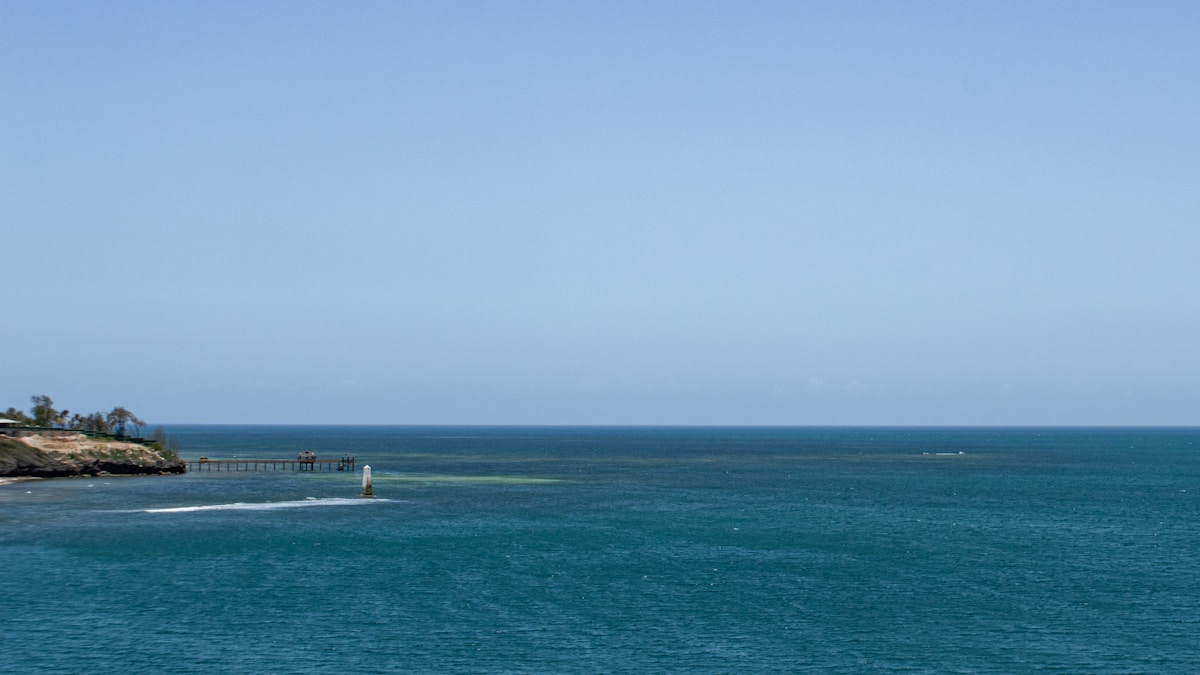
Watamu is a small beach village 105km north of Mombasa, within the Watamu Marine National Park and Biosphere Reserve. It is quieter and less commercial than Diani - the development here is scattered guesthouses and a few mid-range lodges rather than large resort complexes. The result is a beach experience more focused on marine wildlife than resort amenities.
The bay at Watamu is protected and calm, with turquoise water over a sandy bottom. The Marine National Park begins immediately offshore.
Watamu Marine National Park
The park covers 10km² of reef and open ocean extending seaward from Watamu bay. The reef system is intact - visibility of 10–20m is normal in the dry season. Marine life includes:
- Reef fish: Parrotfish, angelfish, triggerfish, clownfish, Moorish idols
- Turtles: Green turtles and hawksbill turtles are resident year-round
- Dolphins: Common and Indo-Pacific bottlenose dolphins visit the bay, particularly in the morning
- Manta rays: Present year-round, most reliably November–March
- Whale sharks: The water north of Watamu (around Malindi Bay) is one of East Africa’s best whale shark sites, October–March. Day trips from Watamu or Malindi (20km north) run daily during peak season
Entry fee: Approximately USD 20 per non-resident adult for the Marine National Park, as of 2026.
Snorkelling and diving: Several operators in Watamu village run reef trips. Ocean Sports Hotel is the most established dive operation (PADI courses available, guided dives from approximately USD 60 including equipment). Mombasa coast tours covering Watamu, Malindi, and the marine parks are also bookable from the north coast.
Turtles
The Local Ocean Conservation (LOC) trust has operated a turtle monitoring and nest protection programme at Watamu since 1997. They tag nesting females, protect nest sites from poaching, and run guided night walks during nesting season (October–March).
Turtle night walks: Depart from the LOC base at approximately 9pm. Cost approximately USD 20–30/person. Sightings not guaranteed but the guides are experienced at locating active nesting females. It is one of Kenya’s best wildlife-focused activities.
Hatchling releases: When nests hatch (approximately 55–65 days after laying), LOC sometimes arranges observation sessions. Contact them in advance to enquire.
Whale Sharks
The warm, plankton-rich waters between Watamu and Malindi are reliable whale shark habitat from October to March. Local operators run full-day dhow trips to find and snorkel with the sharks. Whale sharks here can reach 10–12m - docile filter feeders. Snorkelling (not diving) alongside them is the standard approach.
Operators: Hemingways Watamu runs organised whale shark trips (approximately USD 100–150/person). Several smaller operators in Watamu village offer similar trips at KES 3,500–6,000/person - quality varies.
The Beach
Watamu bay is horseshoe-shaped with calm water. The main beach (fronting most accommodation) is good for swimming but narrow at high tide. Blue Bay (north of the main village) is wider and quieter.
A sandy spit separates the main bay from Turtle Bay - walkable at low tide.
Seaweed: Less of an issue here than at some south coast beaches, but periodic accumulation occurs in March–May.
Getting There
From Mombasa (105km): Take the Malindi road (B8) north through Kilifi. See our Mombasa city guide if you’re using Mombasa as your arrival point. Bus or matatu from Mombasa Abubakar bus terminal to Malindi (approximately KES 400–600, 2–2.5 hours), then a matatu south to Watamu junction (KES 100, 20 minutes) and a boda-boda to your accommodation (KES 100–200).
Taxi from Mombasa: Approximately KES 5,000–8,000, 1.5–2 hours.
From Malindi (20km south): Matatu KES 80–100, 20 minutes, or boda-boda KES 200–300.
By air: Malindi Airport (20km north) has connections to Nairobi (Safarilink and AirKenya, approximately 1 hour, from USD 80). Watamu to Malindi Airport by taxi is approximately KES 1,500.
Where to Stay
Luxury (USD 200–400/night):
- Hemingways Watamu - the flagship Watamu property, on the beach, famous whale shark operation, full board available
Search hotels in Watamu on Booking.com
Mid-range (KES 8,000–18,000/night):
- Ocean Sports Hotel - beachfront, PADI dive centre, straightforward accommodation
- Medina Palms - boutique, good reef access
Budget (KES 2,000–6,000/night):
- Baraka Beach Backpackers - social, pool, close to village
- Several guesthouses along the village road
Combining with Malindi
See our Watamu city guide for town-level hotel and restaurant listings specific to Watamu. Malindi (20km north) has Malindi Marine National Park (adjacent to Watamu Marine Park), the historic Portuguese chapel of São Gabriel (one of Africa’s oldest Christian buildings, approximately 1542), and the Malindi Museum. A day trip from Watamu is easy by matatu or boda-boda.
Gedi Ruins (Giriama), approximately 15km from Watamu - a Swahili town abandoned in the 17th century, with standing walls and a baobab-filled atmosphere. Entry approximately USD 10. Worth a half-day.
For a full comparison of Kenya’s main beach destinations, see our Diani vs Watamu guide and Kenya coast guide. Planning the whole north coast route? Our Kenya coast itinerary covers Mombasa to Lamu in a structured route. For diving and snorkelling options along the coast, see our Kenya diving and snorkelling guide.