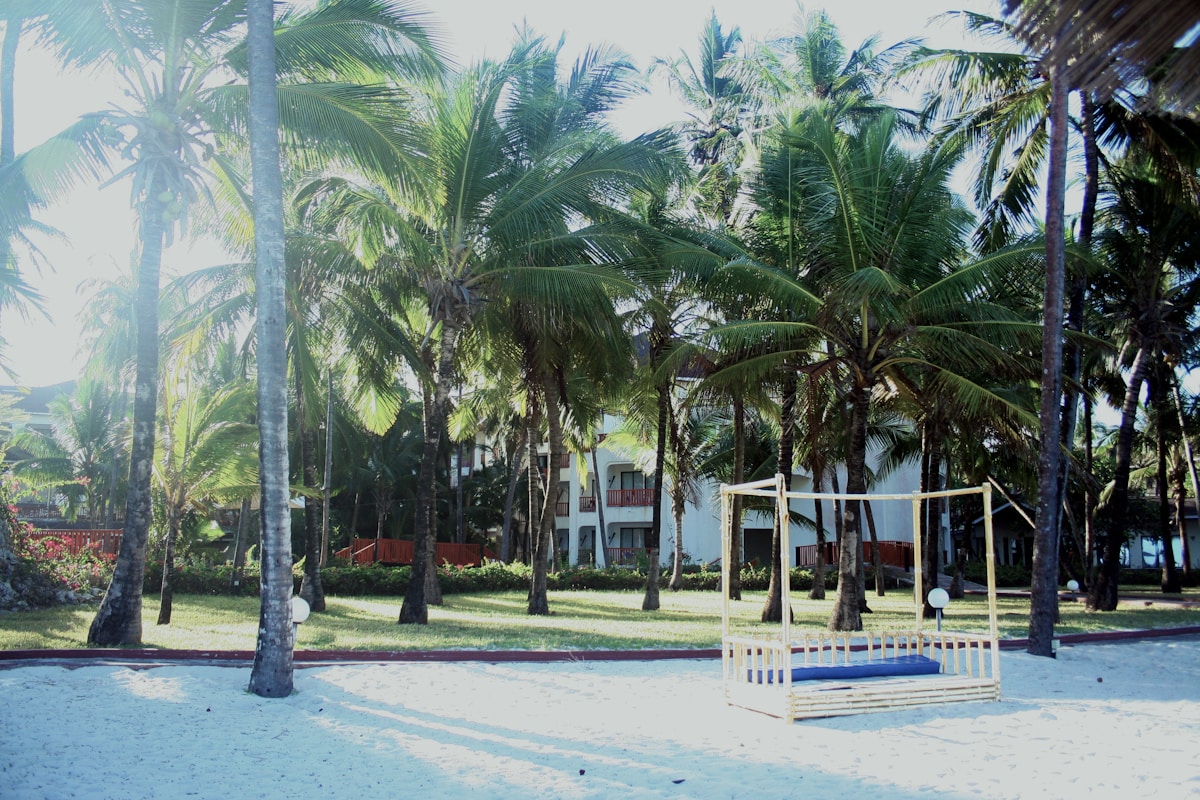
Kenya’s Indian Ocean coastline runs for roughly 480km and has beaches good enough to stand alongside any in the world. Two names come up most often: Diani, on the south coast below Mombasa, and Watamu, on the north coast two hours above it. Both have white sand and turquoise water. But they’re genuinely different places.
Here’s how they compare.
The Beaches Themselves
Diani stretches for approximately 17km of continuous white sand backed by casuarina trees and Indian Ocean palms. The beach is wide, the water colour is that postcard-level turquoise, and a coral reef a few hundred metres offshore keeps waves manageable. Diani is Kenya’s most developed beach resort area - infrastructure is good, and there’s a real choice of restaurants, water sports operators, and supermarkets.
Watamu is more fragmented. The best sections - particularly in front of the mid-range and upscale hotels - are genuinely beautiful, with sheltered lagoons formed by the reef. But the beach can narrow dramatically at high tide in some spots, and the overall feel is greener and more local. Watamu is a small town, not a resort strip, and it shows.
| Factor | Diani Beach | Watamu |
|---|---|---|
| Beach quality | Excellent - 17km, wide, white sand | Good to excellent - smaller, some tidal variation |
| Snorkelling / diving | Good reef; Kisite-Mpunguti Marine Park nearby | Watamu Marine National Park - one of Kenya’s best |
| Marine wildlife | Dolphins, turtles; Kisite for whale sharks (seasonal) | Sea turtles (nesting Oct–Mar), whale sharks, manta rays |
| Watersports | Wide range - kitesurfing, windsurfing, deep-sea fishing | Snorkelling, glass-bottom boats, sea kayaking |
| Nightlife | Moderate - beachside bars, a few clubs | Minimal - a quiet town |
| Restaurants | Wide range - Italian, seafood, Kenyan | Limited - a handful of good spots |
| Crowds | Busier, particularly December–January | Quieter year-round |
| Getting there | Fly to Mombasa or Ukunda; 45 min drive | Fly to Malindi; 30 min drive, or drive from Mombasa (2 hrs) |
| Mid-range budget | KES 8,000–20,000/night (USD 60–155) | KES 6,000–15,000/night (USD 45–115) |
Snorkelling and Marine Life
This is where Watamu wins. Watamu Marine National Park sits right off the beach and covers 32 km² of pristine reef - some of the healthiest coral in Kenya. Sea turtles nest on Watamu’s beaches between October and March, and the conservation work done by the Local Ocean Trust means turtle encounters are common year-round. Whale sharks pass through between November and March.
Diani’s marine life is also excellent, but spread further offshore. The main attraction is Kisite-Mpunguti Marine Park at the southern end of the coast, approximately 45 minutes by boat from Diani. Whale sharks aggregate around Shimoni (from where boats depart to Kisite) between October and February. Snorkelling boat trips from Diani cost approximately KES 3,500–5,000 per person as of 2026.
For serious snorkellers and divers: Watamu edges ahead. For a beach holiday with occasional marine activities: either works.
Activities Beyond the Water
Diani has easy access to:
- Colobus Conservation - Diani is one of the few places in the world to see the Angola colobus monkey; the conservation centre charges approximately KES 1,500 (USD 12) for a guided walk as of 2026
- Shimba Hills National Reserve - 1.5 hours north; the only Kenyan park with sable antelope
- Mombasa’s Fort Jesus and Old Town - 45–60 minutes north
Watamu sits within reach of:
- Arabuko-Sokoke Forest - one of East Africa’s largest coastal forests; guided walks approximately KES 1,000 (USD 8) as of 2026; excellent for bird watching
- Gede Ruins - 14th-century Swahili stone town in the forest; entry approximately KES 1,200 (USD 9) as of 2026
- Malindi - 30 minutes north; the town has a Portuguese chapel dating to Vasco da Gama’s 1498 visit
Where to Stay
Diani Beach
- Baobab Beach Resort & Spa: large all-inclusive; from approximately KES 18,000/person/night (USD 140) as of 2026. Good for families. Book →
- Ali Barbour’s Cave Restaurant (nearby dining landmark): dinner approximately KES 3,500–5,000/person (USD 27–38)
- Diani Reef Beach Resort & Spa: upmarket resort; from approximately KES 25,000/night (USD 195) as of 2026. Book →
- The Sands at Nomad: boutique mid-range; from approximately KES 16,000/night (USD 125) as of 2026. Book →
- Diani Backpackers: budget; from approximately KES 3,000/night (USD 23). Book →
Search all Diani Beach hotels on Booking.com
For a full accommodation guide, see our Diani Beach guide.
Watamu
- Medina Palms: boutique luxury; from approximately KES 30,000/night (USD 230) as of 2026. Book →
- Temple Point Resort: mid-range with excellent snorkelling access; from approximately KES 14,000/night (USD 108) as of 2026. Book →
- Ocean Sports Hotel: watersports-focused, long-established; from approximately KES 10,000/night (USD 77) as of 2026. Book →
- Watamu Beach Hotel: budget-to-midrange; from approximately KES 6,500/night (USD 50) as of 2026. Book →
Search hotels in Watamu on Booking.com
For full details, see our Watamu beach guide.
Getting There from Nairobi: Transport Compared
The two coasts require different approaches from Nairobi, and the logistics favour Diani slightly for most travellers.
To Diani Beach
By air to Ukunda airstrip (closest to Diani): Jambojet operates daily flights from JKIA to Ukunda (approximately 55 minutes). Fares from approximately KES 6,000–14,000 one-way depending on timing and booking lead time. Book 2–4 weeks ahead for competitive fares. From Ukunda airstrip, taxis to Diani Beach hotels cost approximately KES 500–1,000 (5–10 minutes).
By air to Mombasa (for north coast or Diani via Likoni): Kenya Airways and Jambojet fly JKIA to Mombasa Moi Airport (approximately 1 hour). Fares from approximately KES 6,000–18,000 one-way. From Mombasa airport: taxi to Diani (south coast) approximately KES 2,500–3,500 including Likoni Ferry crossing, 45–75 minutes. For Nyali/Bamburi (north coast): approximately KES 1,500–2,500, 20–35 minutes.
By road from Nairobi: Approximately 8 hours via the A109 Nairobi–Mombasa highway. Easy Coach, Mash Poa Bus, and Modern Coast run overnight services from Nairobi CBD to Mombasa (approximately KES 1,500–2,500). From Mombasa bus station, Diani is a further 45–60 minutes by shared matatu south via Likoni Ferry.
By night bus direct: Some operators (Guardian Angel) run overnight services directly to Ukunda/Diani; check current routes at Nairobi’s Machakos bus station. Journey: approximately 9 hours.
To Watamu
By air to Malindi (closest to Watamu): AirKenya Express flies from Nairobi Wilson Airport to Malindi (approximately 1 hour). Fares from approximately KES 8,000–18,000 one-way. Book 1–3 weeks ahead. From Malindi airport, a taxi to Watamu costs approximately KES 2,000–3,000 (30–35 minutes south).
By road from Nairobi: Approximately 7–8 hours via Mombasa then north on the B8. Shared matatus from Mombasa (Mwembe Tayari stage) to Malindi take approximately 2.5 hours (KES 500–700). From Malindi, Watamu is a further 25km by matatu (KES 100–150).
Logistics verdict: Diani has two viable airport options (Mombasa or Ukunda); Watamu depends on Malindi or a longer road journey via Mombasa. If flights to Malindi are full or expensive, Diani becomes the more flexible choice by default. Check both routes when comparing fares.
Food and Eating Out
Diani wins on variety. The main road through the resort area has restaurants covering Italian wood-fired pizza, Indian curries, beachside fresh fish grills, and a handful of craft beer spots. Ali Barbour’s Cave Restaurant - a dinner-only experience inside a natural coral cave lit by candles - is a genuine destination, not a gimmick.
Watamu’s eating scene is smaller but good. La Madrague does reliable Italian. Blue Moon Restaurant serves well-priced fresh seafood - grilled catch of the day runs approximately KES 1,200–1,800 (USD 9–14). The local market near the bus stand has cheap, authentic Kenyan meals for KES 200–400.
Who Should Choose Which?
Choose Diani if: (browse Diani tours and day trips)
- You want the most developed beach resort infrastructure
- You’re travelling as a couple or family who want watersports, nightlife, and restaurant variety
- You’re combining with a Mombasa city visit
- You want easy access to Kisite Marine Park or Shimba Hills
- This is your first time on the Kenya coast
Choose Watamu if: (browse Mombasa and North Coast tours)
- Marine conservation and sea turtles genuinely interest you
- You want a quieter, less touristy base
- You plan to visit Arabuko-Sokoke Forest or the Gede Ruins
- You’re travelling from Nairobi via Malindi flight (saves a Mombasa transit)
- You prefer a small town to a resort strip
Both are worth it on a longer trip. Nairobi–Diani–Watamu–Malindi makes a classic Kenya coast loop, roughly 5–7 days.
For in-depth beach guides, see our Diani Beach guide, Watamu Beach guide, and Kenya coast guide. For the full coast itinerary, see our Kenya coast itinerary. Our Kenya beach and safari combo guide covers how to add a safari to either coast option.
Plan Your Trip
✈️ Book your flights to Kenya 🛡️ Get travel insurance 📱 Stay connected with an eSIM 🚗 Rent a car