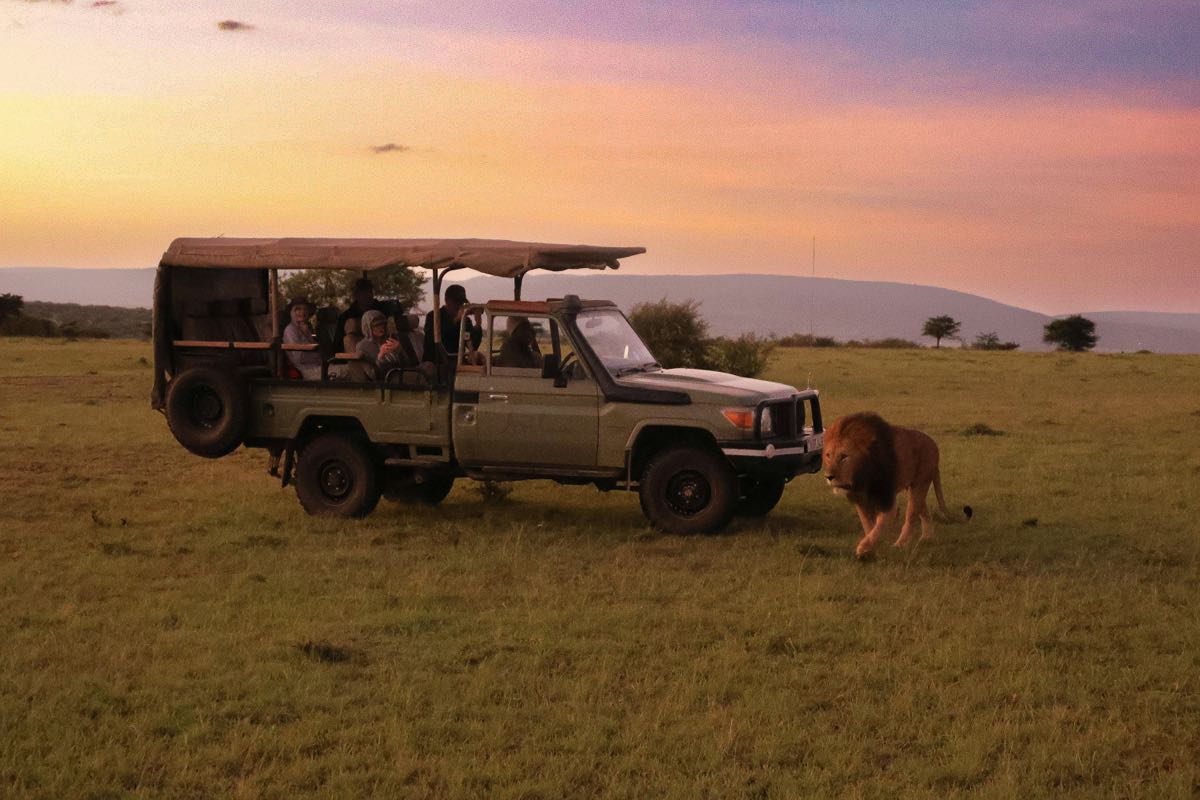
Kenya is a well-established tourist destination with good infrastructure for visitors, but first-timers benefit from knowing a few essentials before arrival. This guide covers the practical basics: documentation, health, money, safety, and getting around. For a detailed cost breakdown, see the Kenya budget guide.
Visa
Most nationalities require a Kenya eVisa. Apply online at immigration.ecitizen.go.ke:
- Single entry: USD 50, valid for 90 days
- East African Tourist Visa: USD 100, covers Kenya, Uganda, and Rwanda (limited reuse)
- Processing time: Usually 3–7 working days; apply at least 2 weeks ahead
- East African Community nationals (Uganda, Tanzania, Rwanda, Burundi, South Sudan): generally visa-free - check the official list
- US and UK citizens: eVisa required, USD 50
Have a printed or digital copy of your approval letter at immigration. The visa is typically stamped on entry - you do not need a physical sticker.
Health
Malaria
Kenya is a malaria zone. This includes Nairobi (lower risk but not zero), the coast, the safari parks, and the highlands. Prophylaxis is strongly recommended for the whole trip.
Common prophylaxis options (consult a travel health clinic):
- Atovaquone-proguanil (Malarone): Take daily, start 1–2 days before, continue 7 days after. Well-tolerated.
- Doxycycline: Take daily, start 2 days before, continue 28 days after. Can cause sun sensitivity - important at the coast.
- Mefloquine (Lariam): Weekly. Not suitable for everyone.
Mosquito precautions: Use DEET-containing repellent at dawn and dusk, wear long sleeves and trousers in the evening, sleep under a mosquito net.
Yellow Fever
A yellow fever vaccination certificate is required if you are arriving from a yellow fever-endemic country (including many in West and Central Africa, and parts of South America). Without it, you may be denied entry.
If you are not arriving from an endemic country, the certificate is not required but the vaccination is still a good idea.
Other Vaccinations
- Hepatitis A and Typhoid: Strongly recommended for all visitors
- Hepatitis B: Recommended for longer stays
- Rabies: Consider for trips involving wildlife encounters or long stays
- Tetanus and routine vaccines: Up to date before travel
Water
Do not drink tap water anywhere in Kenya. Bottled water is cheap and widely available. At restaurants, check that ice is made from purified water - if unsure, decline.
Money
Currency: Kenyan Shilling (KES). USD is widely accepted at lodges, large hotels, and tourist operators. Most everyday transactions (transport, food markets, small shops) are in KES.
Search hotels in Kenya on Booking.com
ATMs: Widely available in Nairobi, Mombasa, Nakuru, and major tourist towns. Withdraw KES on arrival at JKIA airport ATMs (before leaving the arrivals hall). KCB, Equity Bank, and Barclays/ABSA are reliable. Maximum daily withdrawal typically KES 40,000 (approximately USD 300) per card.
Cards: Accepted at major hotels, lodges, and tourist restaurants. Visa is more widely accepted than Mastercard. American Express is rarely accepted outside five-star hotels.
Cash: Essential for small vendors, matatu fares, tips, boda-bodas, and park entry supplementary fees. Always carry some KES.
M-Pesa: Kenya’s mobile money system is ubiquitous - locals use it for almost all transactions. As a foreign visitor without a Kenyan SIM, it is not practical, but knowing it exists explains why some vendors accept only mobile payment.
Tipping: Expected at restaurants (10–15%), safari guides (USD 10–15/day), camp staff (USD 5–10/day), and airport porters. Ask lodges for their recommended tipping guide.
Safety
Nairobi
Nairobi is a large city with city-level crime. The risks for tourists are primarily:
- Petty theft: Pickpocketing in crowds, phone snatching on the street. Use a basic phone for navigation in public; keep valuables in a front pocket or money belt.
- Bag snatching: Carry bags on the sidewalk-side shoulder, not the road-side.
- Taxi scams: Use hotel-recommended taxis or Uber/Bolt (both operational in Nairobi). Never accept an unsolicited taxi at JKIA or Westlands.
Areas to avoid: Nairobi CBD after dark. Mathare, Kibera at night. The immediate area around major bus stations (River Road, Accra Road) has higher petty crime risk. Planning to travel alone? Our Kenya solo travel guide covers safe neighbourhood choices, ways to connect with other travellers, and the best bases for solo visitors.
Areas safe for tourists: Karen, Westlands, Gigiri, Kilimani, Langata during the day. Tourist attractions (JKIA, Giraffe Centre, David Sheldrick Wildlife Trust, Nairobi National Park) are well-managed.
At the Coast
The main resort areas (Nyali, Bamburi, Diani) are generally safe. Avoid isolated beach areas after dark. Use hotel taxis rather than flagging random vehicles.
Lamu: Safe for visitors in the town and Shela. Do not travel by road to Lamu (the coastal road north of Mombasa has security risks in some sections). Fly in and out.
Wildlife Areas
Follow guide instructions at all times in the parks. Do not get out of vehicles in unfenced areas. Do not feed wildlife. Buffalo and elephant cause more safari injuries than predators - give them space.
Getting Around
Air
The most time-efficient way to move between distant destinations. Safarilink and AirKenya serve all major parks and coastal destinations from Nairobi Wilson Airport (WIL). Prices from USD 60 one way. Book directly on their websites.
Road
Matatus: Shared minibuses that run all routes. Cheap (KES 50–500 depending on distance), sometimes uncomfortable, and variable on punctuality. Fine for Nairobi-to-Naivasha type journeys. Not recommended for multi-hour journeys with luggage.
Bus: Modern Coast, Tahmeed, and Mash run comfortable intercity buses (Nairobi–Mombasa, Nairobi–Mombasa, Nairobi–Kisumu). Significantly better than matatus for long journeys. Book online.
SGR Train: The Madaraka Express runs Nairobi–Mombasa (5 hours, KES 700–2,000). Comfortable, air-conditioned, scenic through Tsavo. The best non-flying option between the two cities.
Taxi/Uber: Uber and Bolt (a local equivalent) are reliable in Nairobi, Mombasa, and Kisumu. Book via app for transparent pricing. For a stress-free first arrival at JKIA, Welcome Pickups offers fixed-price private transfers with an English-speaking driver and live flight tracking - worth considering if you’re landing late at night or travelling with a lot of luggage.
Car hire: Practical for self-drive safaris and the coast. 4WD recommended for any park driving. International driving licence required. Book in advance: Avis, Budget, and several local operators in Nairobi. Compare options through our Kenya car hire page.
Electricity
Kenya uses the British-standard 3-pin plug (Type G). Voltage: 240V. If you are travelling from the US or continental Europe, bring an adaptor. Power cuts (load shedding) occur periodically even in Nairobi - lodges have generators.
Communication
SIM cards: Safaricom is Kenya’s dominant carrier with the best coverage in parks and rural areas. Buy a Safaricom SIM at JKIA arrivals or any Safaricom shop (KES 100, requires passport). Top-up data bundles are cheap (KES 100 for 1GB daily bundle). Airtel Kenya is cheaper but has less coverage outside cities. Alternatively, order a Kenya eSIM before you travel to avoid the airport queue.
Internet: Good mobile data coverage in Nairobi, Mombasa, and most towns. Safari lodges typically have WiFi at the main lodge (not in tent rooms). Remote lodges and the coast away from major towns can have unreliable coverage.
What to Pack
- Lightweight, breathable clothing (days are hot in most Kenya regions)
- Warm layer (evenings in Nairobi and highland parks are cool)
- Good sunscreen (UV is intense at altitude - Nairobi is at 1,700m)
- DEET insect repellent
- Malaria prophylaxis (from home or buy in Nairobi)
- Headlamp for safari camps and power-cut situations
- Dust cover for camera equipment (essential in the Mara and Amboseli in dry season)
- Binoculars - essential for bird watching and distance wildlife viewing
For deeper planning resources, see our Kenya visa guide, Kenya health and vaccinations guide, Kenya packing list, and is Kenya safe guide. Our Kenya budget guide covers costs in detail, and our best time to visit Kenya helps with timing your trip.
Plan Your Trip
✈️ Book your flights to Kenya 🛡️ Get travel insurance 📱 Stay connected with an eSIM 🚗 Rent a car