Search hotels in Kenya on Booking.com
Kenya is one of the most rewarding solo travel destinations in Africa. The safari experience is fully accessible without a private group, Diani Beach has a comfortable solo scene, and Nairobi has a large expat and international community. The country does require more situational awareness than some destinations - the guidance below is direct so you can plan with accurate expectations.
Is Kenya Good for Solo Travel?
Yes, with important regional nuance.
The Masai Mara and Amboseli are tailor-made for solo travellers because budget safaris operate on a join-in basis - you book a seat, not a vehicle. You arrive in Nairobi, meet a small group of five to seven other travellers at the operator’s office, and share a 4WD for the duration. It is an inherently social format and one of the best ways to meet people on the road anywhere in Africa.
Diani Beach on the south coast is genuinely relaxed for solo visitors. The kitesurfing and backpacker scene is international, English is universal, and the beach strip is compact enough to navigate on foot or by tuk-tuk.
Nairobi has a large, active expat community, a thriving café culture in Karen and Westlands, and multiple organised social scenes (see the meeting-people section below). It is not a city to wander without a plan, but with some basic awareness it functions well as a solo base.
Avoid the northeast of the country (Mandera, Wajir, Garissa, and the border zone with Somalia) - the FCO, US State Department, and most other government travel advisers categorise these areas as high risk regardless of travel style.
Safety for Solo Travellers
Nairobi is a large city with the petty crime levels typical of large African cities. The key risks for solo travellers are:
- Pickpocketing and phone snatching in busy areas - the CBD, bus stations around River Road and Accra Road, and crowded matatu stops
- Unsolicited taxi touts at JKIA and in Westlands - use Uber or Bolt, which both operate reliably in Nairobi
- Bag snatching from the road-side - carry bags on the pavement-side shoulder
Areas to avoid: Nairobi’s CBD after dark, Eastleigh at any time (known for higher crime), Mathare and Kibera after dark. The area around major bus stations on River Road is higher risk during the day too.
Areas that are comfortable for solo tourists: Karen, Westlands, Gigiri, Kilimani, and Langata during daylight hours. Tourist sites (Giraffe Centre, David Sheldrick Wildlife Trust, Nairobi National Park) are well-managed.
At the coast, the main resort strips - Nyali, Bamburi, and Diani - are generally safe. Lamu town and Shela village are safe; do not travel to Lamu by road (fly in and out from Nairobi or Mombasa).
Solo Female Travel in Kenya
Kenya requires more preparation than Thailand or Portugal but is manageable with the right approach.
In Nairobi, Karen and Westlands are the most comfortable neighbourhoods. Walking alone in unfamiliar areas after dark is not advisable for any solo traveller, and women should be particularly selective about this. Matatus (shared minibuses) can be uncomfortable for women travelling alone - harassment is not universal but is common enough that Uber or Bolt is the better default in the city.
Diani Beach is the standout coastal destination for solo women: the strip is compact, the international kitesurfing scene keeps the social mix diverse, and most accommodation is within a short walk or tuk-tuk ride of restaurants and nightlife.
Safari camps and lodges have excellent safety records for solo female travellers. You are in a fenced camp with 24-hour staff presence, and game drives are conducted with a guide.
In Mombasa Old Town and Lamu, dressing conservatively (loose clothing that covers shoulders and knees) is recommended out of respect for local culture and will also reduce unwanted attention.
How to Meet People in Kenya
Hash House Harriers Nairobi - one of the oldest and most active HHH chapters in Africa. Weekly Monday evening runs attract expats, locals, and travellers of all nationalities. The post-run social is the point. Highly recommended for anyone in Nairobi for more than a few days.
“Expats in Nairobi” Facebook group - very large and active. Regular meet-ups, event listings, and practical advice.
“Digital Nomads Kenya” Facebook group - smaller but active, focused on co-working recommendations and informal meetups.
Safari group tours - small-group Masai Mara safaris are the most reliable way to meet fellow travellers. Budget operators running 3-day Mara trips naturally group solo travellers together, and the shared experience of a predator sighting tends to accelerate conversation considerably.
Wildebeest Eco Camp, Karen (Nairobi) - a well-known backpacker hub with a communal fire pit in the evenings. One of the best places in Nairobi to find other budget solo travellers.
Couchsurfing Nairobi meetups - the local CS community runs regular events open to non-members.
Volunteering networks - Nairobi’s NGO and wildlife conservation communities are large and welcoming to short-term visitors. Organisations like the David Sheldrick Wildlife Trust run volunteer programmes that connect international visitors with like-minded people.
Diani Beach kitesurfing community - international instructors and students create a naturally social scene at the kite schools. No experience required to join the beach social circuit.
Best Bases for Solo Travellers
Nairobi is the logical entry and exit point for most safaris, and it works well as a solo base in Karen and Westlands. The range of co-working spaces, international restaurants, and organised activities makes it easier to fill a few days than its reputation suggests.
Diani Beach is the pick for solo coastal travel. The 10-kilometre beach strip has a well-developed tourist infrastructure, Uber Chapchap tuk-tuks connect the strip efficiently, and the kite and dive community keeps the social scene international year-round.
Nanyuki (Laikipia plateau) is worth knowing for solo travellers interested in more exclusive wildlife experiences. A growing number of conservancies offer community-priced day visits and volunteer programmes. The town is small but there is a solid backpacker scene at a handful of budget lodges near Mount Kenya.
Group Tours Worth Taking
For solo travellers, joining an organised group tour is the most cost-effective and socially rewarding way to see Kenya’s headline wildlife areas. Budget Masai Mara safari packages - typically three days, two nights - depart Nairobi daily and cost approximately USD 250–350 per person as of 2026. Amboseli day trips and two-day packages from Nairobi are a shorter commitment and equally popular with solo visitors.
Browse Masai Mara and Kenya safari tours to compare itineraries and current prices before booking. Kenya travel insurance is worth arranging in advance - solo travellers particularly benefit from having medevac cover if something goes wrong in a remote park.
Practical Solo Tips
Budget: Allow approximately KES 5,000–10,000 per day (roughly USD 40–80 as of 2026) for a comfortable mid-range solo trip covering accommodation, meals, and local transport in Nairobi or at the coast. Safari costs are on top of this.
Transport in Nairobi: Uber and Bolt are both operational and should be your default for all city movement. Both apps show upfront pricing. Never accept an unsolicited taxi outside JKIA arrivals.
M-Pesa: Kenya’s mobile money system is used for almost all local transactions. As a foreign visitor without a Kenyan SIM registered to a local ID, you cannot use it directly - carry KES cash for small vendors, matatu fares, and tips.
Safaricom SIM: Buy one at JKIA arrivals (requires passport, costs approximately KES 100). Safaricom has the best coverage in parks and rural areas. Top-up data bundles are inexpensive (approximately KES 100 for a 1GB daily bundle as of 2026).
Health: Malaria prophylaxis is recommended for all regions including Nairobi. Yellow fever vaccination certificate is required if arriving from an endemic country. Apply for your Kenya eVisa in advance at immigration.ecitizen.go.ke (USD 50, single entry) - processing typically takes 3–7 working days.
Best Time to Go Solo
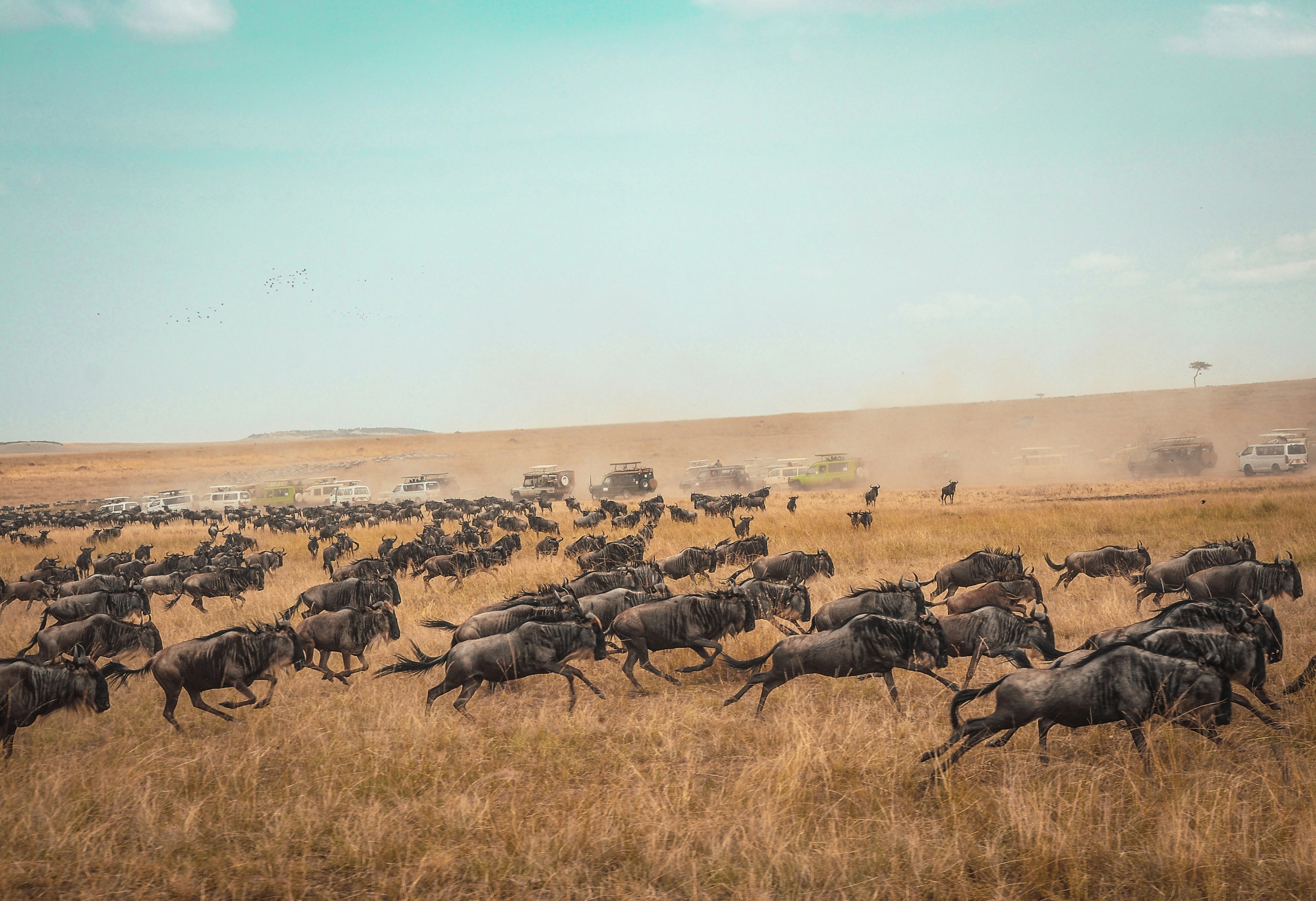
July to September is the best window if seeing the Great Migration is a priority. The peak wildebeest crossing season in the Masai Mara draws more safari vehicles and more travellers - game drives during this period are naturally more social, and budget operators have the most departure options. Accommodation should be booked at least 6–8 weeks in advance for July and August.
January and February offer good wildlife viewing (the short dry season), fewer crowds than peak safari season, and lower accommodation prices. It is easier to secure a last-minute budget safari spot, and Diani Beach is at its most pleasant weather-wise.
Avoid April and May (long rains) for a first solo trip - some unpaved park roads become impassable, and the Mara can be difficult to navigate.
For practical planning resources, see our is Kenya safe guide, Kenya visa guide, and first-time Kenya guide. For solo budget planning, see our Kenya budget guide. Our Nairobi city guide and Mombasa city guide cover the two main urban bases for solo travellers.
Plan Your Trip
✈️ Book your flights to Kenya 🛡️ Get travel insurance 📱 Stay connected with an eSIM 🚗 Rent a car