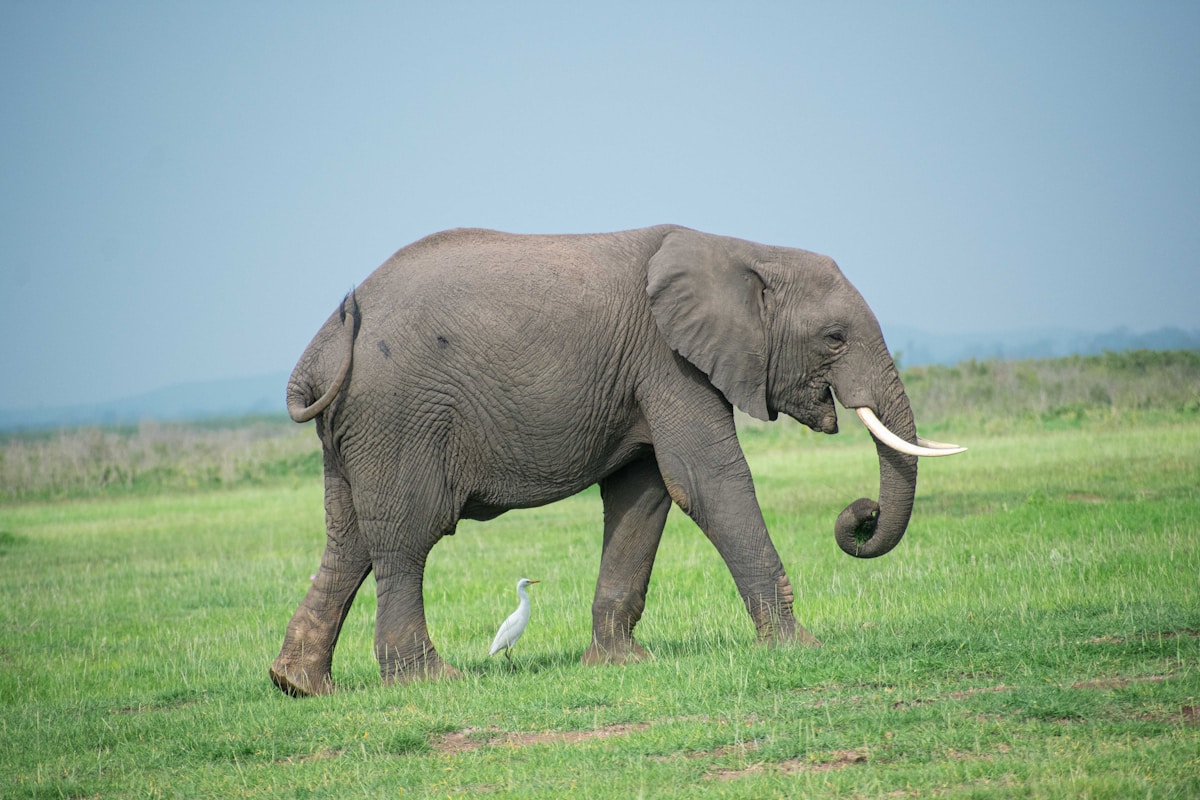
Amboseli and Tsavo are the two pillars of Kenya’s southern safari circuit. For overviews of each park, see our Amboseli guide and Tsavo guide - or continue reading for the head-to-head comparison. Both lie roughly 4–5 hours by road from Nairobi, both offer the Big Five, and both can be combined in a single itinerary. But they look and feel completely different - and each has wildlife experiences the other can’t match.
The Short Version
- Amboseli: the best elephant park in Africa, with Kilimanjaro views and open plains that make photography easy. Compact and accessible.
- Tsavo (East + West combined): Kenya’s largest protected area, with red-tinged dust, dramatic lava scenery, and the famous red elephants. More remote, less visited, and better for those who want to feel they’ve found something.
Park Basics
| Factor | Amboseli | Tsavo East | Tsavo West |
|---|---|---|---|
| Size | 392 km² | 13,747 km² | 9,065 km² |
| Entry fee (non-resident) | ~USD 90/person/day as of 2026 | ~USD 52/person/day as of 2026 | ~USD 52/person/day as of 2026 |
| Distance from Nairobi | ~230km (4 hrs via A104) | ~330km (4–5 hrs via A109) | ~240km (4 hrs via A104, C103 junction) |
| Access from Mombasa | ~5 hrs north | ~2.5 hrs west | ~3 hrs north-west |
| Terrain | Open grassland, swamp, acacia woodland | Semi-arid scrubland, Aruba Dam, Galana River | Lava fields, Mzima Springs, Chyulu Hills |
| Kilimanjaro views | Yes - Amboseli’s signature feature | No | No (but Kilimanjaro visible from far south) |
| Night drives | Not permitted in national park | Not permitted | Not permitted |
| Walking safaris | Limited (with KWS ranger at specific areas) | Not offered in main park | Available at some private conservancies bordering |
Wildlife
Amboseli
Amboseli’s elephant herds are legendary and thoroughly researched - the Amboseli Elephant Research Project has tracked individuals continuously since 1972, making them among the most studied elephants on earth. Bulls with massive tusks (rare elsewhere) are seen relatively frequently.
The swamp ecosystem - fed by underground water from Kilimanjaro - draws a year-round concentration of wildlife. You’ll see large buffalo herds, lion prides, and a wide range of waterbirds. Cheetah and wild dog are present but less reliably seen than in the Masai Mara.
Amboseli’s birdlife is excellent: over 370 species recorded, including various kingfishers, herons, pelicans, and a healthy raptor list.
Tsavo
Tsavo’s combined area is enormous and holds Kenya’s largest elephant population. The famous “red elephants” of Tsavo roll in the local red volcanic soil - the photographic effect is striking. These elephants tend to have larger bodies and bigger tusks on average than Mara or Amboseli populations.
Tsavo East is more open than Tsavo West - the wide dry plains along the Galana River and around Aruba Dam concentrate animals during the dry season. It’s one of the best places in Kenya to see large lion prides and significant numbers of lesser kudu.
Tsavo West is more varied in terrain: the Chyulu Hills, lava tubes at Shetani, and Mzima Springs (where hippos and crocodiles inhabit crystal-clear pools fed by volcanic rock filtration) all add interest beyond pure game drives. Rhino are sometimes spotted in the Ngulia Rhino Sanctuary - approximately 80 individuals as of 2026.
Photography and Scenery
Amboseli’s USP is the Kilimanjaro backdrop. On clear mornings (typically early morning before clouds build), you can photograph elephants against Africa’s highest mountain. No other easily accessible park in East Africa offers this. The flat, open terrain also means more light on subjects and less bush obstruction.
Tsavo’s red-soil landscape against dry bush and riverine trees is equally photogenic but in a different register - dramatic, arid, and expansive. The red dust coating elephants and vehicles alike is a distinctive aesthetic.
Entry Fees and Costs
Amboseli National Park:
- Non-resident adults: approximately USD 90/person/24-hour period as of 2026
- Resident Kenyans: approximately KES 500 as of 2026
- Children (3–18): approximately USD 25 as of 2026
Tsavo East and Tsavo West:
- Non-resident adults: approximately USD 52/person/24-hour period as of 2026
- Resident Kenyans: approximately KES 300 as of 2026
Fees are payable via the Kenya Wildlife Service eCitizen portal (book in advance) or at park gates. Cash in USD is typically accepted at gates - always verify current fee structure at KWS before visiting, as fees adjust periodically.
Where to Stay
Amboseli
- Tortilis Camp: luxury tented camp; from approximately USD 700/person/night all-inclusive as of 2026. Excellent Kilimanjaro views.
- Ol Tukai Lodge: well-established midrange lodge directly inside the park; from approximately KES 35,000/person/night (USD 270) as of 2026.
- Kibo Safari Camp: good mid-range; from approximately KES 25,000/person/night (USD 195) as of 2026.
- Amboseli Serena Safari Lodge: popular all-inclusive option; from approximately KES 38,000/person/night (USD 295) as of 2026.
Search hotels in Amboseli on Booking.com
Tsavo
- Voi Safari Lodge (Tsavo East): classic lodge overlooking a waterhole lit at night; from approximately KES 22,000/person/night (USD 170) as of 2026.
- Kilaguni Serena Safari Lodge (Tsavo West): Kenya’s oldest safari lodge (1962); great waterhole and Kilimanjaro glimpses; from approximately KES 28,000/person/night (USD 215) as of 2026.
- Finch Hattons (Tsavo West): luxury tented camp; from approximately USD 600/person/night as of 2026.
- Satao Camp (Tsavo East): known for elephant encounters at the waterhole; from approximately KES 30,000/person/night (USD 230) as of 2026.
See our Tsavo wildlife guide and Amboseli wildlife guide for further detail.
How to Combine Both Parks
Amboseli and Tsavo West share a boundary - the Chyulu Hills link the two ecosystems. The most efficient circuit:
Day 1–2: Nairobi → Amboseli (game drives focusing on elephants and Kilimanjaro views)
Day 3–4: Amboseli → Tsavo West (Mzima Springs, lava formations, Ngulia Rhino Sanctuary)
Day 5–6: Tsavo West → Tsavo East (Aruba Dam, Galana River game drives)
Day 7: Tsavo East → Mombasa (2.5 hours; fly or continue to the coast)
This circuit works well as a self-drive in a capable 4WD if you’re experienced, or with a guided Kenya safari operator. Allow 7–10 days to do it properly without rushing.
Who Should Choose Which?
Choose Amboseli if: (browse Amboseli tours)
- Elephant photography is a priority
- You want the Kilimanjaro backdrop
- You have limited time (2–3 nights is enough)
- You prefer an accessible, well-organised park with reliable sightings
- It’s your first African safari
Choose Tsavo if:
- You want a larger, less-visited park experience
- The red-earth landscape and lava scenery appeal
- You’re coming from or going to Mombasa (access is easier from the coast)
- You want to maximise value - Tsavo’s lower entry fee stretches your days
- You’re looking for more variety across the two parks
Combine both for a classic southern Kenya safari. You get the Kilimanjaro elephants, Mzima Springs, the Galana River, and the coast - all in a single clockwise loop from Nairobi.
For in-depth guides to each park, see our Amboseli National Park guide and Tsavo National Park guide. Our 10-day Kenya safari itinerary shows how to combine both parks with the Masai Mara. For a broader park comparison, see our Big Five Kenya guide.
Plan Your Trip
✈️ Book your flights to Kenya 🛡️ Get travel insurance 📱 Stay connected with an eSIM 🚗 Rent a car