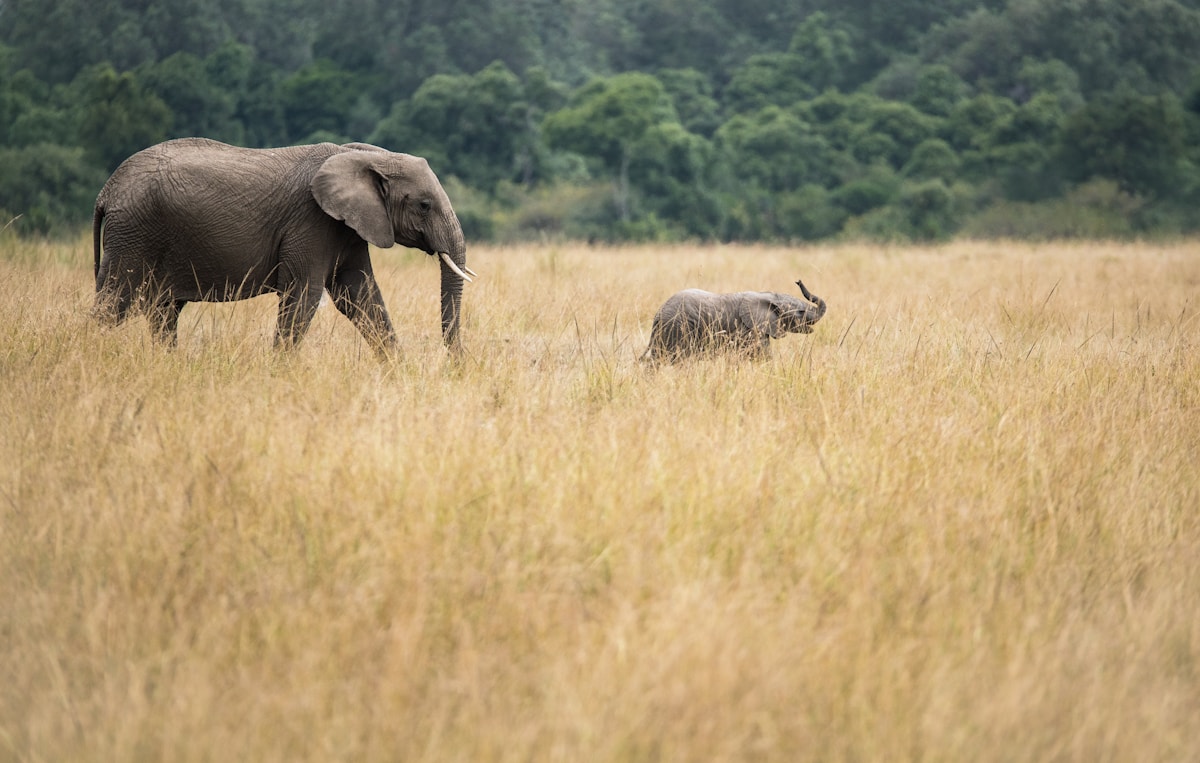
Tsavo is Kenya’s largest national park - combined, Tsavo East and West cover over 22,800km², making it larger than Wales. Split by the Nairobi–Mombasa highway, the two parks were once a single entity. Together they represent Kenya’s largest wilderness area and house the country’s largest elephant population.
Tsavo East
Tsavo East is the larger, wilder, and more remote of the two parks. The landscape is flat semi-arid scrub broken by the Yatta Plateau - the world’s longest lava flow at 300km. The Galana River bisects the park and concentrates wildlife.
Key features:
- Lugard Falls - a series of rapids and rock formations on the Galana River where the water has carved narrow channels through volcanic rock. Accessible by vehicle, approximately 50km from the main Voi gate.
- Red elephants - Tsavo East has one of Kenya’s largest elephant populations. Herds of 50–100 are common. The red soil coating is most visible in the dry season.
- Voi Safari Lodge - the main established lodge, built into a rocky hillside with game-viewing waterholes directly below the rooms.
Entry fee: Approximately USD 52 per adult non-resident per day (as of 2026). Voi Gate is the main entrance from the Nairobi–Mombasa highway.
Tsavo West
Tsavo West is more densely vegetated and topographically varied than the east. The volcanic Chyulu Hills border the park to the north.
Key features:
- Mzima Springs - an oasis fed by underground water from the Chyulu Hills. Clear water, hippos visible from an underwater viewing chamber, crocodiles, and large concentrations of fish. Entry to Mzima Springs is included in park fees.
- Shetani Lava Flows - a dramatic black lava landscape from a relatively recent (approximately 500 years ago) volcanic eruption. Accessible by vehicle.
- Chaimu Crater - a volcanic cone accessible on a short hike from the main gate area.
- Game viewing: Tsavo West has all Big Five. Black rhinos are present in a protected fenced sanctuary. The more varied habitat supports diverse species including hippos, crocodiles, and abundant birdlife.
Entry fee: Approximately USD 52 per adult non-resident per day (as of 2026). Mtito Andei Gate (off the Nairobi–Mombasa highway) and Tsavo Gate are the main entrances.
Getting There
By road from Nairobi: 4–5 hours to Mtito Andei Gate (Tsavo West) or Voi Gate (Tsavo East) via the Nairobi–Mombasa highway.
By train: The SGR Madaraka Express stops at Voi (convenient for Tsavo East) and passengers can arrange collection by lodge vehicles or local taxis.
By air: Charter flights from Nairobi Wilson Airport to Tsavo airstrips take approximately 1 hour (approximately USD 200–300 one way). Several lodges maintain their own airstrips.
From Mombasa: 2–2.5 hours to Voi Gate (Tsavo East) or 1.5 hours to Tsavo West’s eastern gates.
Accommodation
Tsavo East:
- Voi Safari Lodge - well-positioned with waterhole viewing, from approximately KES 20,000/person/night
- Satao Camp - tented camp near Voi, from approximately USD 250/person/night full board
Tsavo West:
- Finch Hattons Luxury Tented Camp - from approximately USD 350/person/night, acclaimed for service
- Kilaguni Serena Safari Lodge - the oldest lodge in Kenya (1962), from approximately KES 20,000/person/night
- Ngulia Safari Lodge - positioned above a seasonal waterpipe, good bird migration viewing
Budget camping: Public campsites in both parks, approximately USD 15/person/night plus entry fees.
When to Visit
Tsavo is drier and hotter than the Mara or Amboseli - temperatures can reach 40°C in the lowland sections. The dry seasons (January–March and July–October) concentrate wildlife at waterholes and give the clearest roads. The green season (April–June) makes roads muddy but the landscape is lush.
The Man-Eaters of Tsavo
Tsavo has one of Kenya’s most famous historical stories. In 1898, during construction of the Uganda Railway bridge over the Tsavo River, two maneless male lions terrorised the construction camp over 9 months - killing an estimated 35 workers (original colonial reports claimed 135, later revised) and halting construction multiple times. Lieutenant-Colonel John Henry Patterson eventually shot both lions after a prolonged hunt. The lions’ skins were sold to the Field Museum in Chicago where they remain as taxidermied specimens. Patterson’s account in “The Man-Eaters of Tsavo” (1907) made the incident world-famous.
Recent research has confirmed that these two lions - their skulls still at the Field Museum - were not aberrant killers but were driven to prey on humans by injury and the unusual circumstances of a railway camp. The story has become part of Tsavo’s identity: large, maneless lions (some Tsavo males are partially or fully maneless, a regional characteristic linked to heat and environment) are still called “Tsavo lions” in wildlife literature.
Wildlife Photography in Tsavo
Tsavo East’s open landscape offers better sightlines than the denser vegetation of Tsavo West. The red elephant photos - grey elephants coated in iron-rich red laterite soil - are among Kenya’s most distinctive safari images. The elephants dust-bathe and roll in the red soil regularly, particularly after rain or at waterholes.
Best waterhole photography: Saturate Camp and the Voi Safari Lodge waterhole attract animals consistently in the dry season. Lodge guests have the advantage of a permanent waterhole position from dawn to dusk.
Combined Nairobi–Mombasa Itinerary
Tsavo works well as a 2–3 night stop between Nairobi and Mombasa - the parks straddle the highway making it the natural midpoint. Kenya safari tours that include Tsavo are available from Nairobi and Mombasa, with itineraries covering both East and West sections. The standard itinerary: depart Nairobi early, enter Tsavo West at Mtito Andei for 1 night, cross to Tsavo East for 1 night near Voi, then continue to Mombasa or the coast on day 3. Our Nairobi to Mombasa road trip guide covers this route in full detail. The SGR train stops at both Voi and Mtito Andei for those combining train travel with park visits.
For a direct park comparison, see our Amboseli vs Tsavo guide. Our Kenya safari guide places Tsavo within the wider Kenya safari circuit, and our Big Five Kenya guide covers what to expect for each species. For accommodation across the parks, see our best safari lodges Kenya guide.
For the full practical visitor guide — entry fees, getting there, tour operators, and what to expect on a self-drive — see our Tsavo National Park visitor guide.