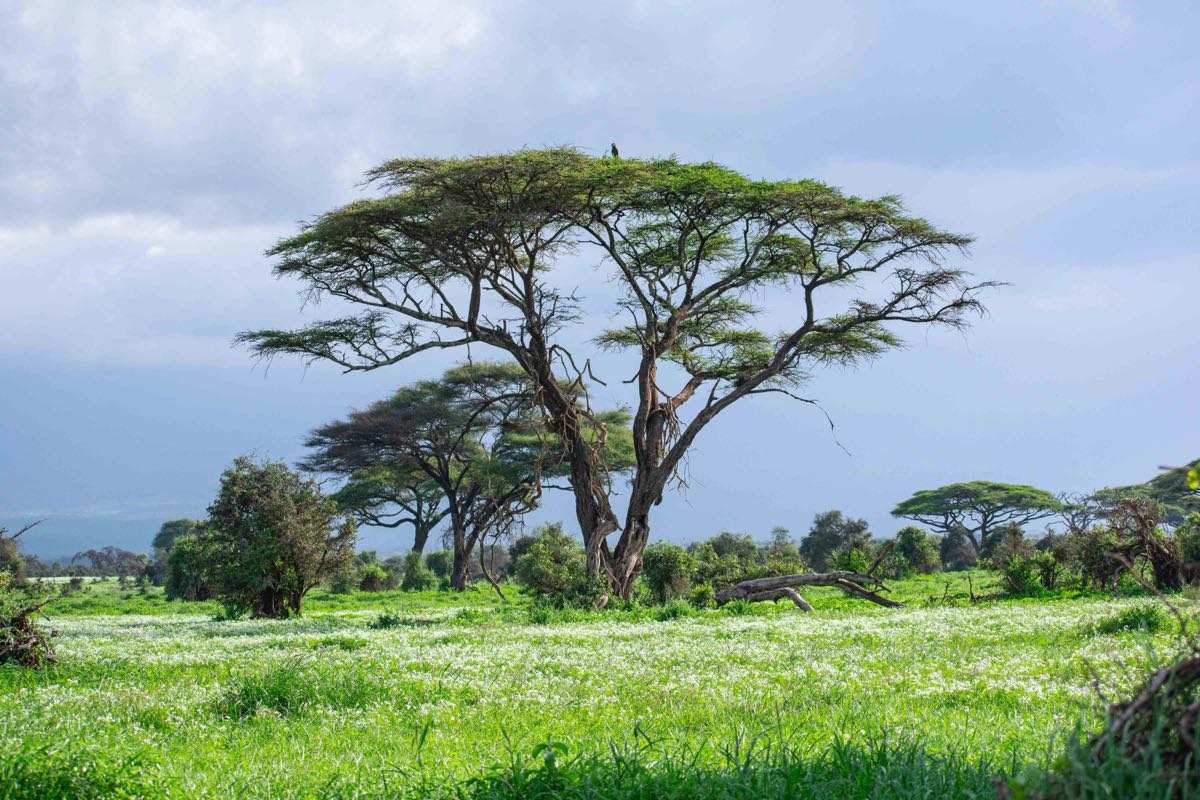
Aberdare National Park covers 767km² of the Aberdare Range in Kenya’s central highlands, stretching from dense montane forest and bamboo zones at lower elevations to open moorland and peaks above 3,500m. It is one of Kenya’s least-visited major parks - overshadowed by the Maasai Mara and Amboseli - but offers a dramatically different experience: a cool, misty highland wilderness where elephants roam through ancient fig forests and waterfalls drop into hidden gorges.
The park is 150km north of Nairobi, accessible via Nyeri or Naro Moru. Altitude ranges from approximately 2,000m to 4,001m (Ol Donyo Lesatima summit).
Wildlife
Elephants and Buffalo
Aberdare’s forest elephants are smaller than the savanna elephants of Amboseli or Tsavo, adapted to moving through dense vegetation. Herds of 10–40 are common at lower forest elevations and around the moorland streams. Large buffalo herds - sometimes 100 or more - graze the moorland savannas near the park’s central plateau.
Leopards
Aberdare has an unusual density of leopards for a highland forest environment. A confirmed population of melanistic (black) leopards - a colour variant caused by excess melanin - inhabits the park. While any leopard is difficult to see in dense forest, the floodlit waterholes at The Ark and Treetops have produced documented sightings. Standard spotted leopards are more commonly observed.
Black-and-White Colobus Monkeys
Among the most visually striking primates in Kenya, black-and-white colobus monkeys are abundant in Aberdare’s canopy forest. Their long white mantles and tails are visible as they move through the trees. Groups of 8–15 are frequently seen near the forest roads.
Other Wildlife
- Giant forest hog - the world’s largest wild pig. Aberdare is one of the most reliable places in Kenya to see this species, particularly at waterholes after dark.
- Bongo - a large striped forest antelope, rarely seen but present in the denser bamboo zones.
- Waterbuck, reedbuck, and bushbuck - common throughout the park.
- Serval and African wildcat - nocturnal predators present but rarely seen.
- Hyena and side-striped jackal - the Highland subspecies differs from the spotted hyena of the lowland parks.
Birds: Over 290 species recorded, including several Aberdare endemics and near-endemics: the Jackson’s francolin, Aberdare cisticola, and various sunbirds and raptors. The moorland above 3,000m supports lammergeiers (bearded vultures), augur buzzards, and mountain buzzards.
The Ark and Treetops
These two tree lodges are the primary reason most visitors come to Aberdare - and among the most distinctive wildlife experiences in Kenya.
The Ark
A purpose-built viewing structure above a waterhole and salt lick in the forest zone of the park. Guests arrive by afternoon, watch wildlife from decks and viewing windows from ground level to 10m up, and spend the night - a buzzer system alerts guests to special sightings. The structure accommodates approximately 90 guests.
Wildlife regularly seen at The Ark: Elephant, buffalo, giant forest hog, waterbuck, bushbuck, hyena, and occasional leopard. Black rhinos have been recorded. Cost: Approximately USD 200–280/person/night full board, including park entry and transfer from Aberdare Country Club. Book through Lonrho Hotels.
Treetops
The original tree lodge - the one where Princess Elizabeth (later Queen Elizabeth II) was staying in February 1952 when she learned that her father King George VI had died and she had become queen. The original structure has been rebuilt several times but the site and concept remain. Located in the Salient section of the park near Nyeri.
Cost: Approximately USD 150–220/person/night full board, including park entry. Book through Abercrombie & Kent or direct at Fairmont Hotels.
Waterfalls
Aberdare has several significant waterfalls accessible on foot or by vehicle:
Gura Falls - at approximately 300m, one of the highest waterfalls in Africa. Located in the upper forest zone. Access requires a guide and hiking from a designated trail head (approximately 3–4 hours return). Scenery is dramatic but the trail is steep and muddy.
Chania Falls - easier to access, near the Fishing Lodge in the lower park. The Chania River tumbles through a forested gorge. A short walk from the vehicle track.
Karura Falls - in the Salient section, a 30m drop into a pool. Accessible by vehicle to within 500m.
Moorland Zone
The high moorland above 3,200m is a distinct ecosystem: heather moorland, giant lobelia, and giant groundsel (Senecio) characteristic of East African alpine zones. The landscape resembles a cross between Scottish moor and highland cloud forest. Eland and reedbuck graze the open moorland. Views over the Rift Valley on clear days.
Driving the moorland: The central moorland road connects the main Ruhuruini Gate (west) with the Kiandongoro Gate (east). This route crosses the highest part of the park and gives the most dramatic scenery. A 4WD vehicle is required - the roads are rough and can be impassable in heavy rain.
Getting There
From Nairobi to Nyeri: 155km north via the Nyeri highway, approximately 2.5 hours by car. Matatu from Nairobi City Hopper (KES 300–500, 2.5–3 hours). For accommodation and town information, see our Nyeri city guide.
From Nyeri to the park gates:
- Kiandongoro Gate (east, main access to moorland): approximately 30km from Nyeri town, 45 minutes by car.
- Ruhuruini Gate (west, moorland loop exit): 60km from Nyeri via Nyahururu road.
- Mutubio Gate (south, forest zone, access to Treetops area): approximately 15km from Nyeri.
Self-drive: Practical for the moorland zone with a 4WD. The forest zone roads can be difficult in wet conditions. For trekking options in the Aberdare highlands, see our Aberdares trekking guide. If you prefer to join a guided Aberdare tour that combines the park with other central highlands sites, several Nairobi-based operators run multi-day packages.
Entry Fees
Approximately USD 35 per adult non-resident per day as of 2026. Children (3–17) approximately USD 20. Pay online at kws.go.ke.
Note: Guests staying at The Ark or Treetops have park fees included in lodge rates.
Accommodation
Inside the park:
- The Ark - from approximately USD 200/person/night full board (tree lodge, waterhole access all night)
- Treetops - from approximately USD 150/person/night full board (historic tree lodge)
- Fishing Lodge - self-catering lodge in the forest zone, approximately USD 80/night for the whole facility. Book through KWS.
Search hotels in Kenya on Booking.com
Outside the park (Nyeri area):
- Aberdare Country Club - the overnight staging lodge for Ark guests. Can be booked independently. From approximately USD 150/person/night full board.
- Green Hills Hotel (Nyeri town) - budget option, from approximately KES 5,000/night.
Best Time to Visit
Dry season (January–March and July–October): Best for moorland road access and clearer views. The forest zone is accessible year-round but dry season makes walking trails less muddy.
Green season (April–June): The forest is extraordinarily lush, waterfalls are at peak flow, and bird activity is high. Moorland roads can become impassable. The Ark and Treetops remain open - wildlife still visits the waterholes year-round.
Temperature: The altitude means temperatures drop to 5–12°C at night year-round. Bring warm layers regardless of season.
Combining with Mount Kenya
Aberdare pairs naturally with Mount Kenya (50km east). A three-day itinerary: one night at The Ark (wildlife), one or two days at the base of Mount Kenya (trekking or acclimatisation). Naro Moru is the midpoint between the two parks.
The Aberdares are best approached via Nyeri - the closest town with good accommodation options and the gateway to both The Ark and Treetops lodges. For trekking in the highland moorland, see our Aberdares trekking guide. Our Mount Kenya trekking guide covers the trekking options on the adjacent peak. For wildlife across the wider central highlands region, see our Mount Kenya wildlife guide.
For the full practical visitor guide — entry fees, The Ark and Treetops booking, tour operators, and what to do on a day visit — see our Aberdare National Park visitor guide.