The East African Rift - one of the planet’s major geological features, where the African continent is slowly splitting apart - runs directly through Kenya from north to south, creating a dramatic escarpment, a chain of soda and freshwater lakes, and some of the most accessible wildlife in the country. From Nairobi, the Rift Valley lakes are between 60 and 200 kilometres away, making them manageable as day trips or short overnights.
Search hotels in Kenya on Booking.com
This guide covers the three most visited Rift Valley lakes - Nakuru, Naivasha, and Bogoria - plus Hell’s Gate National Park, which sits between Naivasha and Nakuru and offers the rare option of cycling and walking safaris among wildlife.
The Geographic Context
The Great Rift Valley in Kenya is visible as an abrupt escarpment from the Nairobi–Nakuru highway: the road descends sharply from the Central Highlands plateau into the valley floor. The viewpoints on the escarpment between Nairobi and Naivasha are the best place to understand the scale - you are looking across a valley that is 45–65 kilometres wide in Kenya, flanked by walls rising 600–900 metres above the floor.
The valley floor contains a chain of shallow lakes fed by rivers draining off the surrounding highlands. The lakes’ alkalinity varies: some (Bogoria, Magadi, Elementaita) are highly alkaline soda lakes supporting flamingos and little else; others (Naivasha, Baringo) are freshwater and support diverse fish, hippos, and birdlife.
Lake Nakuru National Park
Lake Nakuru has historically been the most famous of the Rift Valley lakes - at peak population, it supported over one million flamingos (both lesser and greater flamingo species), turning the lake pink from the air. Flamingo numbers have declined significantly since the 1990s due to water level fluctuations, but the park remains one of Kenya’s best all-round wildlife destinations even when flamingo numbers are lower.
Why visit: Lake Nakuru National Park is one of the few rhino sanctuaries in Kenya - both black and white rhino are protected here behind a full perimeter electric fence. The park also has good populations of Rothschild’s giraffe, lion, leopard, and a large buffalo herd.
Flamingo situation as of 2026: Flamingo numbers fluctuate with lake levels and algae growth. Check recent trip reports before visiting specifically for flamingos - in high-water years, flamingos disperse to other lakes (Bogoria, Elementaita). In dry years, the soda concentrates and flamingo numbers recover. The park is worth visiting regardless.
Entry fees: Approximately USD 35/day non-resident adult as of 2026. Paid via kws.go.ke in advance.
Accommodation: The town of Nakuru (adjacent to the park) has budget guesthouses from approximately KES 2,000/night. Inside the park, Lake Nakuru Lodge offers mid-range accommodation from approximately USD 150/person/night. Public campsites inside the park: approximately USD 15–20/person/night.
Transport from Nairobi: Nakuru is 160km northwest of Nairobi on the A104 highway. Journey time by car: approximately 2 hours. Matatus and buses from Nairobi’s Machakos Country Bus Station run frequently (approximately KES 400–600, 2–2.5 hours). From Nakuru town, taxis or tuk-tuks to the park gate are available.
Lake Naivasha
Lake Naivasha is a freshwater lake 90km northwest of Nairobi, sitting at 1,884m above sea level on the valley floor. It is one of the most accessible natural areas from Nairobi - the drive takes under 2 hours - and offers a quieter, less infrastructurally intense experience than the national parks.
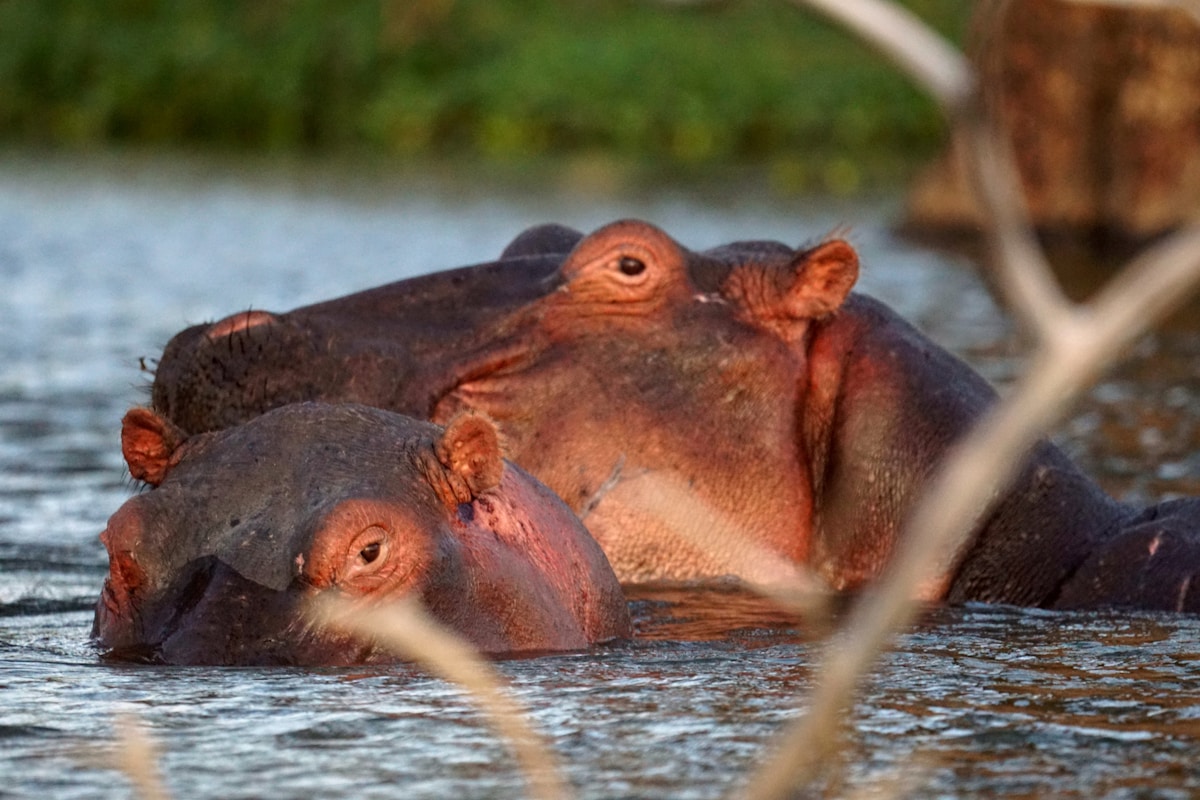
Key wildlife: The lake supports one of Kenya’s largest hippo populations - hippos are routinely visible from the shore or from boat trips on the lake. A huge variety of waterbirds including fish eagles, pelicans, cormorants, kingfishers, and herons. The surrounding Acacia woodland has zebra, giraffe, waterbuck, and baboon.
Crescent Island: A private wildlife sanctuary on a peninsula jutting into the lake. No predators (the island is fenced), so visitors can walk freely among giraffe, zebra, wildebeest, and impala. Entry approximately KES 2,500/person (approx USD 19) as of 2026. Boat from the landing to the island approximately KES 500–800. A genuinely unusual experience.
Boat trips: Available from Moi South Lake Road landing sites (near Fisherman’s Camp and Elsamere). Approximately KES 1,500–2,500/person for a one-hour trip, depending on the operator. Boats go close to hippos - maintain respectful distance and follow guide instructions.
Elsamere Conservation Centre: The former home of Joy Adamson (Born Free) on the southern shore. Museum and afternoon tea available. Day entry approximately KES 1,000/person.
Accommodation: Budget options cluster on Moi South Lake Road - Fisherman’s Camp has tent pitches from approximately KES 800/person and simple bandas from approximately KES 3,500/night. Mid-range lodges from approximately KES 8,000–15,000/night. Naivasha town (3km from the lake) has budget guesthouses from approximately KES 1,500/night.
Transport from Nairobi: 90km on the A104. By car: 1.5 hours. Matatus from Nairobi’s CBD (Muthithi Road stand or Parklands) run to Naivasha town frequently - KES 200–300, approximately 1.5 hours. From Naivasha town, boda-boda (motorcycle taxi) to the lake shore costs approximately KES 100–200.
Lake Bogoria National Reserve
Lake Bogoria is the most reliably spectacular flamingo lake in Kenya. When flamingos disperse from Nakuru in high-water years, many relocate to Bogoria - and the combination of alkaline lake, thousands of flamingos, and active geysers and hot springs on the shoreline makes it one of the most unusual landscapes in East Africa.
What to see: Pink flamingos feeding on cyanobacteria in the shallows, active geothermal features (steam vents, boiling hot springs, and geysers along the eastern shore), greater kudu in the surrounding semi-arid scrubland (one of the best places in Kenya to see this antelope).
Entry fees: Approximately USD 25/day non-resident adult as of 2026. The reserve is administered by KWS.
Practical notes: Bogoria is 50km north of Nakuru (and therefore about 200km from Nairobi). Most visitors combine it with a Nakuru visit rather than treating it as a standalone day trip from the capital. The hot springs on the eastern shore require care - the water is scalding and the ground can be unstable. Stay on marked paths.
Accommodation: No lodges inside the reserve. Camp at the KWS public campsite (approximately USD 15/person/night). Kabarnet town to the north and Marigat to the east have basic guesthouses.
Hell’s Gate National Park: Cycling in the Rift Valley
Hell’s Gate is one of Kenya’s few national parks where you can enter on a bicycle and walk freely without a vehicle - because the park has no lions or elephants. The Kenya cycling tours guide covers bike hire options and the full gorge route in detail. This makes it unique in Kenya’s wildlife portfolio: a place where you can cycle past zebra, giraffe, gazelle, warthog, and buffalo at close range.
The park sits in a dramatic gorge on the floor of the Rift Valley, approximately 25km south of Naivasha town. Towering cliffs, volcanic rock towers, and geothermal steam rising from vents provide the setting.
The cycling experience: Hire a bicycle outside the main gate (Elsa Gate) for approximately KES 500–800/half day from several operators. The main track through the gorge is roughly 10km one-way - most visitors cycle in, walk the inner gorge section on foot, and cycle back. Allow 3–4 hours.
The inner gorge walk: The narrowest section of Hell’s Gate gorge requires scrambling down into the canyon and following the stream through slot canyon passages. A guide is compulsory for this section (approximately KES 600–1,000 from the park ranger post). Flash flooding can occur in wet season - do not enter the gorge if rain is forecast upstream.
Wildlife: Zebra, giraffe, buffalo, kongoni (hartebeest), Thomson’s gazelle, warthog, and Egyptian vulture nesting in the cliffs. No predators.
Entry fees: Approximately USD 26/day non-resident adult as of 2026. Paid via kws.go.ke.
Getting there: From Naivasha town, it is approximately 25km to Hell’s Gate’s Elsa Gate. Boda-boda from Naivasha town to the gate: approximately KES 300–500. The road is drivable by 2WD.
Combining the Rift Valley Lakes
Most visitors combine two or three sites over 2–3 days:
Option A (Nairobi day trip): Naivasha only - boat trip, Crescent Island walk, lunch on the lake shore. Practical as a day trip from Nairobi. Day tours covering the Rift Valley lakes are also available for those who prefer a guided experience.
Option B (2 days): Naivasha overnight, then Hell’s Gate cycling on day two before returning to Nairobi. Achievable without a tour operator if you use public matatus.
Option C (3 days): Naivasha, Hell’s Gate, Nakuru. The standard Rift Valley loop for independent travellers with a rental car. Nakuru town for overnight accommodation keeps costs reasonable.
Option D (3–4 days, full Rift Valley): Add Bogoria to Option C for the full flamingo and geyser experience. Requires a 4WD vehicle on some access roads to Bogoria.
All entry fees are approximate and as of 2026 - confirm current KWS rates at kws.go.ke before travel.
For individual lake guides, see our Lake Nakuru wildlife guide and the Nakuru city guide for accommodation and logistics. Our Hell’s Gate cycling guide covers the cycling routes through the gorge in detail, and the Lake Naivasha guide covers boat trips and Crescent Island. For comparing the two Rift Valley lakes, see our Lake Nakuru vs Lake Naivasha guide.