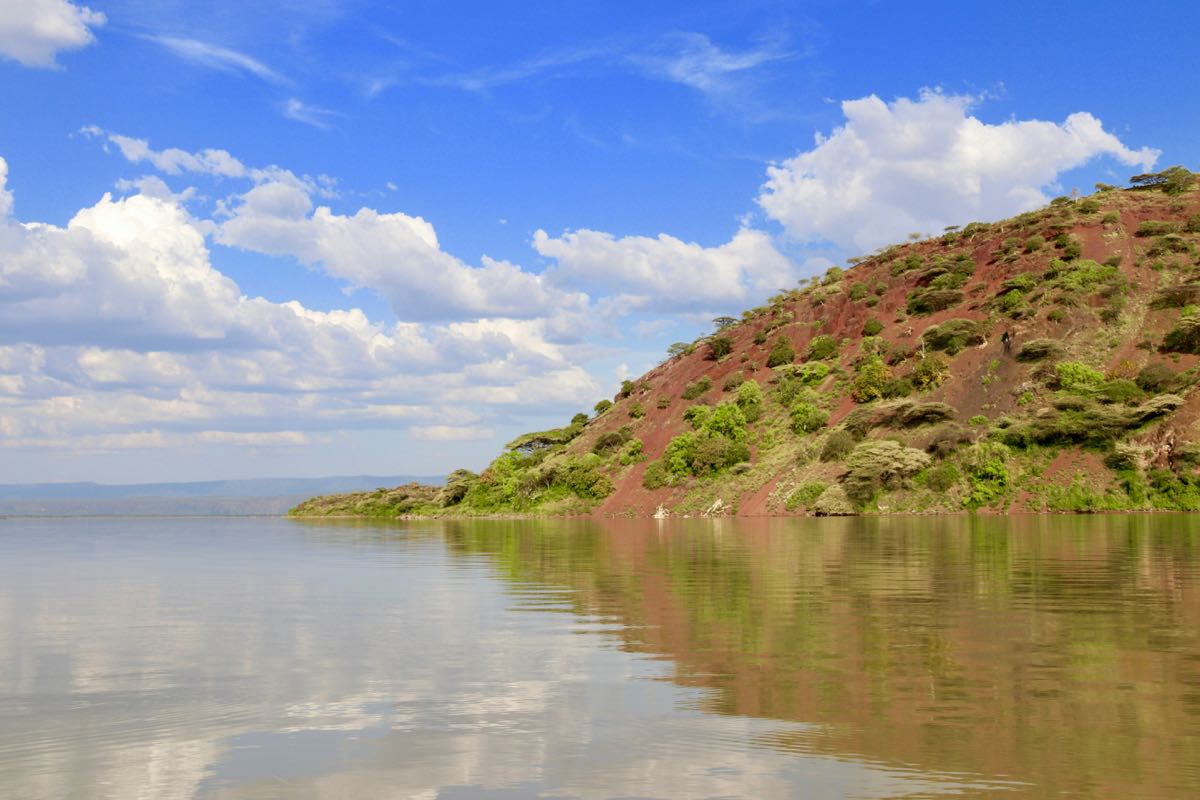
Hell’s Gate National Park is one of only two parks in Kenya (the other being Saiwa Swamp) where you can explore freely on foot or by bicycle among the wildlife. This fundamental difference from every other Kenyan safari park - no vehicle required, no guide mandatory for the main circuit - makes Hell’s Gate a uniquely accessible and affordable wildlife experience.
The park covers 68km² in Kenya’s Rift Valley, adjacent to Lake Naivasha, 90km from Nairobi. Named for a narrow break in the valley wall through which geothermal steam vents, the park’s landscape of volcanic columns, steep gorges, and open grassland inspired the setting for Disney’s animated film The Lion King.
Cycling the Park
Bicycle hire at Elsa Gate costs approximately KES 300–500 per hour. The main circuit road runs approximately 22km through the park - a flat, manageable loop. Most cyclists complete the full loop in 3–4 hours at a relaxed pace with wildlife stops.
Cycling conditions: The road is a mix of graded gravel and packed earth - no technical sections. Road bikes are not suitable; the hire bikes are basic mountain bikes adequate for the terrain. Consider bringing your own bike lock if you plan to stop at the gorge entrance.
Wildlife on the cycling route:
The park’s wildlife is unusually approachable from a bicycle - vehicles seem threatening, but cyclists less so. Common sightings:
- Zebra: Groups of 10–30 regularly cross or graze alongside the road
- Maasai giraffe: Feeding on acacia trees, often 5–10m from the road
- Eland: Africa’s largest antelope - lumbering but fast when startled
- Buffalo: Present but generally move away from cyclists. Keep reasonable distance.
- Thomson’s and Grant’s gazelle: Very common throughout
- Hartebeest: Seen in small herds on the open grassland
- Waterbuck: Near the seasonal stream areas
- Baboons and vervet monkeys: In the fig trees near the gorge entrance. Secure your bags - they will investigate unattended food.
- Hyrax: Visible on the rocks of Fischer’s Tower and Central Tower
No large predators: Hell’s Gate has no lions or leopards (the open terrain and cycling access makes predator presence incompatible). This is explicitly what makes cycling here safe.
Birds: Lammergeier (bearded vulture), Verreaux’s eagle, augur buzzard, and various raptors circle the volcanic columns. Ostriches are common on the open grassland.
The Gorge Walk
The Hell’s Gate Gorge is the park’s most dramatic feature - a narrow canyon carved by geothermal activity and water erosion. The walls rise 30–40m and close to just 2–3m wide at certain points. Hot springs and steam vents emerge at the bottom. The rock formations are extraordinary.
Entry and guide: A guide is mandatory at the gorge entrance (KES 800–1,500 per group of up to 8 people). This is not optional - rangers enforce it at the gorge entrance. The guide fee is well worth it: the guides know the path, manage water conditions, and add considerable context.
Duration: 2–3 hours for the full gorge walk. The gorge exits onto the road south of the main circuit - arrange to meet your bicycle there or walk back along the road.
Conditions: The gorge floor involves scrambling over rocks, occasional wading through ankle-deep water (deeper after heavy rain), and squeezing through narrow passages. Closed-toe shoes that can get wet are essential - sandals are not adequate. The gorge is not suitable for people with significant mobility limitations.
After the gorge: The Olkaria Geothermal Spa at the gorge exit offers hot spring pools for soaking tired muscles after the walk (entry approximately KES 1,500). Bring a towel.
Fischer’s Tower and Central Tower
Two volcanic rock pillars stand at the park’s centre. Fischer’s Tower (25m) and Central Tower (15m) are classic rock climbing venues - the trachyte rock is solid and well-featured.
For trekkers: The base of Fischer’s Tower is a short walk from the road. The hyrax colonies on the rock are interesting, and the tower makes a good photography backdrop. No technical equipment required to visit the base.
For climbers: Both towers have established traditional climbing routes. British Very Difficult (approximately 5.5 American) is the starting grade. A local trad guide can be arranged at the gate (approximately KES 2,000–3,000/day) - they can bring equipment but climbers with their own gear will be better prepared.
Practical Guide
Getting there from Nairobi (90km):
- By car: Nairobi–Nakuru highway to Naivasha exit, then south towards Olkaria. The Elsa Gate is well-signposted. Approximately 1.5 hours.
- By public transport: Matatu from Nairobi to Naivasha town (KES 150–200, 1.5 hours), then boda-boda or taxi to Elsa Gate (approximately KES 500–700, 20 minutes).
Entry fees: Approximately USD 26 per adult non-resident per day as of 2026. Pay online at kws.go.ke or at the gate. For a broader overview of the park’s wildlife and geology, see our Hell’s Gate National Park guide. Guided Kenya day tours from Nairobi that include Hell’s Gate and Lake Naivasha in a single day are also available.
What to bring:
- Closed-toe shoes suitable for getting wet (for the gorge)
- Water - at least 2 litres for the full day
- Sunscreen (no shade on the cycling circuit)
- Small pack for gorge essentials
- Camera
- KES cash for guide fees and spa (no card reader at the gorge entrance)
Time allocation:
- 3–4 hours for the cycling circuit (relaxed pace with stops)
- 2–3 hours for the gorge walk
- 1 hour for the geothermal spa (optional)
- Allow a full day (6–8 hours in the park)
Combining with Lake Naivasha
Lake Naivasha is 5km north of Hell’s Gate. Crescent Island on the lake (boat access from Hippo Point, approximately KES 1,500) offers a walking safari with giraffe, zebra, and wildebeest - no fencing, no vehicles, no predators. A natural half-day pairing with Hell’s Gate. Hippo Point itself has hippos visible at the water’s edge.
Most Lake Naivasha accommodation can arrange transport to and from Hell’s Gate as part of a day trip - worth asking.
Where to Stay
Hell’s Gate has no accommodation inside the park. Lake Naivasha (5km away) has a full range:
Search hotels in Kenya on Booking.com
Budget:
- Camp Carnelley’s (camping and bandas on the lake shore, from KES 2,000/night) - the backpacker favourite on Lake Naivasha
- Naivasha Sopa Resort camping (from KES 1,500/night)
Mid-range:
- Lake Naivasha Country Club (historic hotel, from approximately KES 12,000/person/night, full board)
Upmarket:
- Crater Lake Tented Camp (private crater lake inside a conservancy, from approximately KES 25,000/person/night)
For a full day trip from Nairobi combining Hell’s Gate with Lake Naivasha, see our Lake Naivasha guide. For another Rift Valley hike, the Mount Longonot hike is 30km away and can be combined on a two-day Naivasha trip. For where to stay near Hell’s Gate and the lake, the Nakuru hotels guide has options in the broader Rift Valley corridor.