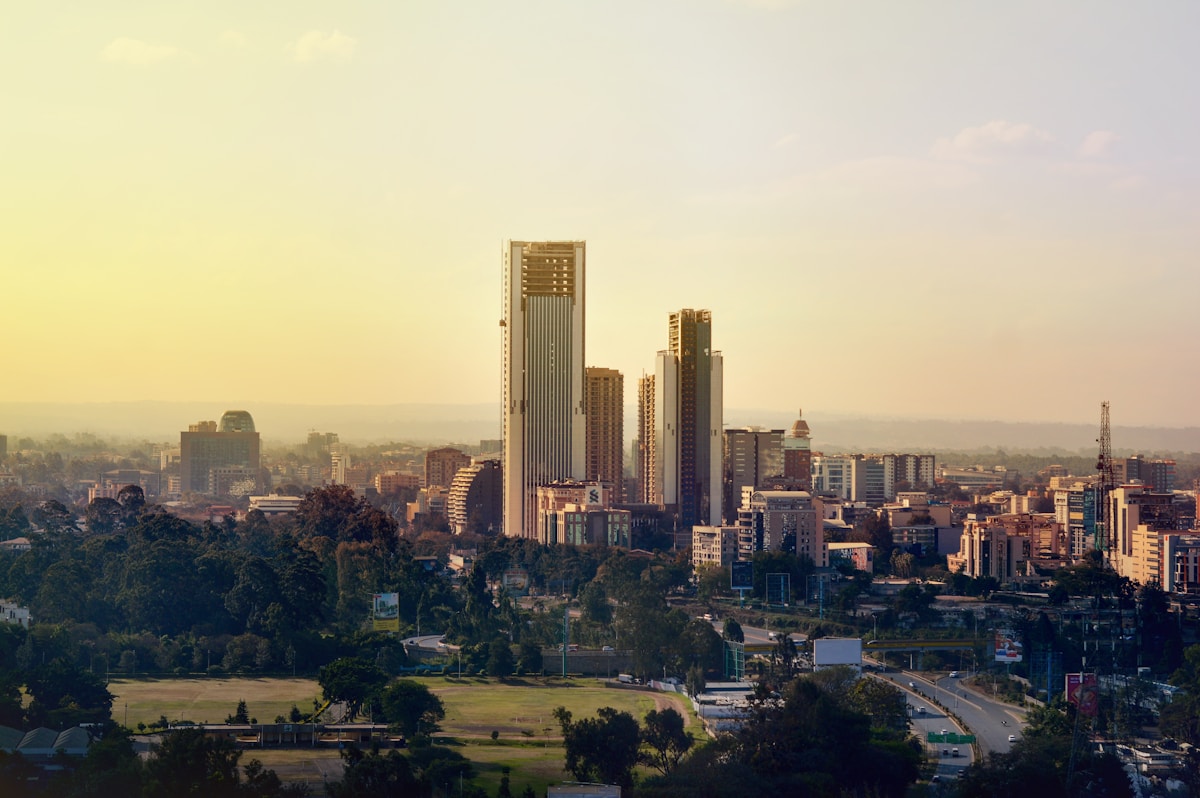
Nairobi: Kenya's Capital City Guide
Planning a trip to Nairobi? Wildlife in the city, giraffes at eye level, East Africa's best food scene: complete guide with hotels and day trips.
Guides for Nairobi
Nairobi is one of Africa’s most dynamic cities - a metropolis of four million people built at 1,795m above sea level, with a functioning national park on its doorstep and one of the continent’s fastest-growing tech sectors. It is also the gateway to Kenya’s safari circuit and the coast.
Getting There
By air: Jomo Kenyatta International Airport (NBO) handles all international flights. Kenya Airways, Ethiopian Airlines, Emirates, British Airways, KLM, and Turkish Airlines all serve the city with direct or one-stop routes from Europe, the Middle East, North America, and Asia. The airport is 15km from the city centre.
From the airport: The SGR train (KES 100, approximately 30 minutes) is the cheapest option to Nairobi Central station. Uber or Bolt cost KES 1,500–3,000 depending on traffic. Journey time by road is 30–90 minutes.
Getting Around
Nairobi’s main neighbourhoods for visitors are:
- CBD (Central Business District) - government buildings, budget hotels, Maasai Market
- Westlands - restaurants, bars, upmarket hotels, malls
- Karen - leafy suburb, Giraffe Centre, Karen Blixen Museum
- Gigiri - UN complex, embassies, Village Market
- Kilimani - mid-range hotels and apartments
Uber and Bolt are the safest and most predictable transport options. Fares within the city centre and Westlands run KES 150–400. Matatus (shared minibuses) are cheaper but confusing for first-time visitors.
Things to Do
Nairobi National Park is 7km from the city centre - the only national park in the world directly adjacent to a capital city. Lions, rhinos, leopards, buffalo, and giraffe roam against a backdrop of city skyscrapers. Entry fee approximately KES 1,000 for foreign residents, USD 60 for non-residents as of 2026. Open daily 6am–6pm. See our Nairobi National Park wildlife guide for a full species list and tips on the best game-viewing spots inside the park. For morning game drives and guided tours in Nairobi, book in advance to secure your preferred time slot. If you’re arriving soon and still need to lock in activities, our last-minute Kenya tours page lists Nairobi day trips and Giraffe Centre visits with confirmed availability updated twice daily.
Giraffe Centre (African Fund for Endangered Wildlife) - feed endangered Rothschild giraffes from an elevated platform at eye level. Located in Karen. Entry approximately USD 15 as of 2026. Open daily 9am–5pm. Book online at giraffecentre.org. Many Nairobi city tours combine the Giraffe Centre with the David Sheldrick Wildlife Trust in a half-day excursion.
David Sheldrick Wildlife Trust - elephant orphanage caring for orphaned baby elephants. Public visits daily 11am–noon. Entry approximately USD 10. Located at the Nairobi National Park main gate. Book online in advance.
Nairobi National Museum - Kenya’s main natural history and cultural museum. Houses exhibits on Kenya’s prehistory, colonial history, and natural world. Entry KES 1,500 for non-residents. Located near Museum Hill. Open daily 9:30am–5:30pm.
Maasai Market - rotating open-air craft market selling Maasai jewellery, carvings, textiles, and souvenirs. Held Fridays at the CBD (City Square) and various other locations on different days. Prices are negotiable.
Where to Eat
Local/budget: Mama Oliech’s in Hurlingham serves legendary Kenyan fish, ugali, and sukuma wiki (approximately KES 300–600 per meal). Nyama choma joints on Ngong Road charge approximately KES 600–900 per kilo of goat or beef.
Mid-range: Java House (multiple locations) is the most reliable chain for breakfast, coffee, and all-day meals, with prices around KES 500–1,200. Artcaffe in Westlands offers similar quality with a broader menu.
Upmarket: Carnivore Restaurant in Langata (approximately KES 3,500–5,000 per person) serves African game meats including ostrich and crocodile. The Talisman Restaurant in Karen is the go-to for long lunches among Nairobi’s expat community (KES 2,000–4,000).
Where to Stay
Budget (KES 2,500–5,000/night): Nairobi Backpackers in Milimani is a reliable hostel with dorms and private rooms. Urban Eatery & Hotel in Westlands is clean and central.
Search hotels in Nairobi on Booking.com
Mid-range (KES 6,000–15,000/night): Trademark Hotel in Gigiri is well-located near the Village Market with strong security. Ole Sereni Hotel overlooks Nairobi National Park with excellent game-viewing from the restaurant.
Upmarket (KES 20,000+/night): Giraffe Manor in Karen (book months in advance) is famous for resident giraffes that visit at breakfast and dinner - from approximately USD 650 per person per night full board. The Tribe Hotel in Gigiri offers boutique luxury from approximately KES 25,000.
Day Trips from Nairobi
Nairobi National Park: The only national park adjacent to a major capital - big game within 20 minutes of the city centre.
Hell’s Gate National Park (90km west, 1.5 hours) - cycling and walking in a gorge, geothermal activity. Day trip.
Lake Naivasha (90km northwest, 1.5 hours) - hippos, boat trips, Crescent Island walking safari. See the Lake Naivasha trekking guide for full details.
Machakos (65km southeast, 1 hour) - Akamba woodcarving cooperative, People’s Park. See the Machakos city guide.
Thika (45km north, 1 hour) - Blue Posts Hotel and falls, pineapple plantation scenery. See the Thika city guide.
Practical Information
Currency: KES (Kenyan Shilling). ATMs widely available throughout the city. 1 USD ≈ KES 130 as of 2026. USD is accepted at larger hotels and many safari operators.
Tipping: Expected at restaurants (10% is standard), in hotels for porter services (KES 100–200), and for game drive guides (KES 500–1,000 per day is the norm at most camps).
Safety: Use Uber or Bolt exclusively - never hail unlicensed street taxis. Avoid the River Road and Eastleigh areas after dark. Keep smartphones and expensive cameras out of sight in the CBD and in crowded areas.
Health: Malaria risk in Nairobi is very low (city is above 1,800m) but exists in lower areas around the city. Yellow fever vaccination required if arriving from an endemic country. Check current requirements before travel at the Kenya government health portal.
Connectivity: Excellent mobile coverage throughout the city. Safaricom 4G is the most reliable network. Buy a Safaricom SIM at the JKIA arrivals hall (approximately KES 100, ID required). M-Pesa mobile money is accepted almost universally in Kenya - worth activating even for short trips. For a full rundown on SIM options, see our Kenya eSIM and SIM card guide.
When to visit: Nairobi’s best safari-combination months are January–March and July–October, when the dry season makes parks accessible and wildlife viewing easiest. The shoulder period in November offers lower prices and quieter lodges - see our visiting Kenya in November guide for detail. For the driest, clearest conditions ideal for Kilimanjaro views from nearby Amboseli, see our visiting Kenya in January guide.
For planning your time in the city, see our Nairobi hotels guide and 3-day Nairobi itinerary.
Frequently Asked Questions
- What is the best time to visit Nairobi?
- Nairobi is pleasant year-round thanks to its elevation at 1,795m. The dry seasons (January–March and July–October) are the best for combining city visits with safari travel. Temperatures stay in the 18–26°C range throughout the year.
- Is Nairobi safe for tourists?
- The main tourist areas - Westlands, Karen, the CBD, and Gigiri - are generally safe with standard precautions. Avoid walking alone after dark, use Uber or Bolt rather than hailing taxis on the street, and keep valuables out of sight. Petty theft and bag snatching do occur in crowded areas.
- How do I get from Nairobi airport to the city centre?
- The SGR Madaraka Express train from Nairobi Airport Station to Nairobi Central takes approximately 30 minutes and costs KES 100 as of 2026. Uber and Bolt take 30–60 minutes depending on traffic and cost approximately KES 1,500–3,000. Avoid unmarked taxis.
- What currency do I need in Nairobi?
- The Kenyan Shilling (KES) is the local currency. USD is widely accepted in hotels and upmarket restaurants but at less favourable rates. ATMs are readily available throughout the city. As of 2026, 1 USD is approximately KES 130.
Upcoming Events in Nairobi
Nairobi Show 2026: ASK Agricultural Fair Dates, Tickets and Highlights
nairobi
Nairobi International Show 2026: 25 Sep–4 Oct at ASK Showground, Ngong Road. Entry prices, livestock competitions, trade halls, and what to see in 10 days.
Nairobi Fashion Week
nairobi
Nairobi Fashion Week 2026, October. East Africa's premier fashion showcase: African designers presenting new collections in the capital.
Jamhuri Day - Kenya Independence Day
nairobi
Jamhuri Day 2026, 12 December. Kenya marks independence with military parades at Nyayo Stadium and public celebrations nationwide.
Book an experience
Top experiences in Nairobi
Explore the best tours and activities in Nairobi - instant confirmation, free cancellation on most bookings.