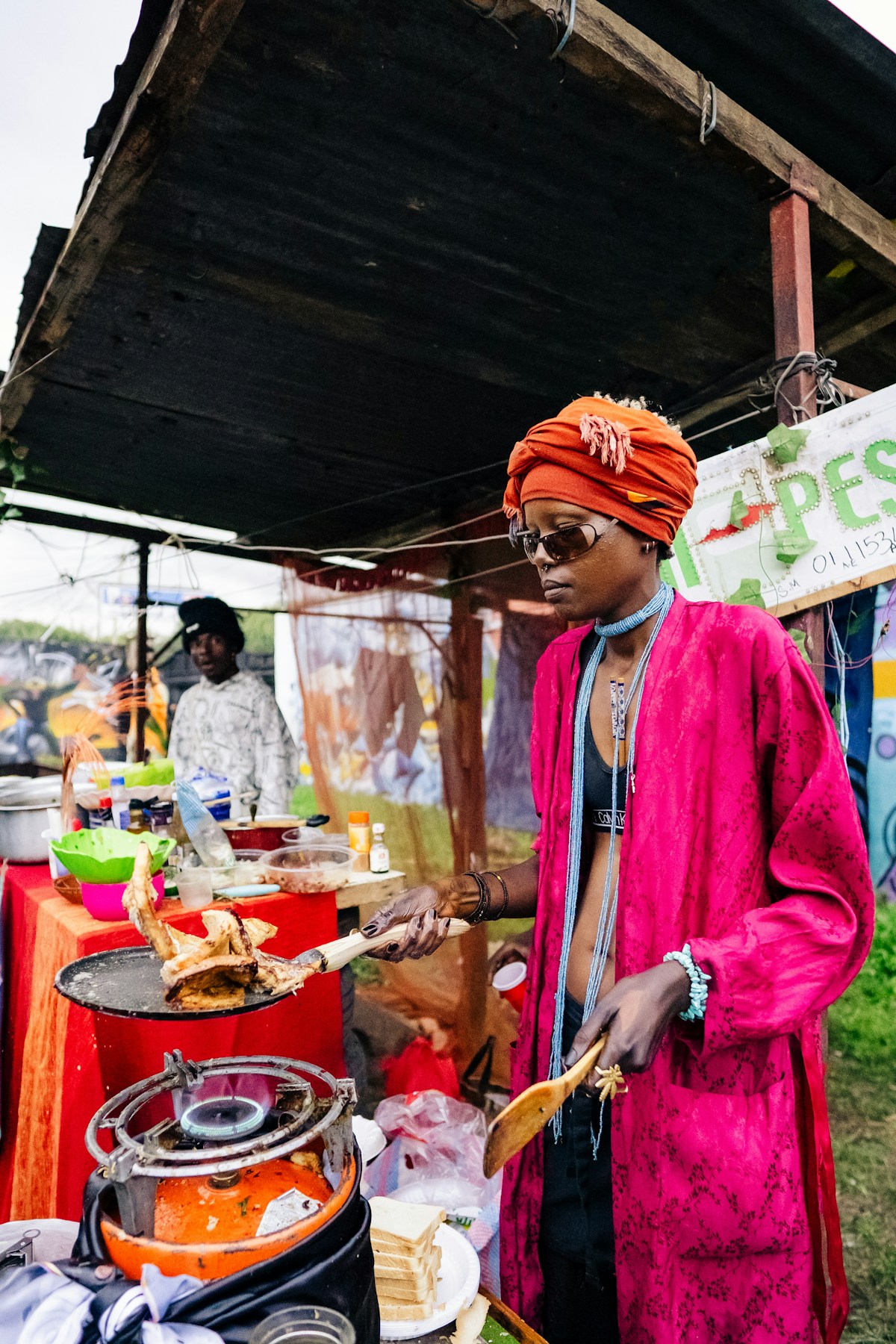
Nairobi’s food scene runs from roadside smoky nyama choma joints that have been feeding the city for decades through to a growing crop of modern Kenyan restaurants reinterpreting local ingredients for a new audience. The city’s Indian community has left a strong mark - chapati, samosas, and biryani are woven into everyday Nairobi eating. And the coffee scene, built on some of the world’s best Arabica beans grown in the Central Highlands, has genuinely arrived.
This guide covers the dishes you should eat, the price you should expect to pay, and specific places to find them.
The Core Dishes
Nyama Choma
Kenya’s national meal in all but official title. Nyama choma means “roasted meat” in Swahili - typically goat or beef, slow-roasted over charcoal, served with salt, kachumbari (a fresh tomato and onion relish), and ugali or chips. The meat arrives at the table in large pieces and you tear and eat with your hands.
The quality marker is the charcoal smoke, the freshness of the meat (nyama choma is always made to order, never pre-cooked), and the fat-to-lean ratio - Kenyans prize fatty cuts for nyama choma, not lean ones.
Where to eat it:
- Carnivore Restaurant (Langata Road, near Wilson Airport): Nairobi’s most famous meat restaurant, open since 1980. Spit-roasted meats including game options (farmed crocodile, ostrich) on rotating skewers. All-you-can-eat from approximately KES 4,500–5,500/person as of 2026. Touristy but genuinely good. Book ahead at weekends.
- Nyama Mama (Westlands and Junction Mall): Upmarket modern Kenyan, nyama choma reimagined with quality cuts and better sourcing. From approximately KES 1,800–2,500/person including sides.
- Local butchery/nyama choma joints in Ngara and Eastlands: The real version costs approximately KES 600–1,000/kg, ordered by weight, eaten on-site. Look for the smoke.
Ugali
A stiff maize porridge cooked to a solid consistency and eaten with the right hand, pinched and used to scoop stew, sukuma wiki, or meat. Ugali is caloric, filling, and cheap - the everyday staple of most Kenyans regardless of income. A portion of ugali with sukuma wiki (see below) at a local canteen costs approximately KES 80–150.
It has no strong flavour of its own; the point is texture and substance. Eating ugali for the first time is a fundamental Kenya experience - most visitors find it more interesting than they expected.
Sukuma Wiki
Literally “push the week” in Swahili - the name reflects its role as an affordable vegetable to stretch meals through to the end of the week. Sukuma wiki is kale or collard greens, wilted in a pan with onion, tomato, and sometimes a little butter. Eaten alongside ugali, nyama choma, or beans.
At local restaurants and canteens, sukuma wiki appears on almost every table. It costs approximately KES 50–100 as a side dish.
Chapati
A flatbread introduced by the large Indian community that built the Uganda Railway in the late 19th century and never left. Kenyan chapati is slightly thicker and doughier than its South Asian equivalent, cooked on a dry griddle and eaten with beans, stew, or tea for breakfast. A chapati costs approximately KES 30–50 at local eateries.
Where: Any local canteen or roadside breakfast spot will serve chapati. For a better version, street stalls in Ngara and Eastlands sell freshly made chapati from approximately 6am.
Pilau and Biryani
Swahili pilau is rice cooked with pilau masala spice blend (cinnamon, cardamom, cumin, cloves, black pepper), typically with beef or chicken and fried onions. It is a Coast dish that migrated to Nairobi’s urban food culture and is now a staple at many local restaurants.
Biryani - Kenyan style, influenced by Indian coastal cooking - is available at Indian restaurants in Westlands and Parklands.
Where to eat pilau:
- Highway Inn (Uhuru Highway, near University of Nairobi): Old Nairobi institution, famous for pilau and nyama choma. Approximately KES 500–800 for a full meal. Local, no frills, always busy.
Mandazi
A lightly sweetened fried dough, roughly triangular, eaten for breakfast with tea (chai). Found at every street corner in the morning. One mandazi costs approximately KES 10–20.
Street Food and Markets
City Market (Biashara Street)
The main covered market in central Nairobi. The upper floor has a food section with local canteens serving ugali, sukuma wiki, beans, and nyama choma from approximately KES 150–300 for a full meal. Busy at lunch, quieter in the morning. The market itself is worth exploring for fresh produce and Maasai craft stalls.
Kenyatta Market (Adams Arcade)
A large local market in the Kilimani/Adams Arcade area with fresh produce, butcheries, and small cooking stalls. Better for ingredients than for sit-down eating, but the roast maize sellers outside are the real deal.
Nairobi Street Kitchen (Kenyatta Avenue Food Festival)
Periodic street food events in central Nairobi bringing together food vendors, food trucks, and craft beer. Check local listings as dates vary.
The Nairobi Coffee Scene
Kenya grows some of the world’s most acclaimed Arabica coffee - SL28 and SL34 varieties from the Central Highlands estates around Nyeri, Kirinyaga, and Murang’a regularly appear on specialty roasters’ menus globally. For years, almost all of it was exported. That is slowly changing.
Artisan coffee shops in Nairobi:
- Dormans Coffee (multiple locations including Village Market and Westgate): Kenya’s original coffee chain, been roasting Kenyan beans since 1950. A well-made flat white costs approximately KES 400–500. Reliable, consistent, not pretentious.
- Java House (multiple locations): The most ubiquitous coffee chain in Nairobi, found in nearly every mall and major commercial area. Quality is solid - they source Kenyan beans and train baristas properly. Good for working. Coffee from approximately KES 350–500.
- The Arbor (Westlands, 4th Parklands Avenue): Independent specialty café with single-origin Kenyan beans, pour-over and espresso. One of the better cups in the city. Coffee from approximately KES 400–600.
- Cultivar (Karen): Specialty coffee with beans sourced directly from Kenyan farms. Excellent for filter coffee. Karen location means a car or rideshare is needed. Coffee from approximately KES 450–650.
- Brew Bistro (The Alchemist, Westlands): Coffee, cocktails, and live music in an outdoor space. More of an evening venue but excellent during the day too.
For the full experience, a coffee cupping tour to the Central Highlands farms (approximately 2 hours from Nairobi) is available through specialist operators - worth the half-day trip. For guided food tours in Nairobi covering markets, street food, and nyama choma joints, several operators offer half-day options.
Modern Kenyan Restaurants
A generation of Kenyan chefs and restaurateurs is now cooking contemporary food that uses local ingredients creatively, without abandoning what makes Kenyan food distinctive.
- Talisman (Karen): Long-running restaurant in a colonial-era garden, one of the best overall dining experiences in Nairobi. Creative menu mixing local and international. Mains approximately KES 2,000–3,500 as of 2026.
- Nyama Mama (Westlands): See nyama choma section above. The contemporary version of traditional Kenyan comfort food. Mains approximately KES 1,800–2,500.
- Mama Oliech (off Ngong Road): Famous for fresh tilapia fish from Lake Victoria - Kenyan style, whole fried or stewed, with ugali and sukuma wiki. No frills, always busy. Fish dish approximately KES 800–1,200.
- The Cultured Goat (Kilimani): Small modern restaurant doing updated versions of Kenyan classics. A good option for travellers wanting something between a tourist restaurant and a local canteen.
Where Budget Travellers Eat
For full meals under KES 500, the network of local canteens (sometimes called “hotels” in Kenyan English regardless of size) near matatu stages, bus stations, and markets is the best bet. Look for places with a chalkboard menu and a steady stream of Kenyans eating - the turnover keeps food fresh.
Search hotels in Nairobi on Booking.com
The Accra Road / River Road / Latema Road area in central Nairobi has the densest concentration of budget eating in the city centre. A plate of ugali, sukuma wiki, and beans with a chapati costs approximately KES 120–200.
Avoid pre-packaged food at petrol stations and mall food courts if you are watching budget - the markup is significant for inferior quality.
Eating Out: Practical Notes
Payment: Most mid-range and upscale restaurants accept card. Street food and local canteens are cash only - carry KES notes in small denominations.
Tipping: Not compulsory but appreciated. Approximately 10% at sit-down restaurants is standard among local middle-class diners.
Water: Bottled water is the safe default. Most restaurants in the mid-range tier include filtered or bottled water in the service.
Vegetarian options: More available in Nairobi than in rural Kenya. Indian restaurants in Westlands and Parklands are the easiest option for vegetarians. Local canteens always have a beans or lentil dish alongside the meat options. For the full vegan and vegetarian guide to Nairobi, see our vegan Nairobi guide.
For the full Nairobi restaurant rundown with neighbourhood-by-neighbourhood picks, see our Nairobi restaurants guide. For the broader Kenyan food culture and traditional dishes beyond the capital, see our Kenyan cuisine guide. For planning your full Nairobi visit, see our Nairobi city guide.