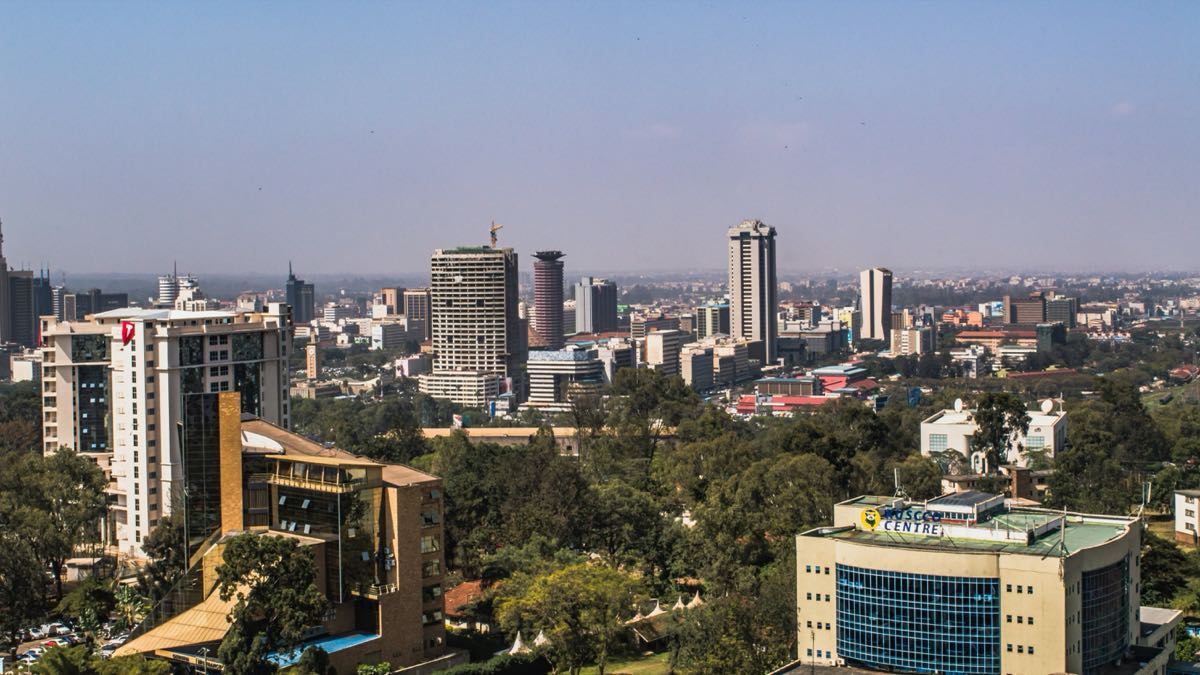
Nairobi is more than a transit stop between international flights and safari camps. It has a full day’s worth of world-class wildlife encounters within 30 minutes of the CBD, a growing arts scene, excellent restaurants, and one of East Africa’s best national parks sitting 7km from the city centre.
Search hotels in Nairobi on Booking.com
Wildlife and Nature
Giraffe Centre
Entry: USD 15 non-resident adults / KES 500 children (as of 2026) Opening hours: 9am–5pm daily Location: Gogo Falls Road, Langata (approx 20km southwest of CBD)
The African Fund for Endangered Wildlife runs this conservation centre for the endangered Rothschild giraffe. Visitors walk up to an elevated wooden platform and feed the resident giraffes by hand or mouth - the giraffes are confident and will take food directly from your lips, which is as strange as it sounds. The centre currently houses 13 giraffes and also has a resident warthog colony. Allow 45–60 minutes. Book tickets online to avoid queues during peak season.
David Sheldrick Wildlife Trust (DSWT)
Entry: Free (donations encouraged and appreciated) Visit hours: 11am–noon daily (orphan visiting hour only) Location: Mbagathi Drive, Langata (adjacent to Nairobi National Park main gate)
The elephant orphanage at DSWT rescues infant elephants whose mothers have been killed by poaching or human-wildlife conflict. The daily visiting hour at 11am–noon is when the young elephants are brought out for feeding and mud-bathing. Arrive by 10:30am to secure a good viewing position. The foster-parent programme lets you support a specific elephant for USD 50/year. The orphanage is a 5-minute drive from the Giraffe Centre, so combine them in the same morning.
Nairobi National Park
Entry: Approx USD 45 non-resident vehicle + USD 35 non-resident pp (as of 2026) Opening hours: 6am–7pm daily Location: Langata Road, 7km from CBD
Nairobi National Park is the world’s only national park sharing a boundary with a capital city. The open savanna holds lions, cheetahs, leopards, black and white rhinos, buffalo, hippos, giraffe, zebra, and over 400 bird species. The CBD skyline forms the backdrop for game drive photographs. Self-drive is possible with a standard saloon car on the main roads. A guided drive through operators like Let’s Go Travel runs approximately KES 4,000–6,000 per person on top of park fees. Early morning (6–9am) is the best time for predator activity.
Karura Forest
Entry: KES 600 non-resident adults / KES 300 resident adults (as of 2026) Opening hours: 6am–6pm daily Location: Off UN Avenue, Gigiri (approx 12km north of CBD)
Karura is 1,000 hectares of indigenous forest inside the city. Trails wind through riverine forest to two small waterfalls. Cycling is popular - bikes are available for hire at the main gate for approximately KES 500–800/hour. Early morning walks often produce colobus monkeys, bushbuck, and dozens of forest bird species. The forest is popular with Nairobi joggers from 6–8am.
Cultural and Historical
Karen Blixen Museum
Entry: KES 1,500 non-resident adults / KES 500 resident adults (as of 2026) Opening hours: 9:30am–6pm daily Location: Karen Road, Karen
Karen Blixen (pen name Isak Dinesen) ran a coffee farm here from 1914 to 1931 and wrote about it in Out of Africa. The colonial farmhouse has been restored and a guided tour takes approximately 45–60 minutes through period-furnished rooms and the farm grounds. The area still feels genuinely rural despite being inside the Nairobi metropolitan area.
Nairobi National Museum
Entry: KES 1,500 non-resident adults / KES 500 resident adults (as of 2026) Opening hours: 9:30am–6pm daily Location: Museum Hill Road, adjacent to the city centre
The national museum covers Kenya’s natural history, archaeology, and ethnography. The hominid skull collection is significant - fossils including Homo habilis were found at East African Rift Valley sites. The Snake Park adjacent to the museum houses Kenya’s venomous and non-venomous reptile species. Allow 2–3 hours for a thorough visit.
Bomas of Kenya
Entry: KES 1,200 non-resident adults / KES 300 resident adults (as of 2026) Performance times: 2:30pm–4:15pm weekdays, 3:30pm–5:15pm weekends Location: Forest Edge Road, Langata (near Nairobi National Park)
Bomas presents traditional homesteads (bomas) from Kenya’s 42 ethnic groups and puts on live performances of traditional music and dance. The afternoon show is a genuine showcase of Maasai, Kikuyu, Luo, Luhya, and Kamba performance traditions. It’s popular with school groups but not in a way that diminishes the quality of the performances.
Kazuri Beads
Entry: Free Opening hours: 8am–5pm Monday–Friday, 9am–4pm Saturday Location: Karen (near Karen Blixen Museum)
Kazuri (Swahili for “small and beautiful”) is a women’s cooperative workshop producing hand-thrown ceramic beads and pottery. The factory tour is free and takes 20–30 minutes - you see the beads being formed, fired, hand-painted, and strung. The on-site shop sells finished pieces. Worth combining with the Karen Blixen Museum.
Markets and Shopping
Village Market (Limuru Road, Gigiri) is a large mall near the UN complex with a weekly Friday market. The craft market has Kenya’s most reliable selection of genuine Maasai beadwork, Kisii soapstone carvings, and Kikoi textiles. Prices are fixed at stalls but mild negotiation is accepted at outdoor market pitches.
Maasai Market (moves location by day - Tuesdays at Upper Hill, Fridays at Village Market, Saturdays at Yaya Centre) is an open-air craft market with competitive prices on beadwork, carvings, and textiles. Quality varies significantly - inspect items carefully.
Uhuru Park is a 12-hectare public park in central Nairobi, good for a free morning walk and people-watching. Pedalo boats operate on the central lake for approximately KES 300–500 per person per 30 minutes.
Practical Transport Tips
Karen cluster: Giraffe Centre, DSWT, Karen Blixen Museum, Kazuri Beads, and Bomas are all within 10km of each other in Karen/Langata. A hired car or Bolt for the full day costs approximately KES 5,000–8,000 and is significantly less stressful than managing individual Uber trips with luggage. Guided Nairobi day tours covering the Karen cluster can be booked through several operators, with transport included.
City centre attractions: Nairobi Museum and Uhuru Park are walkable from each other and from Serena Hotel and Stanley Hotel.
Uber and Bolt are the recommended transport options within the city. A typical city ride costs KES 300–1,000. Surge pricing applies on Friday evenings.
Matatus (shared minibuses) run every major route for KES 30–150 but routes and boarding points can be hard to navigate without local knowledge.
Book Nairobi Tours on GetYourGuide
| Tour | Duration | From price | What’s included |
|---|---|---|---|
| Nairobi National Park Half-Day Game Drive | 4–5 hours | From $45 | Shared 4WD, hotel pickup, professional guide. Park fees (~$52) at gate. |
| Full-Day Wildlife Circuit — NP + Giraffe Centre + Sheldrick | Full day | From $45 | Morning park game drive, elephant orphanage (11am), giraffe feeding platform |
| Nairobi National Park Day Tour (Klook) | Full day | Check pricing | Instant booking, 4WD with guide, Karen attractions circuit |
| Giraffe Centre Guided Tour with Transfer (Klook) | 2–3 hours | Check pricing | Round-trip hotel transfer, guided tour, giraffe feeding platform |
For accommodation options near these attractions, see our Nairobi hotels guide. For restaurant recommendations before or after sightseeing, see our Nairobi restaurants guide. The David Sheldrick Wildlife Trust and Giraffe Centre are Nairobi’s two best wildlife experiences and can be combined in a single half-day in Karen. For a full Nairobi city overview, see the Nairobi city guide.