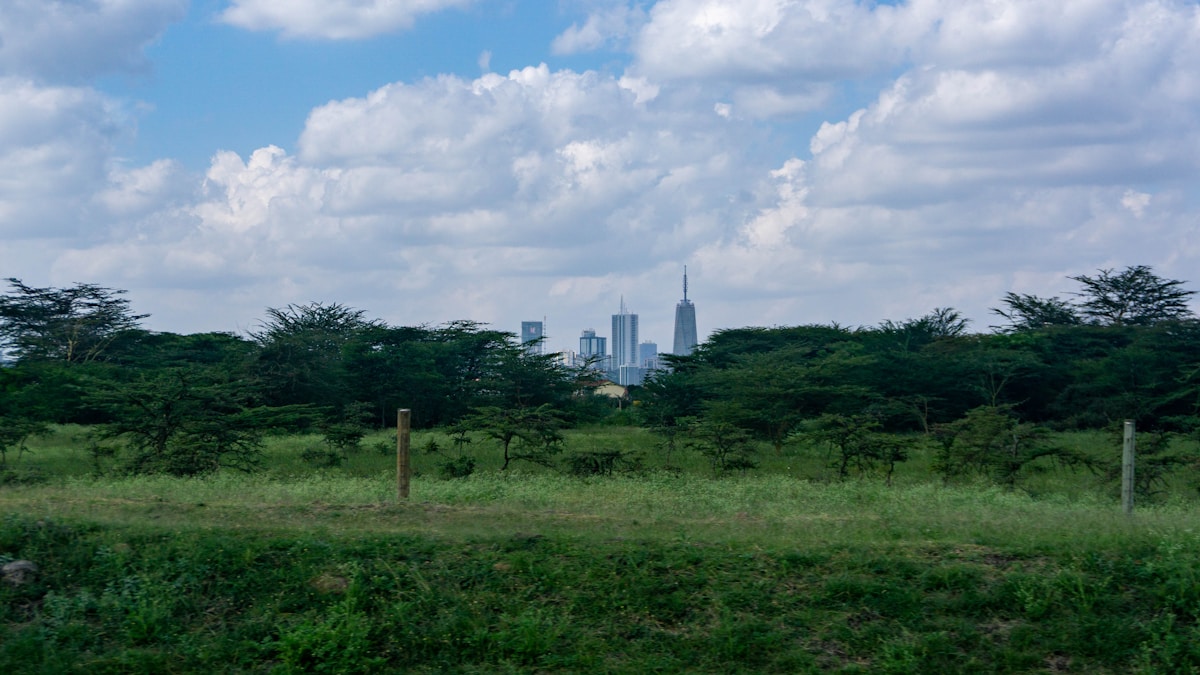
Nairobi covers a large area and its neighbourhoods each have a distinct character. Choosing where to base yourself shapes your budget, your commute to attractions, and your evening options considerably. This guide covers the main areas visitors actually use.
Karen
Character: Upmarket, spacious, low-rise Best for: Wildlife attractions, comfortable mid-range to luxury stays, longer visits
Named after Karen Blixen, the Danish author who farmed here in the early 20th century, Karen is Nairobi’s most pleasant residential suburb. Large plots, mature trees, and a general absence of skyscrapers give it a genuinely different feel from the city centre. Most of Nairobi’s flagship wildlife attractions sit here or nearby: the Giraffe Centre, the David Sheldrick Wildlife Trust, the Karen Blixen Museum, and Kazuri Beads are all within a few kilometres of each other.
Accommodation: The Karen Blixen Coffee Garden & Cottages (KES 12,000–18,000/night as of 2026) offers colonial-era atmosphere in an original farmhouse setting. Hemingways Nairobi (KES 40,000–80,000/night) is the area’s prestige option - a boutique hotel with 45 rooms, gardens, and some of Nairobi’s most reliable fine dining. Budget travellers will find fewer options in Karen, though Airbnb has good inventory in the KES 4,000–7,000 range.
Search hotels in Nairobi on Booking.com
Getting around: Karen has no matatu hub that’s convenient for tourists. An Uber or Bolt from the CBD costs approximately KES 700–1,200 and takes 30–50 minutes without traffic. Most visitors hire a car or negotiate a day rate with a driver (approximately KES 5,000–8,000 for a full Karen sightseeing day).
Westlands
Character: Cosmopolitan, dense, 24-hour energy Best for: Dining, nightlife, business travel, mid-range hotels
Westlands is Nairobi’s main commercial and entertainment district outside the CBD. Sarit Centre and Westgate Mall anchor the area’s retail offer. The restaurant and bar scene here is the most concentrated in Nairobi - Westgate’s food court, the ABC Place complex, and the strip along Woodvale Grove have Indian, Lebanese, Italian, Japanese, and Kenyan options all within walking distance.
Accommodation: Villa Rosa Kempinski (KES 22,000–35,000/night) is the area’s five-star option, reliably used by business travellers and international delegations. The Radisson Blu Nairobi Upper Hill is a 20-minute drive away but Westlands itself has options like Tribe Hotel (KES 15,000–25,000/night) and the Panari Hotel (KES 8,000–14,000/night).
Safety: Westlands is reasonably safe by day and early evening, but the later bar area around Alchemist and its surroundings requires standard urban awareness after midnight. Avoid displaying phones or cameras on the street at night. Use Uber for any journey after 10pm - do not walk between bars.
CBD (Central Business District)
Character: Dense, commercial, budget options Best for: Budget travellers, railway museum visits, transit stays
The CBD is where Nairobi’s grid of tower blocks and traffic congestion exists. It holds the city’s government buildings, the Nairobi National Museum (on its northern edge), the Railway Museum, Uhuru Park, and Jamia Mosque - a striking white minaret visible from most of the centre. Accommodation here runs from genuine backpacker hostels to mid-range business hotels.
Accommodation: Sarova Stanley (KES 15,000–22,000/night) and Serena Hotel (KES 18,000–28,000/night) are the CBD’s heritage hotels, both well maintained with good security. Budget options include Nairobi Backpackers (KES 1,500–3,500/night for dorms or budget doubles) on Milimani Road, just south of the CBD proper.
Safety: Petty theft is a genuine concern in the CBD, particularly on Tom Mboya Street and around the bus stations. Keep bags in front, avoid phone use while walking, and be alert in crowded areas. Do not walk in the CBD after dark - take Uber to any evening destination.
Kilimani
Character: Expat residential, cafe culture, mid-range Best for: Comfortable mid-range stays, cafe-hopping, quieter base
Kilimani sits southwest of Westlands and has become Nairobi’s main expat residential hub over the past decade. Ngong Road and its side streets are lined with coffee shops, international restaurants, and coworking spaces. Java House (a Kenyan coffee chain) has several branches here; so does Artcaffe and various independent cafes.
Accommodation: The Junction Mall area in Kilimani has several serviced apartment options suitable for stays of three nights or more. Boma Inn (KES 7,000–12,000/night) is a reliable mid-range hotel. Several guesthouses operate in the KES 4,000–7,000 range.
Kileleshwa
Character: Quiet residential, tree-lined, family-oriented Best for: Self-contained apartments, longer stays, visitors who want peace
Kileleshwa lies between Kilimani and Westlands and has little in the way of tourist infrastructure, but its quiet streets and relatively secure environment make it popular with longer-stay visitors renting apartments. Fewer restaurant options than Kilimani or Westlands but both are a short Uber ride away (KES 200–400).
Langata
Character: Large plots, safari-adjacent, residential Best for: Nairobi National Park access, Bomas of Kenya, wildlife visitors
Langata borders Nairobi National Park to the south and contains Bomas of Kenya, the David Sheldrick Wildlife Trust, and several upmarket guesthouses. It is quieter than Karen but with many of the same advantages for wildlife-focused visitors.
Transport Between Neighbourhoods
Matatus run all major corridors for KES 30–150 per journey. The main routes visible to visitors are the CBD–Westlands route (via Uhuru Highway) and the CBD–Karen route (via Ngong Road). Both operate from 6am to around 9pm. For anything outside daylight hours, Uber and Bolt are the standard option - both apps work reliably in Nairobi, and surge pricing rarely exceeds 1.5x during normal Friday evenings.
Ride-hail pricing guides:
- CBD to Westlands: KES 300–500
- CBD to Karen: KES 700–1,200
- Westlands to Kilimani: KES 250–450
- Karen to Langata: KES 200–400
For a full picture of Nairobi accommodation across budgets and areas, see our Nairobi best hotels guide and the detailed Nairobi hotels guide. For restaurants and cafes near your base, see our Nairobi restaurants guide. For the main attractions across these neighbourhoods, see our things to do in Nairobi guide. To explore Nairobi’s neighbourhoods with an experienced local guide, browse Nairobi city tours available by half-day or full-day.