Kenyan food is direct, honest, and often excellent when you know where to look. The national cuisine is centred on slow-cooked meat, maize-based staples, and coastal Swahili influences - a combination shaped by the country’s geography, agricultural history, and diverse ethnic groups.
Core Kenyan Dishes
Nyama Choma
Literally “burnt meat” in Swahili, nyama choma is slow-roasted meat - most commonly goat (mbuzi), beef (ng’ombe), or chicken - cooked over charcoal for 1–3 hours. The result is smoky, deeply flavoured, and eaten by hand in chunks torn from the bone.
A nyama choma meal is typically served with:
- Ugali - the maize starch base
- Kachumbari - raw tomato, onion, and chilli salad
- Sukuma wiki - dark leafy greens (collards) sautéed with onion
The social ritual of nyama choma is as important as the food itself. In Nairobi’s Carnivore restaurant (the famous upmarket version), and in thousands of local joints called “nyama choma restaurants,” this is how Kenyans celebrate, socialise, and do business. A kilo of goat runs approximately KES 600–1,200 depending on location; a kilo of beef approximately KES 500–900.
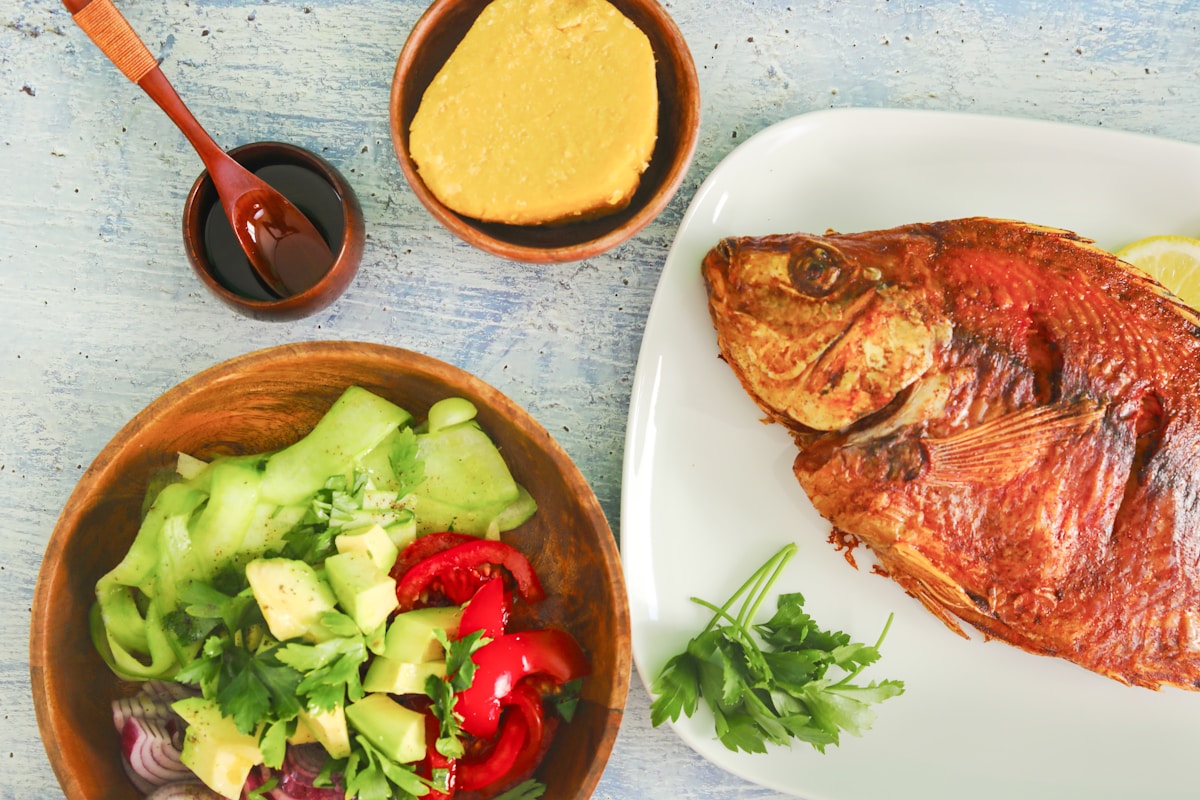
Ugali
Kenya’s most fundamental food - a stiff porridge of maize flour and water, cooked until it has a firm dough-like consistency. Ugali has almost no flavour of its own; its role is as a neutral starch base that absorbs the flavours of accompanying dishes.
Eating technique: pinch a small ball of ugali with your right hand, press your thumb into it to form a scoop shape, and use it to scoop stew or greens.
Variations: In western Kenya, sorghum or millet ugali is darker and has a more complex flavour. Both are served in the same way.
Sukuma Wiki
Kale or collard greens sautéed with onion and sometimes tomato. Inexpensive, nutritious, and eaten throughout Kenya as the standard vegetable accompaniment. The name means “stretch the week” in Swahili - a reference to its role as a cheap meal extender.
Pilau
A fragrant rice dish cooked with whole spices - cardamom, cinnamon, cloves, black pepper - and served with or without meat. Common at celebrations, particularly on the coast and among Kenyan Muslim communities. Mombasa pilau is considered the gold standard.
Mandazi
East African fried dough - triangular or round, slightly sweet, eaten for breakfast or as a snack. Served hot with chai (tea) or coffee. Made from flour, coconut milk, cardamom, and sugar. Available at any tea shop (kahawa stand) in Kenya for KES 20–50/piece.
Chai (Tea)
Kenya is a major tea producer and Kenyans drink chai constantly - a strong, milky, sweet brew made by simmering tea leaves, milk, sugar, and sometimes cardamom together. This is not a weak infusion of teabag-in-hot-water; Kenyan chai is a concentrated, intensely flavoured drink. It is served at every home, office, and tea stand. The correct response to being offered chai in Kenya is to accept it.
Mutura
Kenyan blood sausage - intestines stuffed with a mixture of minced meat, blood, and spices, then grilled over charcoal. A street food sold by vendors in Nairobi’s evening markets and outside bars. Not universally available in tourist restaurants but an authentic late-night Nairobi experience.
Githeri and Nyoyo
Githeri: Boiled maize and beans - a central Kenyan staple associated with the Kikuyu community. Simple, filling, cheap (approximately KES 100–200 at a local eatery).
Nyoyo: Similar to githeri but from western Kenya, sometimes with sweet potato or yam added.
Coastal Swahili Food
The Kenyan coast has a distinct food culture shaped by centuries of Arab, Indian, and Swahili culinary exchange:
Coconut rice (wali wa nazi): White rice cooked in coconut milk - creamy, rich, served with fish, meat, or vegetables. Standard in coastal restaurants.
Samaki (fish): The coast eats fresh fish daily. Whole fish grilled over charcoal, served with coconut rice and kachumbari. Varieties: tilapia (inland), kingfish, snapper, barracuda (coast). Approximately KES 400–800 for a whole grilled fish in a local restaurant.
Biryani: A spiced rice dish with meat (beef, chicken, or goat), slow-cooked with whole spices. Mombasa biryani is considered a separate tradition from Indian biryani - the coastal spice balance is distinctive. A festive dish, particularly popular for celebrations.
Mahamri: A sweetened bread roll made with coconut milk and cardamom, typically eaten for breakfast or tea. A Swahili coastal specialty available in Mombasa and Lamu.
Mishkaki: Spiced meat skewers grilled over charcoal - similar to kebabs, typically beef or goat. Sold at coastal street food stalls and in Mombasa’s Old Town eating areas.
What to Drink
Tusker Lager: Kenya’s most famous beer (made by East African Breweries, now owned by Diageo). Available everywhere. A pale lager best served cold with nyama choma. The beer’s name comes from a 1923 incident when the brewery’s founder was killed by an elephant.
Dawa Cocktail: A Kenyan classic - vodka, honey, lime, and sugar. The name means “medicine” in Swahili. Served at virtually every tourist bar in Nairobi and the coast.
Fresh fruit juice: Abundant in Kenya - passion fruit (the best), mango, pineapple, and watermelon. Freshly pressed at juice bars (approximately KES 100–200/glass).
Chai and Coffee: Both produced in Kenya and of excellent quality. Kenya AA coffee is world-renowned - look for it by name.
Search hotels in Kenya on Booking.com
Where to Eat
Local restaurants (“mama mboga” style - simple, home-cooked meals): KES 200–400 for a full plate Mid-range restaurants: KES 800–2,000 for mains Tourist/upmarket: KES 2,000–5,000+ for mains
Best eating areas:
- Nairobi: Westlands, Karen, Kilimani for variety - see our Nairobi restaurants guide for specific recommendations. Nairobi food tours are a good way to cover multiple neighbourhoods and dishes in a half-day.
- Mombasa: Old Town for Swahili food - see also the Mombasa Swahili food guide
- Diani Beach: Independent restaurants along the beach road - see our Diani beach guide for a full rundown
- Lamu: Guesthouses and small restaurants in the Old Town
For the full street food scene across Kenya, see our Kenyan street food guide. If you want to explore the coast’s food culture with a local, Mombasa food and city tours combine Old Town, Swahili cooking, and seafood markets in a single outing. Vegan visitors should check our vegan Kenya guide for plant-based options.