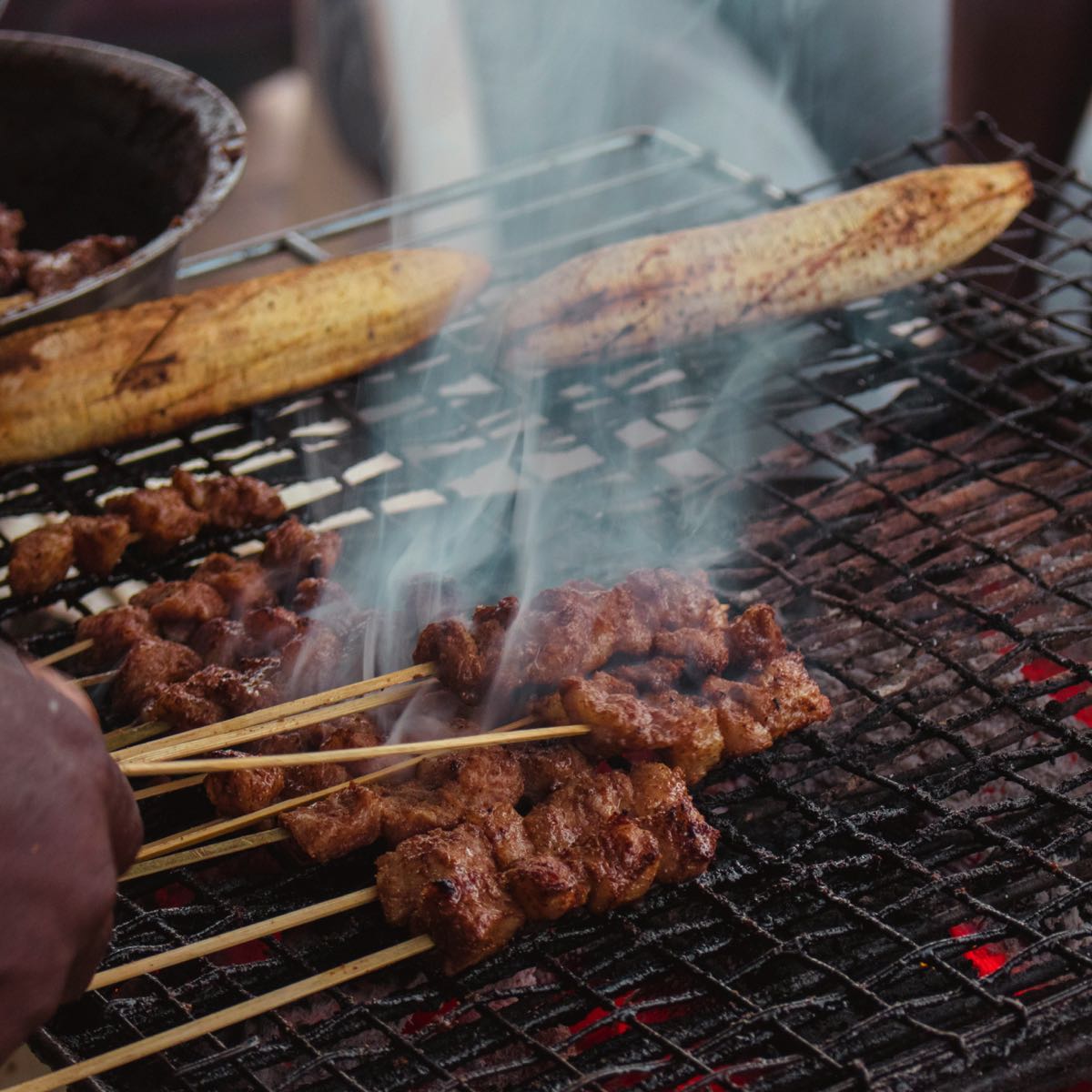
Nyama choma is more than food in Kenya. It is the framework for celebration, for business meetings, for catching up with friends, and for the long weekend afternoons that define Kenyan social life. To understand Kenya without understanding nyama choma is to miss something essential.
What Nyama Choma Is
The name means “burnt/roasted meat” in Swahili. The reality is a slow, patient cooking process over hardwood charcoal - goat, beef, chicken, or (on the coast) fish - cooked for 1–3 hours depending on the cut, until the exterior has a deep char while the interior remains moist.
The preferred meat is goat (mbuzi) - specifically, ribs, leg, and shoulder. Goat has a stronger, more mineral flavour than beef, which responds well to the charcoal smoke. A good choma cook knows when to turn, when to move closer to the heat, and when to rest the meat.
No marinade is used in the most traditional preparation - the meat is salted and that is all. The quality of the meat, the quality of the charcoal, and the skill of the cook are everything.
How to Eat Nyama Choma
Nyama choma is eaten with the hands. A piece of meat is picked up, the flesh is torn or chewed from the bone, and the bones are set aside on the paper lining of the serving dish.
The standard accompaniments:
Ugali: A stiff maize porridge, neutral in flavour, that absorbs the juices of the meat. The correct technique is to pinch a ball of ugali, press your thumb into it to form a cup shape, and use it to pick up a piece of meat or greens.
Kachumbari: Raw salad of finely chopped tomato, red onion, fresh coriander (dhania), and chilli. Acidic and fresh, it cuts through the richness of the meat.
Sukuma wiki: Stir-fried collard greens with onion, sometimes tomato. The standard vegetable component at any choma meal.
Tusker Lager: The accompanying drink. Cold Tusker and nyama choma is one of the great food-drink pairings in East Africa.
The Nyama Choma Ritual
In Kenya, nyama choma is a social activity. You do not order nyama choma alone in a hurry. You arrive, you are seated, you order drinks, and you wait. The meat is sold by the kilogram - for a group of four, order 1–1.5kg and see how you go. A knowledgeable waiter will advise.
The waiting time (30–90 minutes for the meat to cook) is part of the experience. Conversations happen. Beer is consumed. The arrival of the meat on a wooden board with its accompaniments is a moment of communal satisfaction.
Where to Eat Nyama Choma in Nairobi
Carnivore (Langata) - the tourist institution. For more Nairobi restaurant options beyond nyama choma, see our Nairobi restaurants guide. Open-flame roasting, all-you-can-eat, game meats as well as conventional. Approximately KES 3,500–5,500/person. An experience, not just a meal.
Dagoretti Corner - the definitive local choma experience in Nairobi. This area southwest of Karen has a cluster of open-air choma joints operating out of simple structures. Order by the kilo, sit at a plastic table, and eat with your hands. The cost is approximately KES 700–1,000/kg of goat - about a third of what Carnivore charges. Not for tourists who want comfort, excellent for those who want authenticity. Some Nairobi food and culture tours include a Dagoretti choma stop alongside Karen attractions.
Westlands nyama choma spots - several well-regarded local joints in and around Westlands, particularly on the routes south towards Ngong. Ask your hotel or guesthouse for the current recommendation.
Search hotels in Kenya on Booking.com
Kibanda ya Nyama (Ngong Road area) - local institution, well-priced, authentic.
Outside Nairobi
Every town in Kenya has nyama choma available - it is not a Nairobi-specific food. The quality of local choma often equals or exceeds Nairobi for freshness of meat.
Nakuru: The town has several good choma joints near the town centre - worth stopping for if you are en route to Lake Nakuru.
Kisumu: Fish (tilapia) replaces goat as the primary choma protein in western Kenya - samaki wa kukaanga (fried whole tilapia) with ugali is the Lake Victoria equivalent of nyama choma.
Mombasa: The coast prefers spiced meats - mishkaki (skewers) and biryani over plain choma. Nyama choma exists here but the coastal food culture centres elsewhere.
Ordering Guide
- Mbuzi (goat): The classic, most flavourful option
- Ng’ombe (beef): Milder, often preferred by non-Kenyans
- Kuku (chicken): Smaller portions, cooks faster
- Matumbo (tripe/offal): A speciality - not for everyone, but popular with Kenyan diners
Order by weight: 300–400g per person is typical. For eating your way across Kenya beyond nyama choma, Kenya food and market tours cover regional variations from coast to highlands. A full kilo (approximately KES 800–1,200) feeds two to three people adequately with ugali. For a complete picture of Kenyan food culture beyond nyama choma, see our Kenyan cuisine guide. For the best Nairobi restaurants to pair with nyama choma evenings, see our Nairobi restaurants guide. The Nairobi city guide has further recommendations for eating in the Langata and CBD areas. For street food including the other choma staples, the Kenyan street food guide covers mutura, mandazi, and what to eat at market stalls.