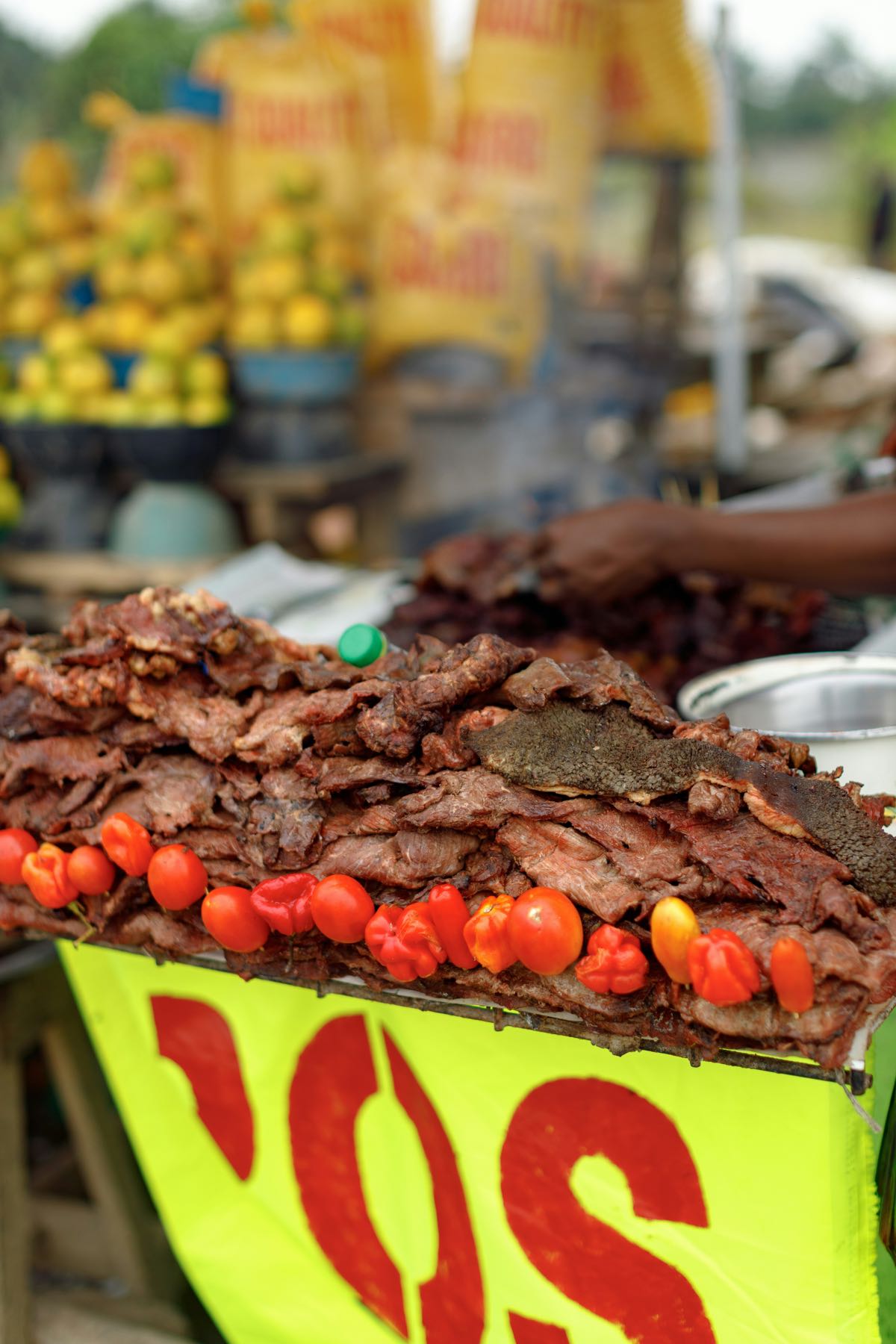
Kenyan street food is honest, inexpensive, and deeply embedded in daily life. The food reflects the country’s diverse ethnic geography - the coastal Swahili tradition (mahamri, samosas), the highland Kikuyu staples (mukimo, githeri), and the pan-Kenyan nyama choma culture that shows up everywhere from roadside shacks to garden restaurants.
The Core Dishes
Nyama Choma
Nyama choma (Swahili for “roasted meat”) is Kenya’s national dish by popular consensus. Goat is traditional; beef and pork are common alternatives; chicken (kuku choma) is widely available. The meat is slow-roasted over charcoal, then served still on the bone with kachumbari (tomato and onion salsa) and ugali.
A proper nyama choma experience is not rushed. You order by weight - typically 500g to 1kg for a person - and the meat takes 20–45 minutes on the grill. It arrives still on the bone and you tear it apart by hand. The best nyama choma is slightly charred outside and juicy inside.
Price: KES 500–1,500/kg depending on the establishment as of 2026. Street shacks charge less than garden restaurants.
Best areas: River Road and Kirinyaga Road in Nairobi’s CBD have the highest concentration of nyama choma shacks. Langata Road (towards Nairobi National Park) has numerous roadside nyama choma spots. In Mombasa, Mtwapa (15km north on the B8) is the coast’s nyama choma strip.
Mandazi
Mandazi are triangular deep-fried dough pastries, slightly sweet, made with wheat flour, coconut milk, and a little cardamom. They’re eaten for breakfast, as a snack, or with chai tea (strongly spiced milky tea).
The texture when fresh is airy inside with a crisp exterior. They go soft quickly - buy them from stalls where they’re being made to order.
Price: Approximately KES 20–40 each.
Best areas: Available everywhere - roadside carts, bus station vendors, market stalls. The Kisumu market and Mombasa Old Town have the best versions.
Mahamri
Mahamri are the coastal version of mandazi - richer, rounder, and made with coconut milk and more cardamom. They’re spongier than mainland mandazi and slightly sweet. Found exclusively on the Kenya coast (Mombasa, Lamu, Malindi).
Price: Approximately KES 30–60 each.
Mutura (Nairobi Specialty)
Mutura is a Kikuyu blood sausage made by filling a cleaned intestine with a mixture of blood, minced meat, and spices, then grilling over charcoal. The exterior is dark and slightly crispy; the interior is dense and rich.
It’s a distinctive Nairobi street food that polarises visitors. For meat-eaters willing to try it, mutura from a good grill-stall is genuinely excellent. Available primarily in Nairobi’s busier markets and along Kirinyaga Road/River Road in the CBD.
Price: Approximately KES 100–200 for a portion.
Roasted Maize (Mahindi ya Kuchoma)
Whole maize cobs roasted directly on charcoal grates, typically brushed with a lime-salt rub. Kenya’s most universal street snack. Available at every road junction, market entry, and bus stop across the country.
Price: Approximately KES 30–50 per cob.
Ugali
Ugali is Kenya’s staple starch - a stiff porridge made by cooking white maize flour with boiling water until it forms a dense, solid mass. It’s the base that accompanies almost every Kenyan dish. It has no flavour by itself - the interest comes from what’s eaten alongside it.
At street food level, ugali is served with sukuma wiki (chopped kale cooked with tomato and onion) as the cheapest complete meal in Kenya.
Price: Ugali + sukuma wiki at a local restaurant or food kiosk: approximately KES 100–200.
Mukimo
A Kikuyu dish from central Kenya made by mashing together cooked green peas, potatoes, and maize into a dense green-grey cake. It’s comfort food and is common at local restaurants in Nairobi and the central highlands.
Price: KES 150–350 at local restaurants.
Githeri
Githeri is a simple dish of boiled maize and beans. It’s the staple of Kenyan school canteens, construction site workers, and anyone eating economically. At its basic level it’s bland; upgraded versions add tomato, onion, and sometimes meat.
Price: KES 100–200 at local kiosks.
Samosas (Sambusa)
The Kenyan samosa is larger and spicier than many other versions. Triangular deep-fried pastry filled with minced meat (usually beef or goat), vegetables, or lentils. The filling is heavily spiced with cumin, coriander, and chilli. Found throughout the country but particularly good at Mombasa Old Town stalls.
Price: Approximately KES 30–50 each.
Best Street Food Areas
Nairobi
River Road and Kirinyaga Road (CBD) is Nairobi’s most active street food corridor. Nyama choma shacks, mutura grills, mandazi carts, roasted maize, and githeri kiosks line both sides. This is where Nairobi workers eat lunch for KES 200–400. Guided Nairobi food tours often include this corridor alongside Eastleigh for a cross-section of Nairobi’s eating culture.
Eastleigh (Somali-Kenyan neighbourhood, northeast of CBD) has a distinct food culture influenced by Somali and Ethiopian traditions. Sambusa (fried pastries with spiced meat), suqaar (spiced meat with vegetables), and oven-baked chapati are available alongside Kenyan staples.
Westlands matatu stage (near the Sarit Centre) has a cluster of mandazi and chai vendors serving the commuter market from morning to midday.
Mombasa
Mombasa Old Town - particularly the streets around the Mandhry Mosque and Old Town market - is the best street food zone on the coast. Mombasa walking and food tours navigate the Old Town’s tighter alleys and introduce the spice-trading history behind the food. Pilau stalls, samosa vendors, urojo mix stalls, and mandazi sellers operate from morning through late evening.
Mtwapa (15km north on the B8) is the coast’s busiest street food strip in the evenings, with nyama choma stalls, coconut maize roasters, and deep-fry vendors active until midnight.
Kisumu
Kisumu Central Market is western Kenya’s most active food market. Fresh tilapia and Nile perch from Lake Victoria are sold here in the morning - the freshest fish in the region. Grilled fish with ugali at the market edge stalls costs approximately KES 300–500.
Search hotels in Kenya on Booking.com
Practical Notes
Timing: Street food markets are busiest at lunch (noon–2pm) and in the early evening (6–8pm). The best nyama choma is typically available from mid-afternoon onwards when the grill has been running for hours.
Hygiene: Choose busy stalls with high turnover. Carry hand sanitiser. Most street food is cooked at high temperatures which addresses most hygiene concerns. Uncooked items (raw salads, cut fruit left out in sun) carry more risk.
Water: Drink bottled water, not tap water. All major brands (Highland, Keringet) are safe and available everywhere.
For a deeper dive into Kenyan cuisine traditions, see our Kenyan cuisine guide. For the best restaurants in the capital, see the Nairobi restaurants guide, and for coastal street food in particular, the Mombasa Swahili food guide. For a budget breakdown of eating across Kenya, see our Kenya budget guide.