Thika Town Guide: Kenya's Falls, Del Monte & Nairobi Day Trips
Thika, Kenya: 45 min from Nairobi on the Superhighway. Blue Posts Falls, Fourteen Falls (Ksh 200 entry), Del Monte tours, Ol Donyo Sabuk, where to stay.
Guides for Thika
Thika is a mid-sized industrial town 45km north of Nairobi on the A2 Thika Superhighway. It sits in the fertile central highlands at approximately 1,600m, where two rivers - the Chania and the Thika - converge in a forested gorge. The town is Kenya’s main centre for fruit canning and pineapple processing, and serves as a gateway between Nairobi and the Mount Kenya region.
For most travellers, Thika is a transit point: a place to stop for lunch, refuel, and stretch before continuing north to Nanyuki, Nyeri, or Mount Kenya. The Blue Posts Hotel and Fourteen Falls make it worth an unhurried stop. For day trips into the surrounding countryside or onward to Mount Kenya, guided Kenya tours can be booked from Nairobi.
Getting There
From Nairobi: The Thika Superhighway (A2) connects Nairobi to Thika in 45–60 minutes under normal conditions. Matatus run throughout the day from Nairobi’s CBD stages (KES 80–120). The road is one of East Africa’s best urban highways and handles heavy traffic efficiently during off-peak hours.
Onward to Mount Kenya: Thika is on the main Nairobi–Nyeri–Nanyuki route. The journey from Nairobi to Nanyuki via Thika takes approximately 3 hours total.
Blue Posts Hotel and Falls
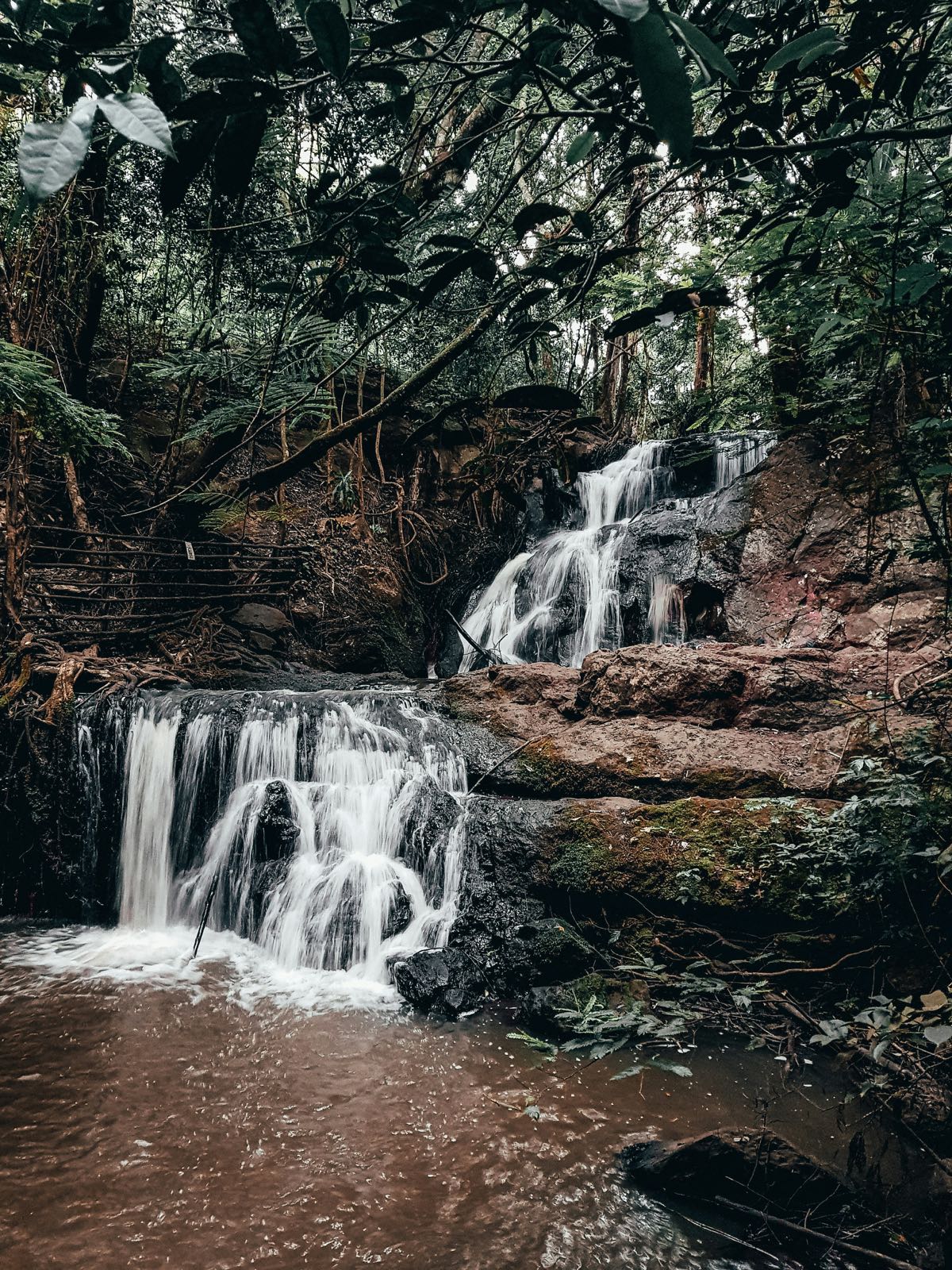
The Blue Posts Hotel was established in 1908 as a staging post for travellers heading into the highlands - one of Kenya’s oldest continuously operating hotels. The property sits at the precise confluence of the Chania and Thika Rivers, where both streams descend in waterfalls into a forested gorge.
The grounds are open to non-guests. Lunch in the riverside restaurant with the sound of the falls in the background costs approximately KES 600–1,500 for a main course - reliable Kenyan and continental dishes, nothing remarkable but solid. The bar terrace overlooks the gorge directly.
The falls themselves are modest compared to Fourteen Falls but the setting is pleasant - large fig trees, kingfishers along the river, and the meeting of two clear streams. Worth an hour.
Fourteen Falls
Fourteen Falls is a series of cascades on the Athi River approximately 8km east of Thika town. After the rainy seasons (particularly April–May and November), the falls are at full volume - a broad curtain of water descending in multiple channels across the basalt ledge. Entry approximately KES 200.
Access is by boda-boda or taxi from Thika centre (approximately KES 300–500 return including waiting time). The path to the viewpoint is straightforward. A local guide is optional but adds context. Swimming in the river below the falls is popular with local visitors but check conditions - the river can be fast after heavy rain.
Best time: April–May and November–December when rainfall is highest. The falls are far less impressive in the dry season (January–February and July–September).
Del Monte Kenya
The Del Monte pineapple plantation north of Thika is one of the largest continuous agricultural estates in East Africa - covering approximately 20,000 acres with its own railway spur and cannery. The pineapples grown here are exported globally. The plantation is not open to visitors but the rows of pineapples are visible from the highway and make an unusual landscape feature.
Where to Eat
Blue Posts Hotel — the most reliable lunch stop (KES 600–1,500 per main course). The riverside terrace overlooks the confluence of the Chania and Thika rivers with the sound of the waterfalls in the background. Solid Kenyan and continental dishes: tilapia fish, nyama choma, and a full lunch buffet available weekends (approximately KES 1,200 per person). Kitchen open daily 7am–9pm.
Thika Greens Golf Resort restaurant — a step up in terms of setting; the clubhouse restaurant serves international dishes from KES 800–2,000. Suited to a relaxed lunch stop in a golf course setting with highland views.
Thika town centre — the main street and market area has local restaurants serving ugali and nyama choma for KES 150–350. For familiar chains, KFC and Java House operate in the town centre — Java for good coffee and all-day breakfast from approximately KES 400–800.
Fresh fruit stalls: Del Monte grows pineapples north of town — roadside stalls on the A2 sell fresh whole pineapples for KES 50–100, far cheaper than Nairobi.
Where to Stay
Upper mid-range (KES 8,000–15,000/night): Thika Greens Golf Resort (3km from town centre) offers the area’s best facilities including a full golf course, swimming pool, and large rooms. Suited to Nairobi weekenders wanting more space than a town guesthouse.
Search hotels in Thika on Booking.com
Mid-range (KES 5,000–10,000/night): Blue Posts Hotel is the most characterful option — colonial building, garden setting, riverside waterfalls. Rooms are comfortable if slightly dated; the location is unique. Book ahead for weekend stays.
Budget (KES 2,000–4,000/night): Several guesthouses in the town centre provide clean, functional rooms. Palm Hotel and Safari Park Hotel (distinct from the Nairobi property) are reasonable mid-budget options for travellers overnighting before heading north to Mount Kenya.
Practical Information
Climate: Thika is in the highlands at 1,600m - temperatures are comfortable year-round at 18–26°C. The town receives two rainy seasons (March–May and October–November).
Facilities: Thika has good banking, supermarkets (Carrefour, Naivas), and petrol stations for stocking up before heading into the Mount Kenya region. Phone coverage is reliable.
Transport from Nairobi: 45km via the Thika Superhighway (A2), approximately 45–60 minutes under normal conditions. Matatus from Nairobi’s CBD cost KES 80–120. Private taxi approximately KES 1,500–2,500. The superhighway is tolled (KES 100–200 for private vehicles).
As a transit stop: Thika’s main value for travellers is as a logical midpoint break between Nairobi and the Mount Kenya region. The 45km superhighway means you won’t need to stop here unless you choose to. For trekking on Mount Kenya, see our Mount Kenya trek guide.
Thika in Literature
Elspeth Huxley’s The Flame Trees of Thika (1959) is one of the most celebrated memoirs of colonial Africa - a childhood account of farming life in the Thika highlands in the early 20th century. The “flame trees” are the vivid orange flamboyant trees (Delonix regia) that line the main streets of Thika and many Kenyan highland towns. They flower brilliantly in October–November and February–March. A BBC television adaptation in the 1980s brought the book to a wider audience. The landscape Huxley describes - rolling red-soiled hills, coffee farms, and forested river gorges - is still recognisable today.
For accommodation and food options in Thika, see our Thika hotels guide and Thika food guide. From Thika, Nanyuki and the Ol Pejeta Conservancy are approximately 2.5 hours north on the Mount Kenya highway.
Frequently Asked Questions
- What is Thika famous for?
- Thika is known primarily as Kenya's main fruit canning centre - the Del Monte Kenya plantation covers thousands of acres north of the town. It is also the setting of Elspeth Huxley's celebrated 1959 memoir 'The Flame Trees of Thika,' which describes a colonial farming childhood in the region. The Blue Posts Hotel, dating from 1908, is one of Kenya's oldest hotels.
- How do I get to Thika from Nairobi?
- Thika is 45km north of Nairobi on the Thika Superhighway (A2) - approximately 45–60 minutes depending on traffic. Matatus run frequently from Nairobi's CBD and Westlands stages (KES 80–120). Private taxis cost approximately KES 1,500–2,500.
- Is Thika worth visiting?
- Thika works best as a transit stop or half-day excursion from Nairobi rather than a primary destination. The Blue Posts Hotel and waterfall setting are pleasant for lunch. Fourteen Falls is worth a visit after seasonal rains. The town itself has limited tourist attractions but functions as a gateway to the Mount Kenya region.
Book an experience
Top experiences in Thika
Explore the best tours and activities in Thika - instant confirmation, free cancellation on most bookings.