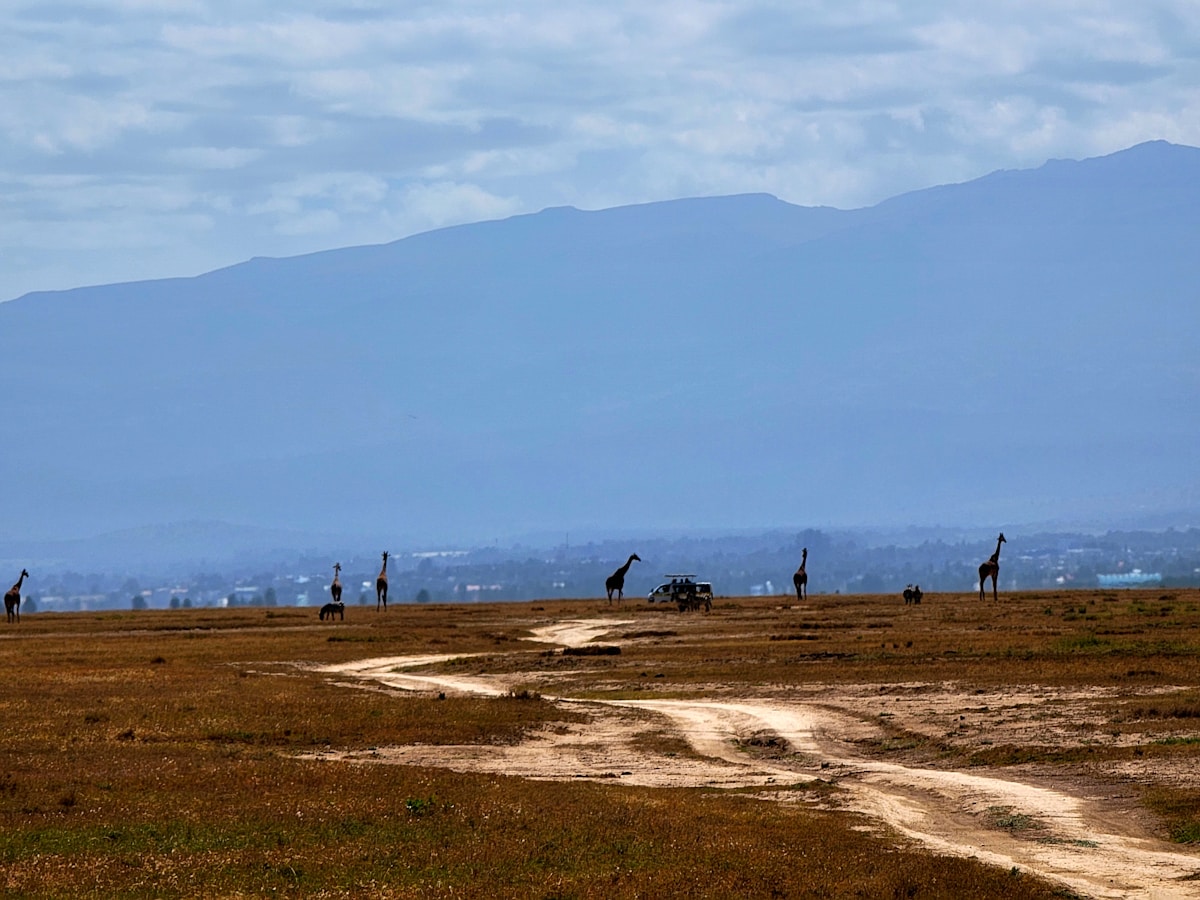
Thika sits 45km north of Nairobi on the A2 Thika Superhighway - close enough to visit in a morning from the capital, but substantial enough to reward a proper stop rather than a drive-through. At 1,600m altitude in the central highlands, the town is cooler than Nairobi and noticeably greener. Two rivers meet here, waterfalls cascade into forested gorges, and the roads leading north toward Mount Kenya are lined with flame trees and pineapple farms. Most visitors arrive in transit; the ones who stop are almost always glad they did.
Fourteen Falls
The standout natural attraction near Thika is Fourteen Falls, a series of cascades on the Athi River roughly 8km east of town. The falls drop across a broad basalt shelf in a wide fan pattern - not a single dramatic plunge, but an extensive series of interconnected channels that spread across the rock face during high water. When the Athi is running full, the effect is genuinely impressive: sheets of white water extending across a broad ledge, with mist rising into the surrounding vegetation.
Timing matters. Fourteen Falls is at its best following the rainy seasons - April through May and again November through December. During the dry months of January and February, or July through September, the flow reduces substantially and the experience is more modest. If you have flexibility in your schedule, plan accordingly.
Entry costs approximately KES 200 (around US$1.50 as of 2026) per person. A boda-boda from Thika town centre takes 20–25 minutes and costs approximately KES 300–500 return, including the rider waiting for you - negotiate the return trip before you leave. Local guides at the site charge approximately KES 200–400 and are entirely optional, though they add context about the river’s seasonal behaviour and the surrounding landscape. Day tours to Fourteen Falls from Nairobi with transport included are also bookable online.
The riverbank below the falls is popular for swimming among local visitors on weekends. The current can be powerful after heavy rain, and the riverbed is uneven. We recommend assessing conditions before entering, particularly in the wet season. The viewpoint above the main drop is safe and gives the best perspective on the cascade’s full width.
Blue Posts Hotel: The Riverbank Lunch Stop
Search hotels in Thika on Booking.com
The Blue Posts Hotel, established in 1908, occupies one of the most distinctive sites of any hotel in Kenya’s central highlands: a promontory at the exact confluence of the Chania and Thika Rivers. Both rivers descend from the land above into a forested gorge, and the hotel grounds sit at the point where they meet, with the sound of cascading water audible from the bar terrace, the restaurant, and most of the guest rooms.
Non-guests are welcome. The grounds and restaurant are open for lunch and afternoon drinks, and using the Blue Posts as a break point on the Nairobi–Nanyuki drive has been a Kenyan tradition since long before the Thika Superhighway accelerated the journey. The riverside terrace is shaded by mature trees, kingfishers work the river channels below, and the gorge provides a complete change of atmosphere from the highway fifty metres away.
The menu covers Kenyan and continental standards - grilled tilapia, chicken dishes, ugali and sukuma wiki, chips. Main courses run approximately KES 600–1,500 (roughly US$4.50–11.50 as of 2026). It is reliable food rather than destination dining, but the setting makes the meal. We recommend arriving between 12:00 and 14:00 to secure a terrace table, as this is a popular stop for tour vehicles heading north.
The Del Monte Plantation
North of Thika town, the Del Monte pineapple plantation extends across approximately 20,000 acres of the central highlands - one of the largest single agricultural operations in Kenya and the backbone of the country’s fruit canning industry. The plantation is visible from the A2 highway: rows of low-growing pineapple plants running to the horizon, with the Del Monte cannery and processing buildings clearly marked.
The plantation is not open to independent visitors. There are no formal tours for the general public. But the scale of the operation is worth a moment from the highway - the sheer extent of the fields gives a sense of what industrial-scale highland agriculture looks like. Fresh pineapples sold at roadside stalls in and around Thika come from this source, and they are noticeably cheaper and sweeter here than in Nairobi.
The Flame Trees of Thika
Elspeth Huxley’s 1959 memoir The Flame Trees of Thika documented a childhood on a colonial farm in the highlands north of town during the early twentieth century. The book shaped international perceptions of the Kenyan highlands for decades, and a BBC television adaptation in the early 1980s gave it fresh reach. The “flame trees” of the title are flamboyant trees - Delonix regia - which produce spectacular orange-red flowers and line Thika’s main streets as well as roads through the surrounding countryside.
The trees flower most intensely from October through November and again briefly in February and March, when the town’s main thoroughfares take on a canopy of colour. Visiting in those months adds a visual dimension that has nothing to do with attractions or itineraries - it is simply what the town looks like at those times of year, and it is striking.
For readers interested in Kenya’s literary and colonial history, The Flame Trees of Thika is worth reading before or after a visit. The landscape Huxley describes - the red earth, the highland light, the views toward Mount Kenya - remains recognisable more than a century after the events she describes.
Thika as a Transit Point
Thika is best understood as a quality transit stop rather than a primary destination. The drive from Nairobi to Thika takes 45–60 minutes on the A2 in normal traffic. From Thika, the road north continues through Kenol, Karatina, and Nyeri toward Nanyuki - the main gateway to Mount Kenya. The full Nairobi–Nanyuki drive runs approximately 200km.
A well-planned Thika stop covers Fourteen Falls in the morning (allow 1.5–2 hours including the boda-boda ride), lunch at the Blue Posts Hotel (1 hour), and departure north by early afternoon. That schedule puts you in Nanyuki by mid-afternoon with time to settle before dark. Attempting to do more than this in a single transit day results in a rushed experience of everything and a proper experience of nothing.
If you have an extra half-day, the pineapple market and a walk through the flame tree streets add another hour without requiring transport. Thika does not need more than that - and it does not pretend to.
For the full Thika city guide, see the Thika city guide. For Nanyuki to the north, which is the usual onward destination, see the Nanyuki city guide and the Nanyuki hotels guide. For Mount Kenya access from Nanyuki, see our Mount Kenya trekking guide.