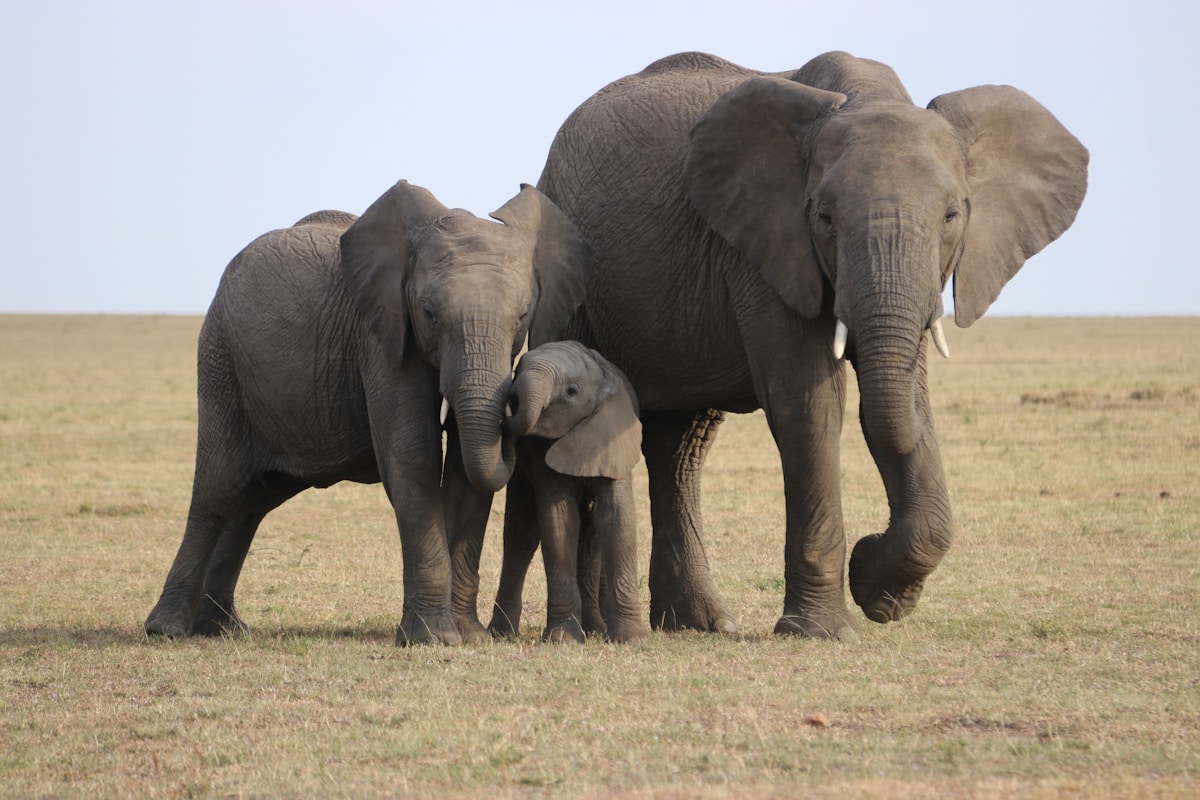
Amboseli National Park sits 230km southeast of Nairobi, at the foot of Mount Kilimanjaro on the Kenya–Tanzania border. It covers 392km² of savanna, swamp, and dry lake bed - a small park by Kenya standards, but one that punches well above its size for the density and accessibility of its wildlife, particularly elephants.
The Elephants
Amboseli has approximately 1,600–1,900 African savanna elephants - the most intensively studied wild elephant population in the world. The Amboseli Elephant Research Project, established in 1972 by Cynthia Moss, has documented the social structure and individual life histories of every elephant in the population across five decades.
The elephants in Amboseli are large (Amboseli bulls carry some of the largest tusks in Kenya), habituated to vehicles, and approachable to within metres. Elephant sightings in Amboseli are virtually guaranteed.
Kilimanjaro Views
Kilimanjaro (5,895m) dominates the southern horizon from Amboseli. Photographs of elephants with Kilimanjaro in the background are one of the most iconic images in wildlife photography. The mountain is most frequently cloud-free in the early morning (6–9am) - cloud typically builds by mid-morning. The best views occur in January–February and during the dry months. For what to expect at Amboseli in the peak clarity window, see our guides to visiting Kenya in January and visiting Kenya in February.
Other Wildlife
Lions, leopards, cheetahs, hyenas, and African wild dogs are all present. Hippos in the Enkiama swamp. Buffalo and giraffe throughout. Over 400 bird species. The park’s central swamp (fed by underground springs from Kilimanjaro’s melting ice) creates permanent water that concentrates wildlife year-round, even during dry periods.
Entry Fees and Access
Entry fee: Approximately USD 60 per adult non-resident per day (as of 2026). Pay online at kws.go.ke before arrival. Gates open 6am–7pm.
Gates: Meshanani Gate (main southern gate, closest to Kimana on the Nairobi–Mombasa road) and Kimana Gate (east) are the main entry points.
Getting There
By road: The most direct route from Nairobi is via the Namanga road (C103): approximately 4 hours to the Meshanani Gate (230km). Alternatively, via the Mombasa highway to Emali, then southwest to Kimana Gate - slightly longer but better road quality.
By air: Charter flights from Nairobi Wilson Airport to Amboseli airstrip take approximately 45 minutes. Cost varies by charter size - typically USD 200–400 per person one way.
Accommodation
Inside the park:
- Ol Tukai Lodge - well-positioned with views of Kilimanjaro, elephant-viewing from the restaurant deck. Approximately KES 25,000–45,000/person/night full board.
- Amboseli Serena Safari Lodge - reliable larger lodge with good facilities. Similar pricing.
Outside the park (cheaper, similar game access):
- Satao Elerai Camp - just outside the park boundary, excellent views and good wildlife access. From approximately KES 20,000/person/night.
- Kimana Sanctuary - private conservancy adjacent to the park with walking safaris available. From approximately USD 200/person/night.
Budget camping: Public campsite inside the park, approximately USD 15–20/person/night plus full entry fees.
For a full breakdown of camps, lodges, and campsites with current pricing, see our Amboseli accommodation guide.
The Amboseli Ecosystem
The park is fed by underground springs from Kilimanjaro - the mountain’s glaciers melt and the water travels underground, emerging in the Amboseli basin as permanent swamps. This makes the central swamp area (Enkiama) a year-round water source, which in turn concentrates wildlife regardless of surface rainfall. Amboseli’s central area has water when the surrounding savanna is bone dry.
The ecosystem extends beyond the park boundaries - the surrounding Maasai group ranches are important dry-season dispersal areas for elephants and other species. The relationship between the Maasai community and wildlife management around Amboseli has been one of Kenya’s more successful community conservation stories, though tensions over livestock and wildlife competition persist.
Elephant research: The Amboseli Elephant Research Project (amboselielephants.org) has been running since 1972 - one of the world’s longest continuous wildlife studies. Individual elephants are named and their life histories documented across generations. This research has transformed scientific understanding of elephant social structure, communication, and cognition. Visitors who spend time with the researcher teams (available seasonally at certain lodges) experience a completely different depth of encounter.
Combining Amboseli with Other Parks
Amboseli and Tsavo: A natural combination - Tsavo lies directly north of Amboseli. A 4–5 day itinerary can cover both parks: fly into Amboseli (day 1–2), drive to Tsavo East or West (day 3–4), exit via Voi and SGR or drive back to Nairobi.
Amboseli and Mara: A classic 7-day safari - Amboseli for elephants and Kilimanjaro, Masai Mara for the big cat concentration and (July–October) migration crossings. See our 10-day Kenya safari itinerary for a complete plan covering both parks.
For a detailed comparison, see Amboseli vs Tsavo - which park fits your safari priorities.
Practical Tips
Amboseli is very dusty - particularly in July–October. Bring a dust cover or sealed bag for camera equipment. Dust penetrates everything. Early morning and late afternoon game drives are most productive for animal activity; the midday lunch hours (11am–3pm) see animals resting in the shade. For conditions specific to the late dry season when dust is at its peak, see our guide to visiting Kenya in October.
A minimum two-night stay (giving one full day of game driving) is significantly more rewarding than a day visit. Those flying in and out from Nairobi often spend 2–3 nights, which allows one Kilimanjaro-watching morning and one afternoon drive at minimum. For a fully organised experience, Amboseli safari tours include transport, park entry, and accommodation in a single booking. For operator rates, game drive options, and self-drive logistics, see our Amboseli safari guide.
For the complete Kenya safari overview, see our Kenya safari guide. Our Big Five Kenya guide explains how Amboseli fits into a Big Five itinerary. For the best combination of parks in a single trip, see our 7-day Kenya itinerary and 10-day Kenya safari itinerary.