October opens with the Indian Ocean warming and Kenya’s first whale sharks appearing off Watamu and Diani - the start of a season that runs through March. Inland, the Masai Mara’s migration season winds down as the last wildebeest cross back to Tanzania, but the resident predator population remains exceptional. The first short rains arrive mid-month, greening the landscape and pushing lodge prices below peak. October is a genuine sweet-spot month: whale shark season opening, Samburu at its dry-season best, safari prices dropping, and the Mara quieter than at any point since May.
Short Rains Arrive Mid-Month: Dry First Half, Green Second Half
| Region | Avg High | Avg Low | Rainfall | Notes |
|---|---|---|---|---|
| Nairobi | 25°C | 13°C | 90mm | Short rains; afternoon showers |
| Masai Mara | 26°C | 14°C | 80mm | Short rains begin; landscape greening |
| Amboseli | 28°C | 14°C | 100mm | Some rain; Kilimanjaro sometimes cloudy |
| Samburu | 30°C | 17°C | 55mm | Less rain; still good conditions |
| Kenya Coast | 30°C | 23°C | 95mm | Short rains; whale shark season opens |
| Mount Kenya (base) | 19°C | 10°C | 130mm | Short rains; trekking possible but wet |
October Wildlife & Seasonal Events Summary
| Event | Timing | Where |
|---|---|---|
| Whale shark season opens | October (runs through March) | Watamu, Chale Island (Diani) |
| Wildebeest depart Masai Mara | Early-to-mid October | Masai Mara → Serengeti |
| Turtle nesting begins | October | Watamu Marine Park |
| Impala and topi calving | October–November | Masai Mara, Amboseli |
| Palearctic migrant birds arrive | October | Masai Mara, Rift Valley lakes |
| Short rains begin | Mid-October | Nairobi, Mara, Coast |
| Samburu dry season continues | All October | Samburu, Shaba, Buffalo Springs |
Wildebeest Depart as Resident Predators Come Into Their Own
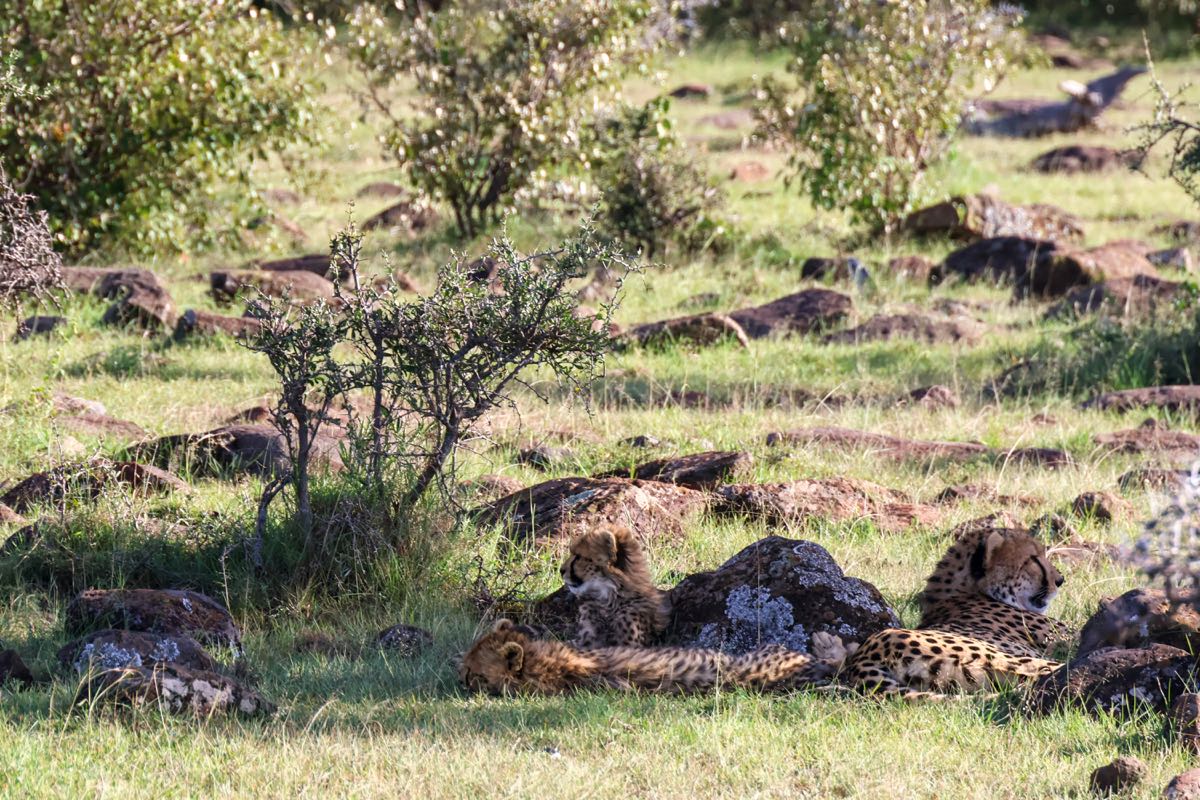
Masai Mara: The last wildebeest herds cross back to Tanzania in October - some September years extend into the first week of October, but the migration is essentially over by mid-month. What happens next is underappreciated: the Mara’s resident predator population, well-fed from the migration season, becomes the story. Lion prides are active and visible in shorter dry-season grass. Cheetah females with cubs born in July–August now have 2–3-month-old cubs learning to hunt. Leopards, less visible during the August vehicle rush, become reliably seen again.
Resident Grazers in October: Calving Season Opens
Impala (October): Impala calving begins in October - the Mara’s approximately 30,000 resident impala synchronise births across the population to overwhelm predators with sheer numbers of vulnerable young. Newborn lambs are rust-coloured, able to stand within minutes of birth, but remain highly vulnerable for the first two weeks. Cheetah, leopard, and spotted hyena all respond quickly to the presence of newborns. Impala nursery groups are conspicuous in the Mara’s open grassland edges and riverine woodland throughout October.
Topi (October): Topi calving also peaks in October–November in the Mara. The Mara’s approximately 12,000 topi calve on open short-grass plains where adults can see approaching predators from a distance. Calves can stand and run within the first hour of birth but remain vulnerable for the first week. October mornings on the Mara Triangle frequently produce topi birth sightings on open plains.
Thomson’s gazelle (October): The Mara’s resident Thomson’s gazelle population of approximately 30,000 is not calving in October (that cycle begins December–January), but the gazelle are highly active as the short rains arrive. Cheetah activity near gazelle herds remains high as the migration thins and gazelle become the primary cheetah prey again.
Burchell’s zebra (October): The migratory zebra have departed by mid-October, leaving the resident population of approximately 80,000 as the sole zebra cohort. October resident zebra foals born earlier in the year are now 4–6 months old and nearly adult-sized. The post-migration Mara in October has a noticeably different character - the resident grazer populations, stripped of their migratory augmentation, become the primary wildlife story.
Samburu: October is one of Samburu’s best months. The short rains that affect the Mara and coast have much less impact in the northern drylands. The Ewaso Ng’iro River is lower and the Samburu Special Five (Grevy’s zebra, reticulated giraffe, Somali ostrich, Beisa oryx, gerenuk) are reliably at the water. Temperatures warm (28–30°C daytime) but mornings are crisp and comfortable. This is Samburu’s shoulder season - good quality with mid-season pricing.
Coast - Whale Sharks: The whale shark season opens at Watamu and around Chale Island near Diani Beach in October. The sharks arrive as the Indian Ocean warms and coastal plankton blooms. October is the start of a sustained season running through March. Trips depart from Watamu Blue Bay with Local Ocean Conservation, which also runs whale shark research and monitoring - guests contribute to data collection during trips. Expect 2–4 hours on the water with snorkelling in the open ocean alongside sharks that typically measure 4–8 metres.
Birdwatching: Palearctic migrant birds begin arriving from Europe and Central Asia in October for the East African summer. Lake Nakuru, the Masai Mara grasslands, and Arabuko-Sokoke Forest all see significant influxes of new arrivals. October bird diversity is high and rising.
Coast Conditions in October
The SE trade winds ease as October progresses. Beach conditions improve through the month - early October can bring afternoon squalls but by late October the coast is returning to its settled inter-monsoon calm. The Indian Ocean is warm (26–28°C sea temperature) and snorkelling conditions are good between rain periods.
Turtle nesting at Watamu: Green and hawksbill turtles nest on Watamu beach from October through March. Local Ocean Conservation runs nightly turtle monitoring walks - guests join conservancy staff to observe nesting females or hatchlings. These walks depart from the Watamu beach area and can be combined with a whale shark trip the following morning.
Shoulder Pricing - Good Value for Safari-Plus-Beach Combinations
The departure of the peak migration crowd in October means lodge prices drop meaningfully. Most Masai Mara properties shift to mid-season rates from late October. Samburu lodges maintain steady mid-season pricing throughout October.
Search hotels in Kenya on Booking.com
Recommended Lodges for October: Samburu for Dry Conditions, Watamu for Whale Sharks
Samburu:
- Elephant Bedroom Camp - October is Samburu at its most reliable: the northern rains are significantly lighter than at the Mara or coast, roads stay excellent, and wildlife concentrates at the Ewaso Ng’iro River. The 12-tent intimate camp has strong elephant and Special Five sightings from riverside positions. Rates approximately USD 350–500/person/night full board, October mid-season. Search availability at Elephant Bedroom Camp
- Samburu Sopa Lodge - 60-room mid-range option with reliable river frontage. October brings steady mid-season pricing to Samburu while the Mara and coast face the start of the short rains. Rates approximately USD 150–220/person/night full board, October mid-season. Search availability at Samburu Sopa Lodge
Watamu coast (whale shark season opens):
- Hemingways Watamu - boutique hotel directly on Watamu beach, working closely with Local Ocean Conservation on whale shark snorkel trips and turtle monitoring walks. October’s whale shark season opening combined with evening turtle nesting walks makes this one of the most wildlife-rich coast programmes in Kenya. Rates approximately USD 300–450/night room only, October mid-season. Search availability at Hemingways Watamu
Booking horizon: 4–8 weeks ahead is adequate for most October stays. There is no pressure to book months ahead as in July–August.
Top Experiences: Whale Sharks, Samburu Game Drives, Mara Resident Predators
- Whale shark snorkelling at Watamu - season opens October; book through Local Ocean Conservation
- Samburu game drives - Samburu Special Five reliably at the Ewaso Ng’iro River; best of the drier months
- Masai Mara resident predators - lion prides and cheetah families visible without August’s vehicle congestion
- Turtle nesting walks at Watamu - nightly walks with conservancy staff
- Birdwatching at Lake Nakuru - Palearctic arrivals join the resident flamingo and pelican colonies
- Diani Beach - whale shark season, improving Indian Ocean conditions, shoulder pricing
Best Destinations in October: Samburu for Wildlife, Watamu for the Ocean Season
Best for wildlife: Samburu - the northern parks stay drier than the Mara and coast in October. Wildlife concentrates at the Ewaso Ng’iro River, road conditions remain excellent, and the Samburu Special Five are at their most accessible. Fewer vehicles than the Mara. Browse Samburu safari tours for guided options at October mid-season rates.
Best for the complete experience: Masai Mara + Watamu coast - a 7-night split works well in October: 4 nights Masai Mara for resident predators and fresh green landscape, 3 nights Watamu for whale shark trips and turtle walks. October availability is good for both destinations and pricing is 70–80% of the July–September peak. Browse Masai Mara tours to compare October safari options.
Avoid in October: Amboseli - the short rains often cloud Kilimanjaro throughout October. Save Amboseli for January–February when Kilimanjaro clarity is at its annual best.
October Costs: Shoulder Rates at 70–80% of Peak, Good Availability
Safari costs (per person/night, full board, Masai Mara or Samburu):
- Budget tented camp: approximately KES 12,000–20,000
- Mid-range lodge: approximately KES 25,000–48,000
- Luxury conservancy: approximately USD 350–600
Watamu coast costs:
- Budget guesthouse: approximately KES 3,000–6,000/night
- Mid-range beach hotel: approximately KES 9,000–18,000/night
- Whale shark boat trip: approximately USD 50–80/person (half day, Local Ocean Conservation or similar operators)
October pricing is meaningfully below the July–September peak - typically 70–80% of peak rates at most properties.
What to Pack: Packable Rain Jacket for Afternoon Showers, Snorkelling Mask for the Coast
- Light clothing for warm afternoons (28–32°C)
- Packable rain jacket for afternoon showers (especially second half of month)
- Swimwear and snorkelling mask for the coast (whale shark season, warm Indian Ocean)
- Sunscreen and insect repellent
- Binoculars - essential for open-plain game viewing in Samburu and the Mara
- Waterproof day bag for boat trips
FAQs
Is October a good time to visit Kenya? Yes - particularly for the coast and Samburu. The migration has ended but resident Mara wildlife is excellent, Samburu is at its dry-season best, and whale shark season opens at Watamu. Prices are 20–30% below the July–September peak.
Can I still see the migration in October? The last herds typically return south by mid-October. Early October sometimes has straggler herds. Do not plan an October trip specifically for migration crossings - plan it for excellent resident wildlife, whale sharks, and shoulder-season value.
What is the whale shark season in Kenya? October–March at Watamu and around Chale Island near Diani. The sharks (filter feeders, not dangerous) aggregate as the Indian Ocean warms. Trips run from Watamu - book through Local Ocean Conservation or reputable Watamu dive operators. Average encounter time is 1–2 hours in the water.
Is Samburu better than the Masai Mara in October? Samburu receives significantly less rain in October and has more reliable road conditions. For wildlife density it is competitive with the Mara in October - and has fewer vehicles. The Mara remains worth visiting for its resident predators and greening landscape.
For the full month-by-month planning overview, see our best time to visit Kenya guide. For Samburu in detail, see the Samburu National Reserve guide. For the Masai Mara in October, the Masai Mara wildlife guide covers resident game in the post-migration shoulder period. For the whale shark and turtle experiences, see the Watamu beach guide.
Plan Your Trip
October is a two-zone month: dry Samburu for inland wildlife, and the coast for the whale shark season opening. The Masai Mara’s migration is winding down but Samburu’s Ewaso Ng’iro River concentrates the Special Five through the month. At Watamu, whale shark season opens in October - book through Local Ocean Conservation for responsible snorkel trips. The short rains arrive mid-month and push lodges toward green-season pricing. Book flights to Kenya early if targeting early-October dry conditions - the transition to cheaper rates from mid-month also means reduced availability as tour operators front-load departures. Travel insurance and an eSIM are both standard kit for an October trip.