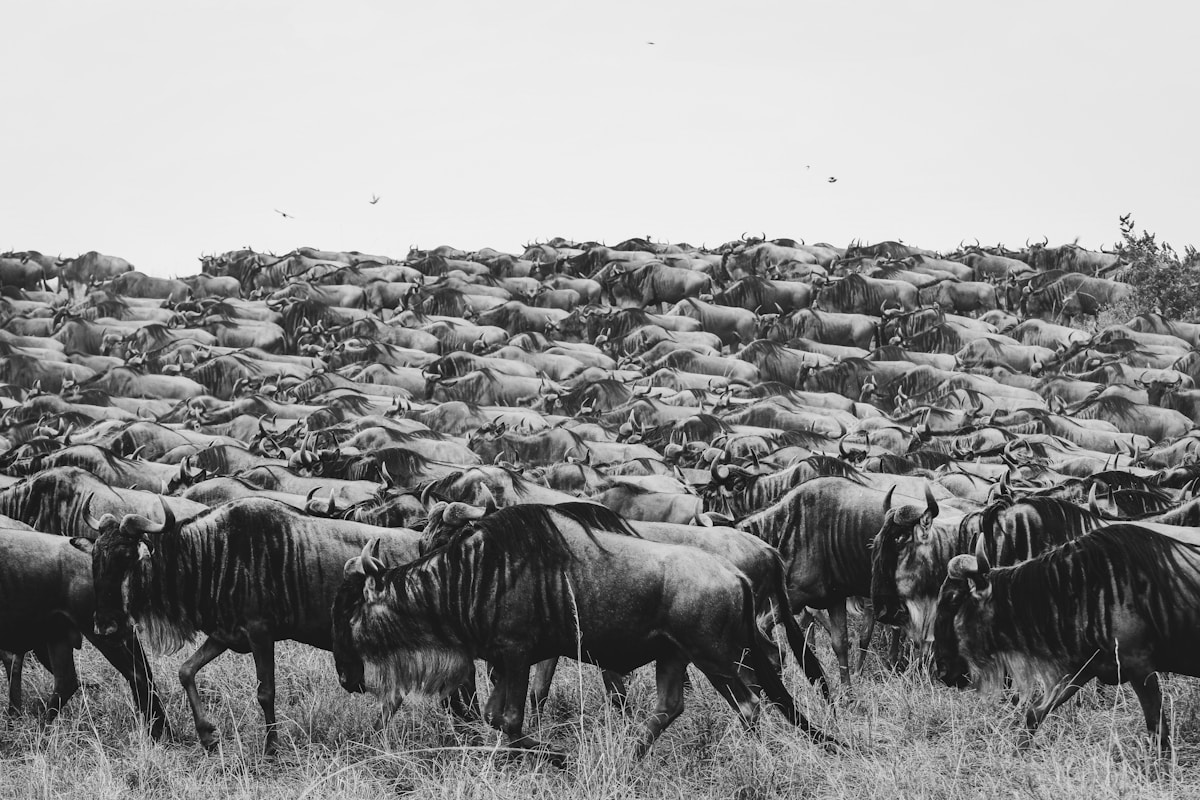
Over 1.5 million wildebeest, 200,000 zebras, and 350,000 gazelles complete a clockwise loop between Kenya’s Masai Mara and Tanzania’s Serengeti every year. The Mara River crossings - where crocodiles wait and wildebeest hesitate for hours before plunging - are the most dramatic wildlife event on earth. Understanding the month-by-month pattern helps you plan when to go, where to position yourself, and what to expect.
How the Migration Works
The Great Migration is not a single event. It is a year-round circular movement driven entirely by rainfall and grass growth. The herds follow a broadly predictable route, though timing shifts by several weeks depending on annual rains:
| Period | Location | What’s Happening |
|---|---|---|
| December–March | Southern Serengeti, Tanzania | Calving season on short-grass plains |
| April–May | Central Serengeti | Long-grass season, herds moving north |
| June | Western Corridor / Grumeti | First river crossings in Tanzania |
| July–October | Masai Mara, Kenya | Main Mara River crossings |
| November | Return south | Herds cross back after short rains |
The Kenya section - the Masai Mara - is where the most-photographed action happens. During peak crossing months, the Mara River becomes the focal point for vast herds building up on one bank before a lead animal triggers a mass crossing. A single crossing can take hours and involve thousands of animals.
Month-by-Month Breakdown
January–March: Calving Season
The herds are in southern Tanzania during this period. In January, approximately 500,000 calves are born within a three-week window - one of wildlife photography’s most sought-after events. The Masai Mara itself still holds exceptional resident wildlife: lions, cheetah, leopard, and elephant are present year-round. But if your primary goal is Mara River crossings, skip this window. For a full picture of what Kenya offers in this period, see our guides to visiting Kenya in January, visiting Kenya in February, and visiting Kenya in March.
Who should come: Budget travellers (low-season rates apply), photographers targeting big cats, anyone with limited flexibility on dates.
April–June: Build-Up Phase
The herds move north through central Serengeti. By June the first wildebeest begin reaching the Mara Triangle in Kenya’s southwest. Sporadic crossings can occur from late June in good years. This period offers the greenest landscapes, dramatically low camp rates (sometimes 30–50% below peak), and far fewer vehicles at sightings. See our guide to visiting Kenya in June for what to expect in the lead-up to peak season.
Who should come: Photographers prioritising fewer vehicles in frame, return visitors who have already seen peak crossings, budget-conscious travellers.
July–August: Peak Crossing Season
This is the window most visitors target. The northern Serengeti and Masai Mara hold the greatest concentrations. Mara River crossings occur every few days - sometimes multiple times daily when herds are agitated by predators or crossing triggers. Late July through August is the busiest period, with game-viewing vehicles sometimes numbering forty or fifty at a single crossing point. A hot air balloon safari at dawn offers the most spectacular aerial view of the herds during this period. For full planning detail on peak season, see our guides to visiting Kenya in July and visiting Kenya in August.
Who should come: First-time visitors who want maximum crossing odds, families wanting the most complete wildlife experience, anyone booking from a distance with limited flexibility. For accommodation, see our Masai Mara where to stay guide for camp options at every budget tier.
September–October: Late Season
Crossings continue into October, typically with less vehicle density than peak August. October often produces excellent photographic conditions - long grass, dramatic pre-rain skies. Many experienced safari-goers prefer this window specifically because the spectacle remains strong while crowds thin out. See our guides to visiting Kenya in September and visiting Kenya in October for crowd levels, pricing, and what to expect on the ground.
Who should come: Photographers, repeat visitors, anyone who prefers a quieter experience without sacrificing crossing potential.
November–December: Return Migration
The short rains arrive in late October or November, triggering the southward return. By late November the main herds have crossed back into Tanzania. The Mara is excellent for resident wildlife year-round, but the migration spectacle is effectively over until the following July.
Best Crossing Points in the Mara
The Mara River runs through two distinct management zones. Knowing the difference matters for camp selection:
Mara Triangle (western zone): Managed by the Mara Conservancy (separate from Narok County). Crossings occur at Lookout Hill, Fig Tree Crossing, and the Purungat Bridge area. Road conditions are better maintained, vehicle density is lower, and the Mara Triangle tends to hold herds slightly earlier in the season.
Sekenani / Talek area (eastern zone): The main Narok County reserve boundary. Crossings happen around Governors’ Crossing and Sand River. More accessible by road from Nairobi, slightly more vehicles, but crossings here can be equally spectacular.
Both areas produce outstanding sightings. The critical variable is not which side you choose, but how close your camp is to where herds are currently building up - experienced guides track this daily via WhatsApp networks with real-time intelligence on river bank activity.
Named Camps and Price Ranges
Budget Options
Mara Eden Safari Camp (Mara Triangle adjacent) - Tented accommodation from approximately USD 120–200 per person per night as of 2026, full board. Good river access, experienced local guides.
Mara Crossings Camp (eastern Mara boundary) - From approximately USD 100–180 per person per night as of 2026. Basic tented setup, open-sided mess area, solid guiding.
Kenya Wildlife Service public campsites - From approximately USD 30–50 per person per night as of 2026. Basic facilities only; self-catering or bring your own food. Bookable at kws.go.ke.
Mid-Range Options
Fig Tree Camp (Talek River, eastern Mara) - Long-established property with approximately 45 tented rooms, swimming pool, and strong guide reputation. From approximately USD 200–400 per person per night as of 2026 depending on season.
Mara Serena Safari Lodge - Larger property with central location in the reserve, good for accessing both crossing zones. From approximately USD 350–550 per person per night as of 2026 full board.
Basecamp Masai Mara (Mara Triangle) - Eco-focused camp with community partnership model. From approximately USD 350–500 per person per night as of 2026.
Luxury and Conservancy Camps
Angama Mara - Perched on the Great Rift Valley escarpment with panoramic views over migration territory. From approximately USD 1,400–1,900 per person per night as of 2026. Photography-focused programme available. Book via angama.com.
How to Book
GetYourGuide and Day Trips
For two- to three-day packages from Nairobi, guided Masai Mara safari tours list vetted operators with verified reviews. Group departures run from approximately USD 350–600 per person as of 2026; private vehicles cost more but allow flexible timing at crossing points.
Specialist Operators
Gamewatchers Safaris - Nairobi-based, operates Porini camps in conservancies bordering the main reserve. Low vehicle density, strong community conservation model.
Micato Safaris - Premium operator, known for exceptional guiding. Packages typically from USD 700 per person per day as of 2026 including domestic flights.
Basecamp Explorer - Runs their own eco-camp in the Mara Triangle; packages available with Norwegian-Maasai community focus.
Self-Drive vs Guided
Self-drive is permitted within the main Masai Mara National Reserve but is not recommended for first-time visitors. The reserve has no internal navigation signage, crossing points change daily, and an experienced naturalist guide substantially improves success rates. Private guides hired in Narok or via lodges charge from approximately USD 100–150 per day as of 2026.
Practical Notes
- Book 6–12 months ahead for July–August camps, especially river-adjacent luxury properties
- Peak-season surcharges typically add 20–40% to standard published rates
- Flying vs driving: The road from Nairobi to the Mara takes 5–6 hours; charter flights from Wilson Airport to Mara airstrips (Ol Kiombo, Musiara, Keekorok) take approximately 45 minutes and cost from USD 200–380 one-way per person as of 2026
- Reserve entry fees: Masai Mara National Reserve charges from approximately USD 80 per person per day as of 2026 for non-residents; private conservancies add separate fees
- Visa: Most nationalities can obtain a Kenya e-visa online at evisa.go.ke before travel
Travelling soon? Check our Kenya last-minute tours for confirmed availability and instant booking.
For the full Masai Mara safari planning guide, see our Masai Mara wildlife guide. Our Masai Mara where to stay guide covers all camp and lodge options. Comparing destinations? The Masai Mara vs Serengeti guide helps with the Tanzania decision, and the 10-day Kenya safari itinerary shows how to combine the Mara with other parks.