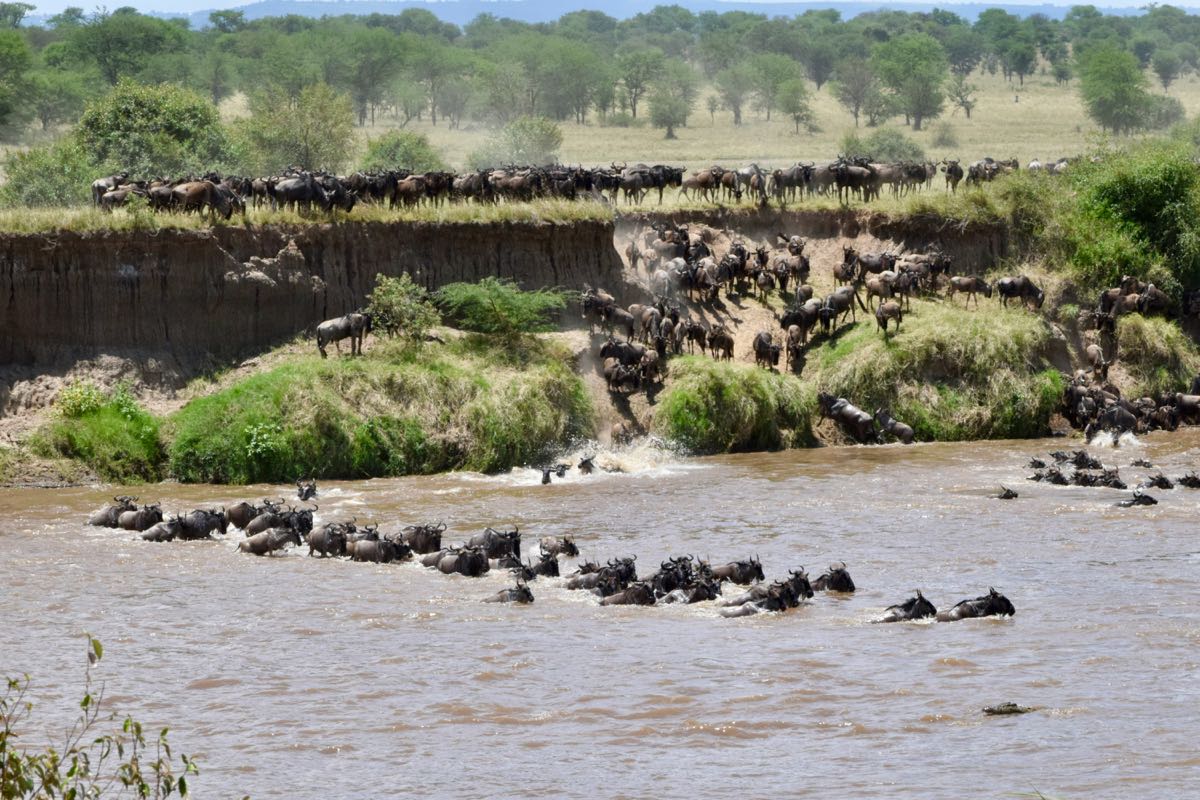
July is Kenya’s most popular month for safari - the Great Migration wildebeest river crossings begin in earnest, schools are on holiday across Europe and the UK, and the dry season conditions make game viewing exceptional. Expect full lodges, peak prices, and the most dramatic wildlife spectacle on earth.
Search hotels in Kenya on Booking.com
Weather in July
| Region | Avg High | Avg Low | Rainfall | Notes |
|---|---|---|---|---|
| Nairobi | 21°C | 10°C | 30mm | Cool, dry, clear |
| Masai Mara | 23°C | 11°C | 25mm | Cool mornings, warm days, very dry |
| Amboseli | 25°C | 12°C | 20mm | Dry, dusty |
| Samburu | 27°C | 15°C | 20mm | Hot and dry |
| Kenya Coast | 27°C | 20°C | 30mm | SE winds; good kitesurfing |
| Mount Kenya (base) | 16°C | 6°C | 50mm | Good trekking conditions |
July is one of Kenya’s driest and most pleasant months - cool mornings, warm afternoons, clear skies. Bring a proper jacket for game drives (6am temperatures in the Mara can reach 8–10°C with wind chill).
The Great Migration in July
The wildebeest migration is one of the world’s great wildlife spectacles. Approximately 1.5 million wildebeest, 200,000 zebra, and 400,000 Thomson’s gazelle complete an annual circuit between the Serengeti (Tanzania) and the Masai Mara.
July timing: The main herds cross the Mara River from Tanzania into Kenya in July–September. Crossings are unpredictable in exact timing - they can happen once a day, several times a day, or not at all for days. River crossings involve massive herds of wildebeest stampeding into crocodile-filled water - one of the most dramatic events in nature.
Key crossing points: Mara River crossings most commonly occur at known points - the crossing at Bila Shaka, the Sand River crossing, and multiple points along the Mara River. Your guide will know current activity.
What to do: Position at a crossing point early (6am is ideal) and wait. Crossings can happen at any time. Patience is required - but the payoff when a crossing occurs is extraordinary.
Crowds in the Masai Mara in July
The Masai Mara National Reserve in July can have 15–30 vehicles at a popular sighting simultaneously. This is the main downside of peak season - the driving is good but the experience at major sightings is crowded.
Solution: Book accommodation in one of the private conservancies (Olare Motorogi, Naboisho, Mara North, Mara Triangle). These areas have strict vehicle limits per sighting - often 2–5 vehicles maximum vs. the free-for-all in the National Reserve. Conservancy camps are more expensive but the experience difference is significant.
Booking in July
Book 6–12 months ahead for July Masai Mara stays. Popular lodges in the conservancies sell out by November–December for the following July. Masai Mara tours include guided group departures that can be booked well in advance to secure your spot.
Airfare: Book international flights 4–6 months ahead; July is peak season for UK and European airlines serving Nairobi.
July Pricing
July is peak pricing across all Kenya safari destinations. Expect 30–60% above low-season rates at most camps. Budget accordingly.
Other July Destinations
- Samburu: Excellent in July - dry, hot, no migration crowds, Special Five. A good July alternative for those avoiding Mara crowds.
- Amboseli: July is Kilimanjaro season (clear views). Very good.
- Mount Kenya trekking: July is one of the best months - dry season conditions on the mountain, clear summit views.
July Budget Guide
Safari costs (per person/night, full board, Masai Mara):
- Budget tented camp, National Reserve: approximately KES 15,000–26,000
- Mid-range lodge, National Reserve: approximately KES 32,000–65,000
- Luxury conservancy camp: approximately USD 500–850+
Balloon safari: approximately USD 450–500/person - book through your lodge months in advance. For a comprehensive overview of the park and what to expect, see our Masai Mara safari guide.
Samburu alternative (per person/night):
- Budget lodge: approximately KES 12,000–22,000
- Mid-range: approximately KES 25,000–50,000
Nairobi costs:
- Budget guesthouse: approximately KES 2,500–5,000/night
- Mid-range hotel: approximately KES 8,000–18,000/night
July is peak pricing throughout Kenya. Budget 40–60% more than the April–June low season for comparable accommodation.
What to Pack for July
- Heavy fleece and windproof outer layer - 6am Mara temperatures reach 8–10°C
- Multiple mid-layers - temperatures swing from 10°C at dawn to 23°C by midday
- Closed-toe shoes for walking (some lodges offer short bush walks)
- Dust covers for camera equipment
- Binoculars - excellent quality pays dividends in July conditions
- Sunscreen - clear skies mean intense UV despite cool temperatures
FAQs
Is July the best month to visit Kenya? July–August is the peak migration season and statistically the best for Mara River crossings. However, it is also the most expensive and crowded. September offers similar wildlife quality with fewer crowds. January–February offers excellent conditions at lower prices without migration.
How early do I need to book for July? 8–12 months ahead for any specific lodge preference. The best conservancy camps are commonly full by November–December of the previous year for July dates.
Is it possible to see a river crossing on a 3-night July trip? Possible, yes - but not guaranteed. The crossings are unpredictable. A 4–5 night stay significantly improves the odds. Some visitors wait 3 days without a crossing; others see one on their first morning drive.
For the full monthly breakdown, see our best time to visit Kenya guide. Our Great Migration Kenya guide explains the crossing timing, and the Masai Mara where to stay guide covers which camps give the best river access in July. To add a hot air balloon view of the migration herds, see our hot air balloon Masai Mara guide.
Plan Your Trip
✈️ Book your flights to Kenya 🛡️ Get travel insurance 📱 Stay connected with an eSIM 🚗 Rent a car