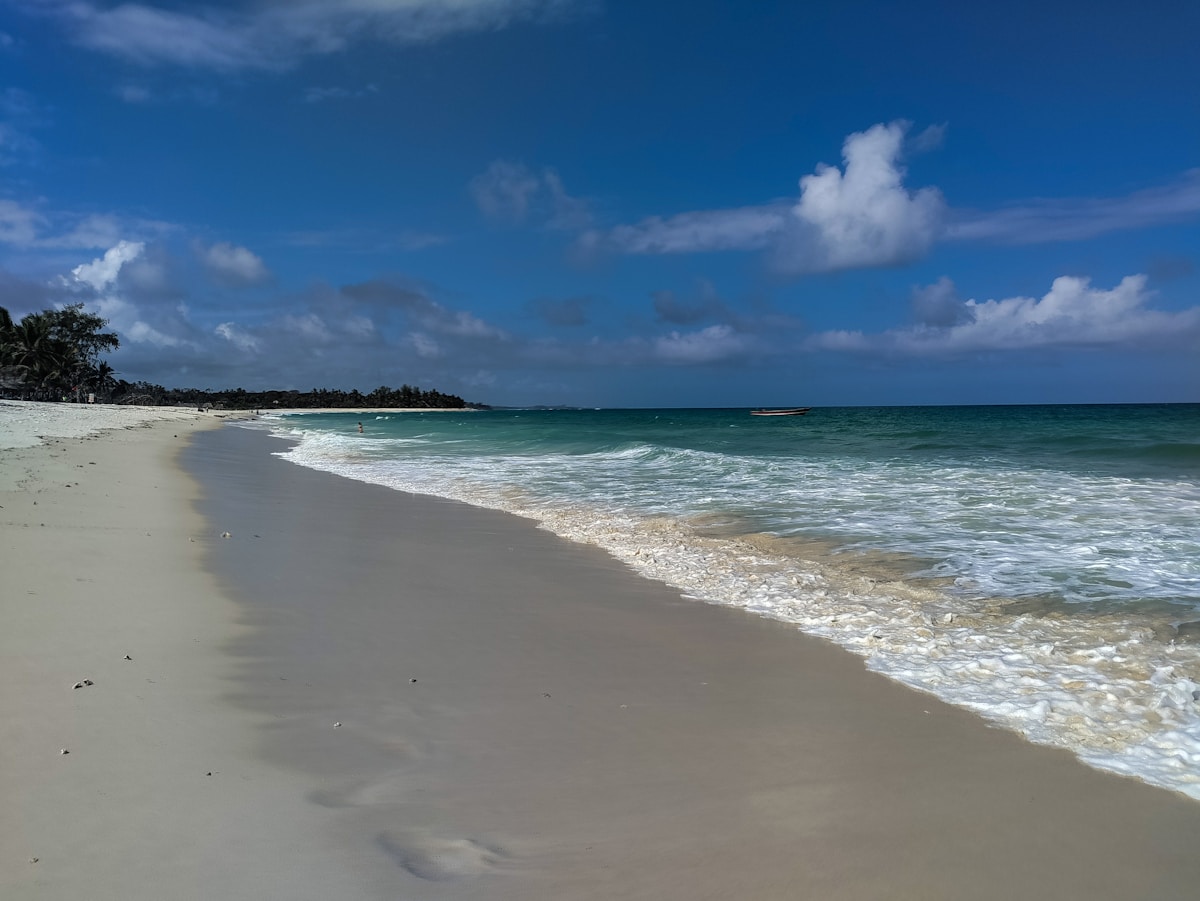
Watamu: Kenya North Coast Beach Guide
Guide to Watamu: marine park snorkelling, turtle nesting, beach resorts, and Gede Ruins day trip on the Kenya north coast.
Guides for Watamu
Watamu is a small beach village on Kenya’s north coast, approximately 105km north of Mombasa and 15km south of Malindi. It sits within the Watamu-Malindi UNESCO Biosphere Reserve and is one of Kenya’s most important sea turtle nesting sites. The marine park offers some of the best snorkelling on the Kenyan coast, and the village has a quieter, less commercial atmosphere than Diani or Mombasa.
Watamu attracts travellers who want marine activities, turtle conservation, and a slower pace than the larger coastal resorts. The reef is its main draw.
Getting There
From Mombasa: Matatu or bus to Malindi (2 hours, KES 300), then a short matatu to Watamu (20 minutes, KES 50–100). Total journey approximately 2.5 hours.
From Nairobi: Fly to Malindi Airport (1 hour, from KES 5,000 with AirKenya or Safarilink), then taxi or matatu to Watamu (20 minutes, approximately KES 500 by taxi, KES 50–100 by matatu).
From Malindi: 15km south - easily reached by matatu (KES 50–100) or taxi (KES 400–600) in 20 minutes.
Watamu Marine National Park
The marine park sits directly offshore. The coral reef system here is among the healthiest on the Kenyan coast - Watamu is outside the Galana River silt zone that affects Malindi, giving consistently clearer water.
Glass-bottom boat trips: The standard visitor experience - a boat takes you over the reef for viewing through the glass bottom, then anchors for snorkelling (approximately KES 1,500–2,500 per person, 1.5–2 hours). Most trips depart from the beach in front of Watamu village and Turtle Bay area. You can book Watamu marine park tours in advance, including snorkelling, diving, and Gede Ruins day trips.
Snorkelling: Snorkel gear can be rented on the beach (KES 400–600) or through your hotel. The reef is shallow enough in sections for confident swimmers without a boat, but most visitors prefer the guided boat trip for access to the best coral sections.
Diving: Available through several local operators. Blue Footprint Divers and Aqua Ventures are established operations. A two-tank dive costs approximately KES 7,000–10,000 including full equipment. Open Water certification courses available.
Best conditions: July–October (calm weather, southeast trade winds have passed, good visibility). The reef is diveable year-round.
Sea turtles: Green and hawksbill turtles are regularly spotted during snorkelling and dives throughout the year. The nesting season (October–March) increases in-water encounters.
Sea Turtle Conservation
Watamu is one of Kenya’s most important sea turtle sites and hosts one of the country’s best-organised community conservation programmes.
Watamu Turtle Watch (watamuturtles.com) - a community-based programme protecting nesting turtles along 26km of beach. For the full beach, marine park, and turtle experience, see our Watamu Beach guide. Green turtles and hawksbill turtles nest here from October through March. The programme employs local community scouts who patrol the beach at night to protect nests from poaching.
For visitors: Guided night beach walks during nesting season (approximately KES 1,000 per person) allow visitors to observe nesting turtles - a remarkable experience. Turtle hatchling releases are held when nest emergence occurs; the timing is unpredictable but the programme maintains contact with visitors who have expressed interest.
Rescue and rehabilitation: The programme also rescues sea turtles accidentally caught in fishing nets. Released turtles are satellite-tagged - tracking data is available on the programme website. This is one of the most visitor-accessible turtle conservation programmes in East Africa.
Bio-Ken Snake Farm and Research Centre
The Bio-Ken Snake Farm on the Watamu main road is one of Africa’s most respected herpetology research centres, housing over 200 live specimens of East African snake species — including black mambas, forest cobras, puff adders, and Gaboon vipers — in controlled enclosures. Founded in the 1960s, Bio-Ken produces antivenom and conducts research on snakebite treatment for rural East Africa.
For visitors, it is a surprisingly compelling stop: guided tours walk you through the live specimen enclosures with narration from the handlers. Entry approximately KES 700 per adult as of 2026. Open Monday to Saturday, 10am–4pm. Located on the main Watamu road, a 10-minute walk or short boda-boda from the beach (KES 100).
Bio-Ken is also affiliated with Watamu Turtle Watch — the same organisation works across both snake research and marine conservation. The combination of turtle and herpetology conservation on a small stretch of coastline makes Watamu a meaningful destination for wildlife-focused travellers beyond the standard beach itinerary.
Kite Surfing
Watamu’s northern bay and the Mida Creek area offer consistent conditions for kite surfing from July through September, when the southeast trade winds (the kusi) deliver steady 15–25 knot winds. The protected bay inside Ras Watamu provides a safer learning environment than open-ocean kite spots further down the coast.
Operators: Watamu Kite Centre (at the northern end of the beach) offers half-day introductory lessons from approximately KES 5,000–7,000 per person including equipment. Independent kiters hiring gear pay approximately KES 3,000–4,000 per half-day. Outside the July–September window, winds are lighter and less predictable — the marine park activities remain good year-round regardless.
Gede Ruins
Gede is an abandoned Swahili city in the coastal forest, 4km inland from Watamu. The city was inhabited from the 13th to 17th centuries - at its peak, a prosperous trading community of several thousand people. It was abandoned in the early 18th century for reasons still debated (water shortage, disease, or insecurity from the north are the main theories). The ruins include a palace, multiple mosques, merchant houses, and a city wall, all now partially reclaimed by forest. Entry approximately KES 500. Open daily 7am–6pm.
Getting there: Boda-boda from the Watamu village stage (KES 100–150). Walking is possible but hot in the midday sun (4km). Guided tours last approximately 1 hour.
What to see: The palace compound, the pillar tombs (characteristic of Swahili elite burials), the mosque, and the merchant houses. The baobab trees and strangler figs growing through the ruins are as impressive as the stonework. Hornbills and colobus monkeys in the canopy.
Where to Eat
Most mid-range and upmarket hotels have their own restaurants. The village has a small selection of independent restaurants:
Turtle Bay area: Hemingways Restaurant is the most reliable upmarket dining option in Watamu, with good seafood (approximately KES 1,200–2,500 per main course).
Watamu village restaurants: Several simple restaurants near the village stage serve fresh fish, chips, and local food at KES 200–500. Cristal Restaurant in the village is a reliable local option for seafood at reasonable prices.
Where to Stay
Budget: Ocean Sports Hotel is the most affordable beach-adjacent option (from approximately KES 4,000/night). Several guesthouses in the village from KES 2,000.
Search hotels in Watamu on Booking.com
Mid-range (KES 8,000–20,000/night): Hemingways Watamu is the standout - a classic colonial-era property with deep-sea fishing heritage, excellent pool, and consistently good food. Turtle Bay Beach Club is a large all-inclusive resort popular with families and good value for the amenities provided.
Upmarket (KES 25,000+/night): Medina Palms (boutique, pool villas north of the village) is Watamu’s luxury choice with outstanding design and direct beach access.
Practical Information
Atmosphere: Watamu is meaningfully quieter than Diani or Mombasa. Fewer persistent vendors on the beach, a more local feel, and a slower pace. This suits some travellers well; those wanting large resort facilities and nightlife will find it limited.
Getting around: The village is compact enough to walk. Boda-bodas cover distances to the marine park, Gede, and Malindi at KES 100–200.
Safety: Safe by Kenyan coastal standards - standard precautions apply.
Malaria: Prophylaxis recommended for the coast.
Shopping: The village has basic shops for provisions. For serious shopping, Malindi (15km north) has better options.
What Watamu is best for: The marine park reef, turtle conservation, a quiet beach holiday, and as a base for Gede and Malindi day trips. It is not ideal for nightlife, large resort amenities, or busy beach entertainment.
For more on how Watamu compares to the south coast, see our Diani vs Watamu guide. For accommodation options, see our Watamu hotels guide. Our Kenya coast itinerary links Watamu into a full north coast route from Mombasa to Lamu.
Frequently Asked Questions
- How do I get to Watamu?
- Watamu is 105km north of Mombasa. By road: take a matatu or bus from Mombasa to Malindi (2 hours, approximately KES 300), then a short matatu to Watamu (20 minutes, KES 50–100). Alternatively, fly from Nairobi Wilson Airport to Malindi (1 hour, from KES 5,000) and take a taxi or matatu to Watamu.
- What is Watamu Marine National Park?
- Watamu Marine National Park is a protected coral reef accessible directly from Watamu beach. Glass-bottom boat trips to the reef cost approximately KES 1,500–2,500 per person. The reef has excellent coral and abundant fish. Sea turtles are frequently spotted here - Watamu is one of Kenya's main turtle nesting sites.
- When do turtles nest at Watamu?
- Green and hawksbill sea turtles nest on Watamu beach from October through March. The Watamu Turtle Watch programme (watamuturtles.com) runs community-based turtle protection and offers night nesting observation opportunities during the season.
Upcoming Events in Watamu
Watamu Turtle Watch Season
watamu
Watamu Turtle Watch 2026, October to March. Olive ridley and green turtles nest on the beach; guided night watches available at the sanctuary.
Book an experience
Top experiences in Watamu
Explore the best tours and activities in Watamu - instant confirmation, free cancellation on most bookings.