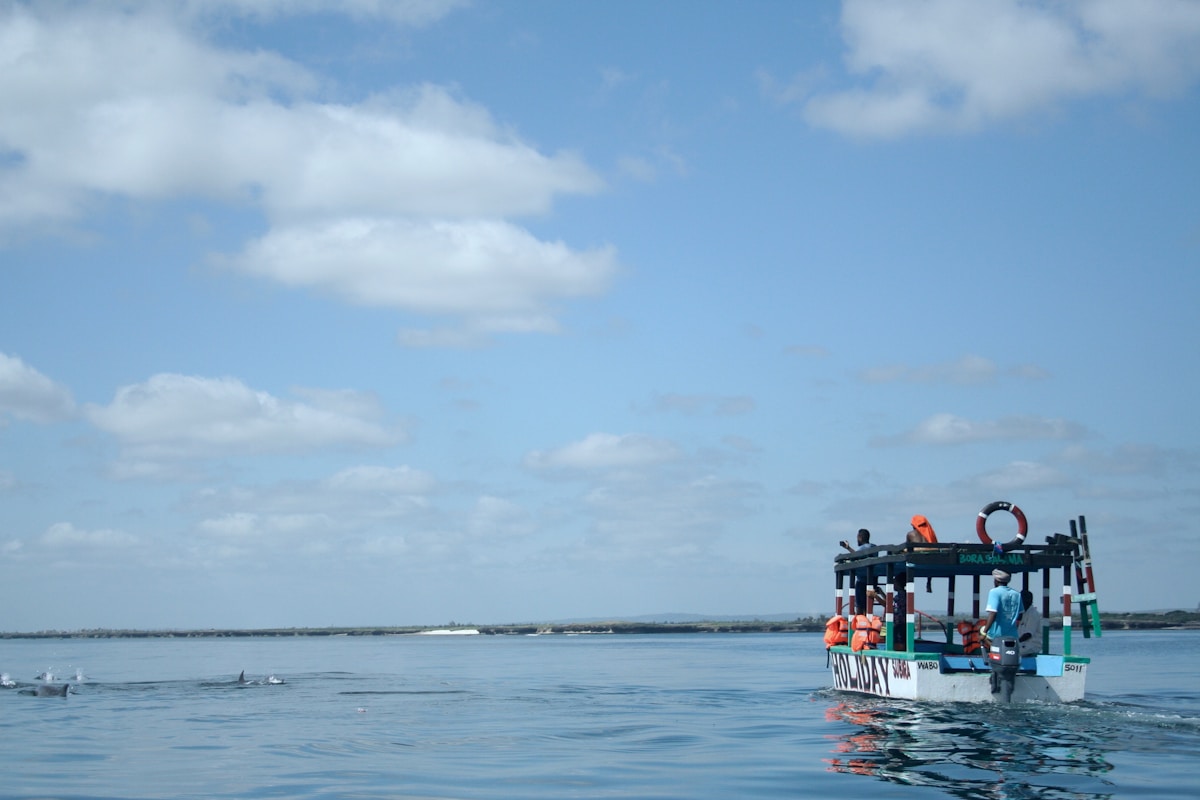
Watamu is a small coastal village 15km south of Malindi that punches well above its size for things to do. The marine national park offshore is one of the best snorkelling and diving destinations on the East African coast. The Gedi Ruins are 3km from the village centre. Arabuko Sokoke Forest - the largest remaining coastal forest in Africa - starts at the edge of town. It’s possible to fill three or four days here without repeating an activity.
Marine and Water
Watamu Marine National Park
Entry: Approx USD 25 non-resident adults / KES 300 children (as of 2026)
Opening hours: 6am–6pm daily
Location: Off Watamu beach - boat operators at the beach launch you directly to the reef
The marine park covers roughly 10km of coastline and reef system. Snorkelling over the coral gardens takes you through schools of parrotfish, surgeonfish, and wrasse with regular sea turtle sightings. Glass-bottom boat trips run approximately KES 1,200–1,800 per person and don’t require payment of the full park fee - they stay in the outer zone. Diving is possible through Blue World Diving, Watamu’s longest-running dive centre, with a two-dive package costing approximately USD 65–80 (as of 2026). Night dives over the coral can be arranged in advance. Snorkelling and marine park day tours from Watamu can also be booked online with guide and equipment included.
Search hotels in Watamu on Booking.com
Sea Turtle Encounters (Kenya Sea Turtle Conservation Programme)
Entry: Donation-based, typically KES 500–1,500 suggested
Location: Watamu beach, early morning
The conservation programme has operated in Watamu since the 1990s and works with local fishermen to monitor nesting beaches and rescue bycatch turtles. Guided turtle walks on nesting beaches take place after dark during nesting season (June–September) and hatchling seasons. Outside these periods, bycatch turtles held for rehabilitation can be viewed at the programme’s beach station. Contact the programme office directly to arrange visits.
Kayaking and Paddleboarding
Price: From approximately KES 1,500–3,000 for 2 hours
Location: Watamu beach operators
Several informal operators on the main beach hire sea kayaks and paddleboards. The protected bay between the beach and the reef is calm enough for paddleboarding in the mornings. Kayaking to the mangrove creek system at the south end of the bay takes about 30 minutes each way and is best done at high tide.
Archaeology
Gedi Ruins
Entry: KES 1,200 non-resident adults / KES 300 resident adults (as of 2026)
Opening hours: 8am–6pm daily
Location: 3km from Watamu, 15km south of Malindi - shared taxis from Watamu cost KES 500–800 return
The 13th–17th century Swahili city of Gedi was once home to several thousand people and sat at the intersection of Indian Ocean trade routes. The walled ruins include a palace, multiple mosques, and hundreds of stone house foundations spread across 18 hectares of forest. National Museums of Kenya guides lead tours included in the entry fee. The resident golden-rumped elephant shrew colony is a bonus - these small insectivores look like a cross between a mouse and a miniature antelope and are found only in coastal East African forest. Allow 60–90 minutes.
Nature
Arabuko Sokoke Forest Reserve
Entry: KES 600 non-resident adults / KES 200 resident adults (as of 2026)
Opening hours: 6am–6pm daily
Location: Forest gate is approximately 1km from Watamu village
The forest is home to endemic species including the Sokoke scops owl (world’s rarest owl), Clarke’s weaver, and Sokoke pipit. The same forest can be reached from Malindi as a day trip - the two towns share the forest edge. The forest board employs community guides who lead dawn birding walks (6–8am) for approximately KES 1,500–2,500 per group. August and September are the peak birding months when migratory species augment the resident endemics. The forest canopy walk, when operational, offers elevated views across the forest canopy.
Mida Creek
Entry: KES 300 non-resident adults (as of 2026)
Opening hours: Daytime hours, best at low tide
Location: 4km south of Watamu
Mida Creek is a 32 square kilometre tidal creek and mangrove system. The mudflats at low tide attract thousands of wading birds - crab plover, greater flamingo, and numerous sandpiper species are regular from October to March. A basic wooden walkway extends over the mangroves. Kayak hire for the creek is available through local operators at approximately KES 1,000–1,500 per hour.
Practical
Watamu village is walkable - the beach, most restaurants, and dive operators are within 15 minutes on foot. For Gedi and the forest gate, a bicycle hire (KES 300–500/day from several shops) or motorcycle taxi (KES 100–300 per trip) covers both comfortably. See the Watamu city guide for accommodation and our Malindi city guide for broader regional context. For snorkelling and diving conditions including whale shark season, the Watamu beach guide covers what to expect month by month. For where to eat after a day on the reef, see our Watamu food guide.