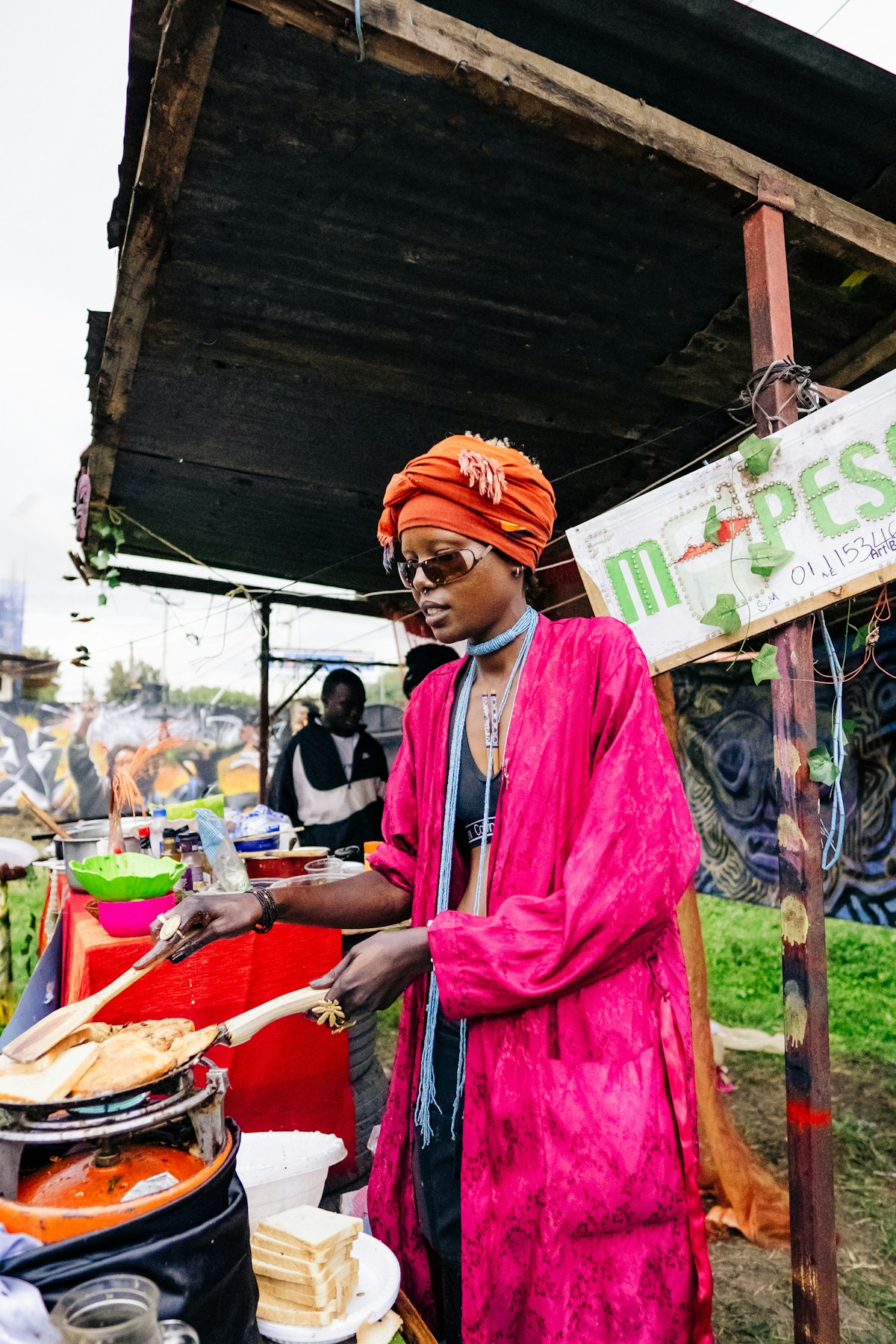
Eldoret’s food culture is highland Kenyan through and through. The Uasin Gishu Plateau produces maize, dairy, and livestock in quantity, and what you eat here reflects that agricultural base. The Kalenjin people - the dominant ethnic group of the surrounding region - are pastoralists with a strong dairy tradition, and that tradition shows up in the local food in ways that set Eldoret apart from other Kenyan cities. Don’t come expecting cosmopolitan variety. Come expecting good, honest food at very reasonable prices.
Mursik: Kalenjin Fermented Milk
Mursik is the signature food of the Kalenjin tradition and one of the most distinctive things to eat in the Eldoret region. It is soured milk - specifically, cow’s or goat’s milk fermented in a gourd that has been lined with charcoal from specific trees, traditionally olive or sodom apple. The charcoal gives it a distinctive grey-blue colour and a subtly smoky, sharp flavour unlike any other fermented dairy product.
Mursik is not served at restaurant tables as a menu item - you find it at homes, at small kiosks near the market, and occasionally offered at guesthouses that cater to local clientele. Some Thursday market stalls sell it in small gourds or plastic containers for KES 50–100 / US$0.40–0.75 as of 2026.
Runners in training camps around Iten consume mursik as part of their standard diet - it is high in probiotics and regarded locally as a recovery food. If you get the chance to try it, do so.
Search hotels in Eldoret on Booking.com
The Runner’s Diet
The athletes who train in the hills east of Eldoret eat with purpose, not indulgence. The standard training camp meal is ugali (stiff maize porridge) served with sukuma wiki (sautéed kale), boiled beans, and sometimes goat stew. It is a high-carbohydrate, high-protein diet built for altitude training at 2,000–2,400m.
Local restaurants near Eldoret Stadium and along Nandi Road serve exactly this kind of meal. A plate of ugali with sukuma wiki and a piece of meat costs approximately KES 200–350 / US$1.50–2.60 as of 2026. These are not tourist restaurants - they are working lunch spots for local Eldoret residents. The food is filling, honest, and cheap.
Nyama Choma
Nyama choma - charcoal-grilled meat, usually goat - is Kenya’s national informal dining experience, and Eldoret has several good spots for it. The meat is ordered by weight, brought to the table on a wooden board, and eaten with fingers alongside ugali and kachumbari (a raw tomato and onion salad with fresh chilli and lime juice).
Expect to pay approximately KES 800–1,500 / US$6–11 per kg at mid-range nyama choma restaurants, or KES 600–900 / US$4.50–7 at local market-area joints as of 2026. A standard order for one person is 400–500g of meat plus ugali, which brings a meal to approximately KES 500–700 / US$3.75–5.25.
The better nyama choma spots in Eldoret are found along Uganda Road and in the residential areas south of the town centre - ask at your hotel for the current locally favoured place.
Boma Inn Restaurant
Boma Inn’s in-house restaurant is the most reliable option in Eldoret for a predictable, varied meal. The menu covers Kenyan staples - nyama choma, pilau rice, chicken stew, fish - alongside basic continental options like grilled chicken and chips. Meals run approximately KES 500–1,500 / US$3.75–11 as of 2026.
The restaurant also serves breakfast: eggs, toast, sausages, and fresh fruit. For early-morning departures toward Iten or the Cherangani Hills, the Boma Inn breakfast (approximately KES 600–800) is a practical start. The coffee is Kenyan, which means good arabica poorly prepared - ask for it strong if you need a proper cup.
Java House, Garden City Mall
Java House is the closest thing to a specialty coffee shop in Eldoret. Located within Garden City Mall on the edge of town, it serves Kenyan single-origin coffee in espresso and filter formats, pastries, sandwiches, and smoothies. Coffee from approximately KES 280–450 / US$2.10–3.40 as of 2026.
The mall setting is not the most atmospheric, but Java House is a reliable stop for travellers who want reliable Wi-Fi, air conditioning, and a cappuccino that meets a recognisable standard. It is also a useful meeting point given its visibility and consistent quality.
Chapati Stalls and Market Food
Chapati - unleavened flatbread cooked on a flat griddle - is the universal street food of Eldoret and western Kenya generally. Chapati stalls cluster around the bus terminus, the Thursday market, and along the main streets. A single chapati costs KES 20–50 / US$0.15–0.38 and is typically eaten folded around beans, eggs, or vegetables.
The Thursday market itself has a food section with stalls selling grilled maize, fried mandazi (a slightly sweet doughnut-like fried dough), and samosas. This is Eldoret at its most informal and most genuinely local. A full market lunch from stalls runs KES 100–250 / US$0.75–1.90.
Chai Culture
Tea is grown in the nearby Nandi Hills, and chai in Eldoret is serious business. The standard Kenyan chai is black tea brewed with milk and sugar, sometimes with spices (ginger is common). It comes in a glass and costs KES 30–80 / US$0.22–0.60 at most small restaurants and kiosks.
Eldoret’s proximity to the Nandi tea estates means the tea itself is often of higher quality than in cities further from production areas. If you buy loose tea at the Thursday market, you are likely getting genuinely local highland tea at local prices - approximately KES 100–200 / US$0.75–1.50 per 250g.
Practical Notes on Eating in Eldoret
Eldoret is not the place to look for Indian, Chinese, or international cuisine - the options are very limited. The food culture is firmly Kenyan: filling, flavourful, and priced for local incomes. Budget on approximately KES 600–1,000 / US$4.50–7.50 per day for meals if eating at local restaurants, or KES 1,500–2,500 / US$11–19 if mixing in a Boma Inn breakfast and a mid-range dinner. For excursions from Eldoret into the Cherangani Hills or Iten, guided Kenya tours can arrange itineraries with transport included.
For the full Eldoret city overview, see the Eldoret city guide. For a broader look at Kenyan food traditions, see our Kenyan cuisine guide. For accommodation in Eldoret, see our Eldoret hotels guide.