Kilifi rewards people who stay a couple of nights rather than drive through. The activities are low-key: water in the creek, wind on the beach, ruins on the cliff and a handful of good side trips. Here is how to fill your days. For the town overview, getting there and where to stay, start with our Kilifi guide.
Kilifi Creek
The creek is the heart of Kilifi. The water is sheltered and warm, which makes it good for swimming, paddleboarding and kayaking, and several lodges run informal boat trips and sunset outings. Because it is a tidal inlet, depth and current change through the day, so swim where locals do and ask your lodge about the tide.
Many visitors stay beside the creek. Distant Relatives Ecolodge and Backpackers sits on the creek shore at Seahorse Road, a few kilometres from town, and is listed on Booking.com. It has a restaurant, a pool and a mix of dorm beds, tents, doubles and family rooms, and doubles as the town’s unofficial social hub. See its own site, kilifibackpackers.com, for activities. On dark, moonless nights some guests report bioluminescent plankton glowing in the water when disturbed. It is seasonal, so treat it as a bonus.
Bofa Beach and Kitesurfing
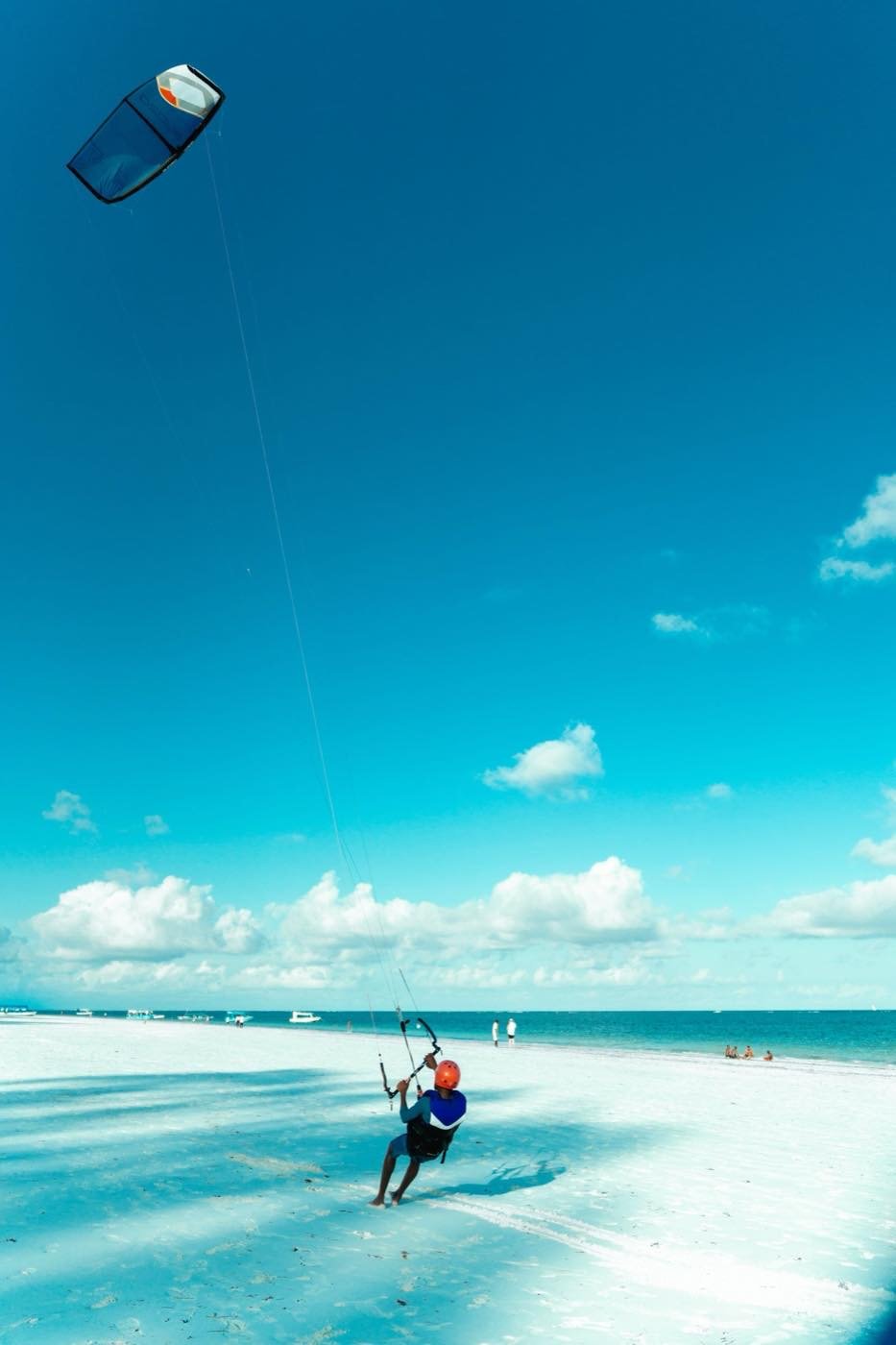
Bofa Beach is the main public beach, a tuk-tuk ride from town (agree the fare first). It is wide, quiet and often empty. Two things to know:
- Tide matters. The reef sits close to shore, so swimming is best around high tide. At low tide the sea retreats and the beach turns to rippled sand flats.
- Wind drives the season. Kitesurfing is the headline activity. The winds are generally reported as strongest from June to September and again from December to February. Facilities are informal compared with Diani, so confirm lessons, kit hire and safety arrangements locally before you commit.
If you want a quick sense of the Kenyan coast’s kiting scene more broadly, see our guide to Diani Beach.
Mnarani Ruins
On the south side of the creek, the Mnarani ruins are a 14th- and 15th-century Swahili settlement: a mosque, tombs including a pillar tomb, and a cistern, with views over the creek. The site is run by the National Museums of Kenya (Mnarani page). Plan about an hour. Fees were revised across National Museums sites in May 2026 and we could not confirm a current Mnarani figure, so confirm at the gate and carry small notes.
Vipingo Ridge
Vipingo Ridge is a golf and residential estate along the B8 south of Kilifi, known for its championship golf course among baobab trees. It is private, so check with the club for visitor tee times before you go. It is a niche stop, not a general sightseeing one.
Day Trips from Kilifi
Gedi Ruins
Gedi (also spelt Gede) is the best-preserved Swahili town on the Kenyan coast, set in forest roughly 45km north of Kilifi near Watamu. Its stone houses, mosque and palace were abandoned in the 17th century. Expect to spend two hours; monkeys and birds in the forest add to it. Entry fees changed in May 2026 and sources conflict on the non-resident rate, so confirm on arrival. Pair it with a beach afternoon in Watamu; our Watamu day trip guide shows how.
Mida Creek
Mida Creek is a mangrove-fringed tidal creek just south of Watamu with a boardwalk and canoe trips, and strong birdwatching, especially for waders on the mudflats. The boardwalk has been reported closed for maintenance in 2026, so check locally before you build a plan around it. Boat and canoe trips are typically priced separately by community operators.
Watamu Marine Park
For snorkelling and turtles, Watamu is about an hour north. Our things to do in Watamu guide covers the marine park, turtle conservation and the forest at Arabuko Sokoke.
To book guided Gedi, Watamu and Mida Creek outings, browse north coast tours.
Practical Tips
- Getting around: tuk-tuks for short hops, matatus along the B8 for Gedi and Watamu. See Watamu getting there for the Kilifi leg of the journey.
- Money: carry cash for tuk-tuks, ruin entry and creek boat trips; M-Pesa is widely used.
- Health: use repellent; coastal counties have had dengue alerts.
- Where to sleep: search Kilifi hotels on Booking.com or stay in Watamu for a larger choice.