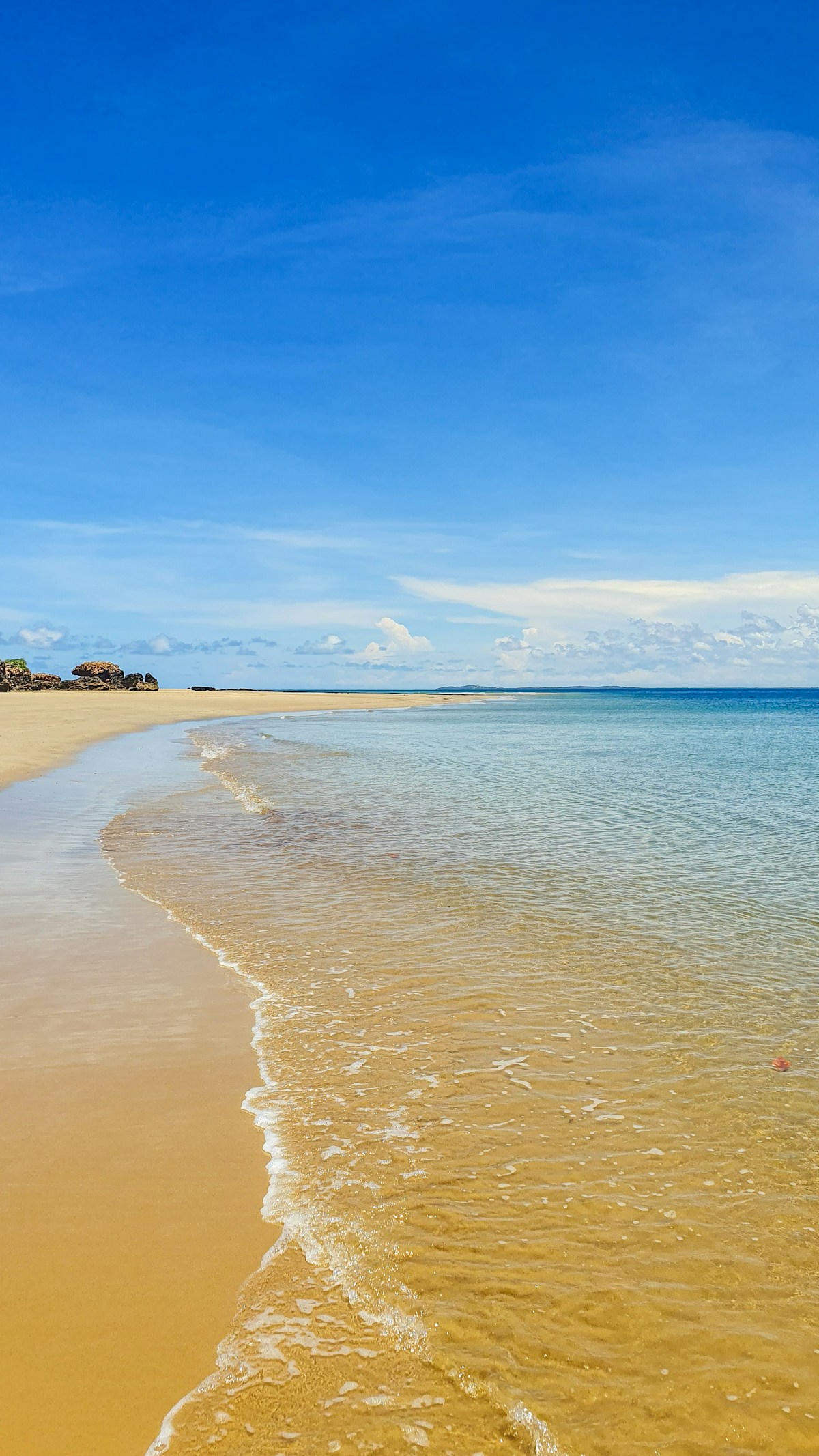
Lamu Archipelago holds some of East Africa’s finest beaches — cleaner, quieter, and more unspoiled than most of the Kenyan mainland coast. The lack of cars and the traditional dhow culture define the beach experience here: getting anywhere involves water transport, which adds to the appeal rather than diminishing it.
Search Lamu beach tours and activities
Shela Beach
Shela is Lamu’s most visited and most beautiful beach. It stretches 12km along the ocean-facing side of Lamu Island from Shela village to the undeveloped southern tip, backed by sand dunes that climb to 20-30m — the largest dunes on the Kenya coast.
The village end of the beach has the most infrastructure: a handful of boutique hotels, two or three simple restaurants, and sun lounger rental (approximately KES 300-500/day). The further you walk south from the village, the emptier the beach becomes. After 2km, you’re likely to have several hundred metres of white sand entirely to yourself.
Swimming conditions: The beach faces southeast towards the open Indian Ocean. From June to October, the kaskazi winds create surf conditions — waves are consistent and 1-1.5m, enjoyable for swimming but not ideal for nervous swimmers. January to March offers calmer, flatter seas. The tide drops significantly at low tide, exposing extensive tidal flats — plan swimming at mid to high tide.
Accommodation at Shela: Peponi Hotel (book on Booking.com) is the anchor property — a long-standing Lamu institution with a seafront terrace and dhow sailing. Rooms from approximately USD 200/night. Fatuma’s Tower (a restored coral mansion, from approximately USD 150/night) and Lamu House Hotel (book on Booking.com, from approximately USD 120/night) are the other main options. All three sit directly on or within a short walk of the beach.
Getting there from Lamu town: Water taxi from the main jetty (10-15 minutes, approximately KES 500-800 per person), or walk 3km along the beach path from Lamu town through the village (45 minutes on foot, flat and easy).
Manda Island Beaches
Manda Island lies across the channel from Lamu town and is reached by dhow or motorboat. The island is mostly uninhabited mangrove and dry bush, with two exceptional beach areas on its ocean-facing shore.
Manda Channel beach: The thin strip of sand facing the channel between Manda and Lamu is accessible by dhow in 10-15 minutes. Calm water, no surf — good for children and weak swimmers. Several dhow operators offer day trips with snorkelling equipment (approximately KES 3,000-5,000 per boat, negotiated at the Lamu jetty for groups of 4-6 people as of 2026).
Manda Toto: The small island off Manda’s southern tip is surrounded by coral reef and is Lamu’s best snorkelling site. Fish populations are dense — parrotfish, angelfish, moray eels, and octopus are common. Visibility is best from January to March before the long rains. A dhow trip from Lamu to Manda Toto and back takes a full day — agree the route and timing in advance with the boatman.
Takwa Ruins: On the northwest shore of Manda Island, a 15th-century Swahili settlement was abandoned in the 17th century, likely due to freshwater shortage. The ruins are protected as a national monument (entry approximately KES 1,200 non-resident as of 2026). A well-preserved mosque and residential structures remain standing. Combine with a beach day if chartering a dhow for the full day.
Kipungani Beach (Lamu Island South)
At the southern tip of Lamu Island, Kipungani is the most remote and tranquil beach accessible without crossing to another island. It’s 12km from Shela village, reachable by walking the full beach length (2-3 hours from Shela) or by boat from Lamu town (approximately KES 2,000-3,000 return).
Kipungani Explorer is the sole accommodation here — an eco-lodge of traditional banda-style cottages in a palm grove directly on the beach. Rates from approximately USD 200/person/night fully inclusive. There are no day facilities for non-guests, but the beach itself is accessible. The seclusion and empty sand make the effort worthwhile.
The dune system behind the beach is the largest in the archipelago. Walking the dunes at low tide offers views down to both the ocean and the mangrove-lined channel on the island’s western shore.
Manda Bay (North Manda Island)
On the northern shore of Manda Island, Manda Bay Lodge operates a private beach camp on a stretch of coastline entirely inaccessible except by boat or light aircraft. This is Lamu’s most exclusive beach experience — the lodge (from approximately USD 450/person/night) offers motorised water sports, windsurfing, kite surfing, and sailing on a bay with consistent northerly wind from June to October.
The northern Manda coast is favoured by kitesurfers during the kaskazi season. Equipment rental is available through the lodge. Non-guests cannot access the beach, but the lodge occasionally offers day packages.
Pate Island and the Outer Archipelago
For travellers willing to journey further, Pate Island (2 hours by boat from Lamu) has isolated beaches on its eastern shore visited by almost nobody. The boat trip from Lamu passes through mangrove channels and open water — wildlife including dugongs (rare) and dolphins are occasionally seen en route. The fishing village of Siyu on Pate Island is worth a walking visit; the 15th-century Siyu Fort is partially restored.
Boat charter: A full day trip to Pate from Lamu costs approximately KES 8,000-15,000 for a motorised dhow (8-12 passengers), negotiated with boatmen at the main jetty. Food and water should be brought from Lamu. Mobile signal on Pate is intermittent.
Practical Beach Information
What to bring:
- Sun protection is non-negotiable. The equatorial sun at Lamu is intense year-round. Pack high-factor sunscreen, a hat, and UV-protective clothing if snorkelling.
- Fresh water is limited on day trips and dhow excursions — carry at least 2 litres per person.
- A waterproof bag for electronics — dhow travel involves some spray.
- Snorkelling gear if you have it (mask, fins, rash vest). Some operators provide masks; quality varies.
Dress code near the village: Lamu Town is a predominantly Muslim community. Cover shoulders and knees when walking through Lamu or Shela villages. Swimwear is appropriate on the beach itself, but change before walking back into the village.
Cash: Lamu has limited ATM access — the few ATMs in Lamu town are unreliable and frequently out of cash. Bring sufficient KES from Mombasa or Malindi before arriving. Cards are accepted at a few hotels but not at boat operators or market stalls.
Best season: January to March for flat seas and snorkelling. June to October for sailing winds and surfable waves at Shela. Avoid the long rains (April-May) and short rains (October-November) when sea conditions deteriorate.
For more on getting to and around Lamu, see our Lamu things to do guide and Lamu hotels guide. For the broader Kenya coast overview, see our Kenya coast guide and the Lamu Archipelago guide.
For dhow sailing trips, snorkelling excursions, and guided Lamu Old Town tours, browse Lamu tours on GetYourGuide.