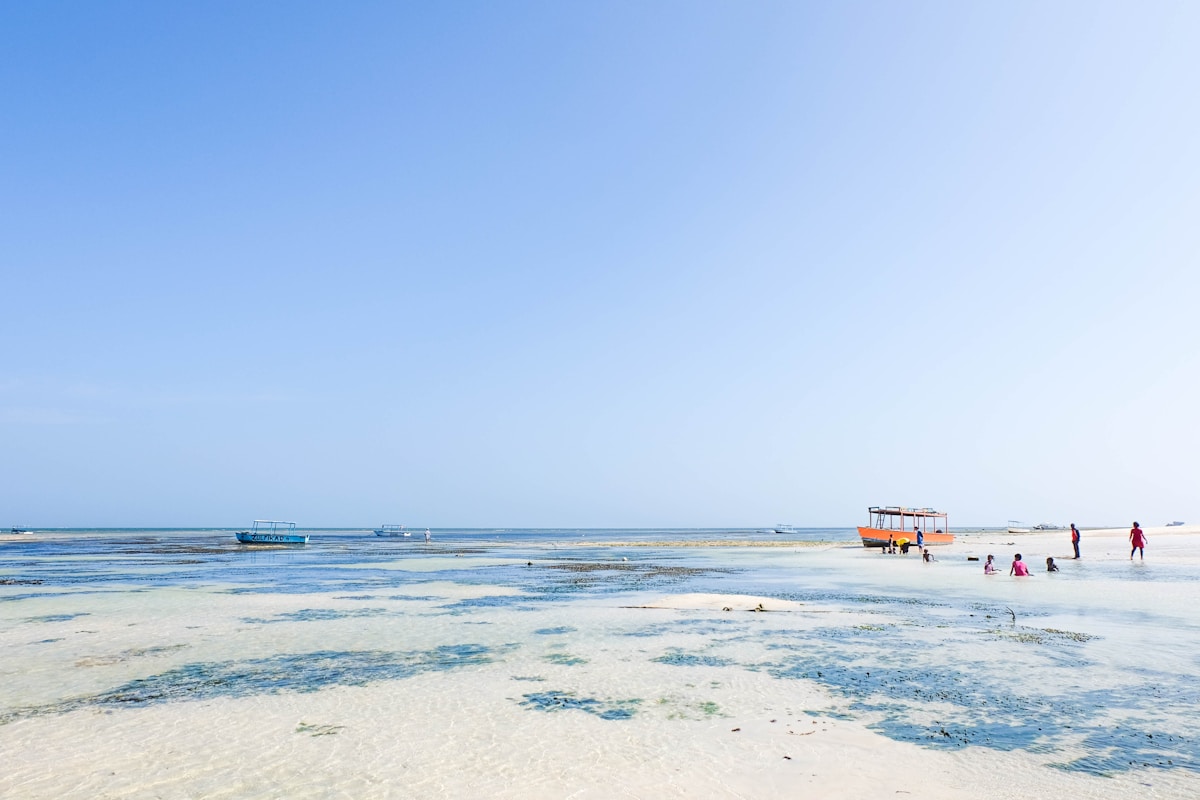
Malindi is one of Kenya’s oldest coastal towns - a Portuguese trading post from the 15th century that became a popular Italian resort in the 1980s and has since settled into a distinctive hybrid identity. It sits 120km north of Mombasa on the Indian Ocean coast, with a reef-protected lagoon, a historic town centre, and several genuinely interesting archaeological and marine attractions within a short drive.
Marine and Beach
Malindi Marine National Park
Entry: Approx USD 25 non-resident adults / KES 500 children (as of 2026)
Opening hours: 6am–6pm daily
Location: 3km south of Malindi town centre
The park protects a stretch of coral reef running from the shoreline out to the reef edge. Snorkelling is the main activity - boat operators run glass-bottom boat trips for approximately KES 1,500–2,500 per person and can drop snorkellers over the reef for an additional park entry fee. The reef holds moray eels, parrotfish, angelfish, sea turtles, and healthy coral gardens. Diving is also possible through operators in town, with a typical two-dive package running USD 60–90. Water visibility is best between October and March. The beach at Watamu Marine National Park, 12km south, is generally regarded as having clearer water than the Malindi section.
Malindi Beach (Silversands)
The central town beach runs for several kilometres. The area fronting the town is busy with boat operators and hawkers; head north towards the Italian resort strip for quieter sand. Sunrise swimming is popular with local residents. There’s no formal entry fee for the public beach sections.
Historical Attractions
Vasco da Gama Pillar
Entry: KES 800 non-resident adults / KES 200 resident adults (as of 2026)
Opening hours: 8am–6pm daily
Location: Southern end of Malindi town, above the marine park office
The coral pillar was erected in 1498 by the Portuguese explorer Vasco da Gama on his first voyage to India. It stands roughly 4 metres tall on a low cliff above the ocean and is one of the oldest European monuments in sub-Saharan Africa. The site includes the remains of a small chapel. The sea view from the pillar is excellent. Allow 20–30 minutes.
Malindi Museum
Entry: KES 800 non-resident adults / KES 200 resident adults (as of 2026)
Opening hours: 8am–6pm daily
Location: Malindi town centre, near the Portuguese chapel ruins
The museum occupies a restored colonial-era building and covers the town’s Swahili, Portuguese, and Arab trading history. Exhibits include dhow models, Portuguese artefacts, and displays on local fishing culture. The adjacent Portuguese chapel is one of the oldest Christian structures on the East African coast. Allow 45–60 minutes combined.
Gedi Ruins
Entry: KES 1,200 non-resident adults / KES 300 resident adults (as of 2026)
Opening hours: 8am–6pm daily
Location: 15km south of Malindi (near Watamu), off the Malindi–Mombasa road
Gedi was a walled Swahili city that thrived from the 13th to 17th centuries and was mysteriously abandoned - no written records document why. The ruins include a palace, several mosques, tombs, and the footprint of a town that once held several thousand people. The site is managed by National Museums of Kenya and has a resident colony of golden-rumped elephant shrews, one of the world’s most endangered mammals. A guided tour is included in the entry fee and takes 45–60 minutes.
Nature and Wildlife
Arabuko Sokoke Forest Reserve
Entry: KES 600 non-resident adults / KES 200 resident adults (as of 2026)
Opening hours: 6am–6pm daily
Location: 25km south of Malindi near Gedi
The largest intact coastal forest in East Africa covers 420 square kilometres. The forest holds endemic species found nowhere else on Earth: the Clarke’s weaver, Sokoke scops owl, Sokoke pipit, and golden-rumped elephant shrew. Guided birding walks can be arranged at the forest gate for approximately KES 1,500–2,500 per group. The forest connects to Watamu Marine National Park, and dawn birding sessions starting at 6am are the most productive.
Watamu Day Trip
Watamu lies 15km south of Malindi (20 minutes by matatu, KES 50–100) and is widely regarded as having cleaner marine park water, a more relaxed atmosphere, and the best turtle programme on the Kenya coast. A Watamu day trip from Malindi is practical: take a matatu south by 9am, do a marine park snorkelling trip (from KES 2,000), visit Bio-Ken Snake Farm (entry KES 500), and return to Malindi by late afternoon. The combination of Malindi’s heritage sites and Watamu’s marine park makes a good 2-night base split. For details on Watamu, see our Watamu beach guide.
Practical
Malindi town is compact and walkable. Tuk-tuks run fixed local routes for KES 50–200. Taxis to outlying attractions like Gedi Ruins and Arabuko Sokoke cost KES 800–1,500 return from the town centre. For organised tours from Malindi including marine park snorkelling, Gedi Ruins, and Arabuko Sokoke birding walks, book through coastal operators before you arrive. For the full picture on visiting the coast, see our Kenya getting around guide and the Malindi city guide for accommodation and orientation overview. For places to eat around the marine park and Gedi Ruins, the Malindi food guide covers the best local options. For combining Malindi with nearby Watamu, see our Watamu beach guide.