A Kenya safari does not have to cost USD 600 a night. The country has three national parks that collectively offer world-class wildlife at entry fees well below those of the Masai Mara - and a range of accommodation from KWS public campsites to mid-range tented camps that keep daily costs manageable. This guide covers the cheapest parks, the difference between group and private tours, what self-drive actually involves, and the named camps and operators to look at.
The Cheapest National Parks for a Budget Safari
Nairobi National Park
Nairobi NP sits 7 km from the city centre, making it the only national park in the world with a skyscraper skyline backdrop. It covers 117 sq km and holds lion, leopard, black rhino, buffalo, giraffe, zebra, cheetah, and over 400 bird species. Entry fees as of 2026 are approximately USD 43 per adult non-resident per 24-hour period. Because no accommodation is inside the park, you sleep in Nairobi and commute in - which slashes costs dramatically. A morning game drive from Nairobi takes around 3–4 hours total and can be added to a Nairobi city stay without a dedicated safari itinerary.
What it costs on a budget:
- Park entry: approximately USD 43/person/day
- Shared group game drive (4–6 pax): approximately USD 35–50/person for a half-day
- You sleep in Nairobi - budget guesthouses from USD 25/night
Amboseli National Park
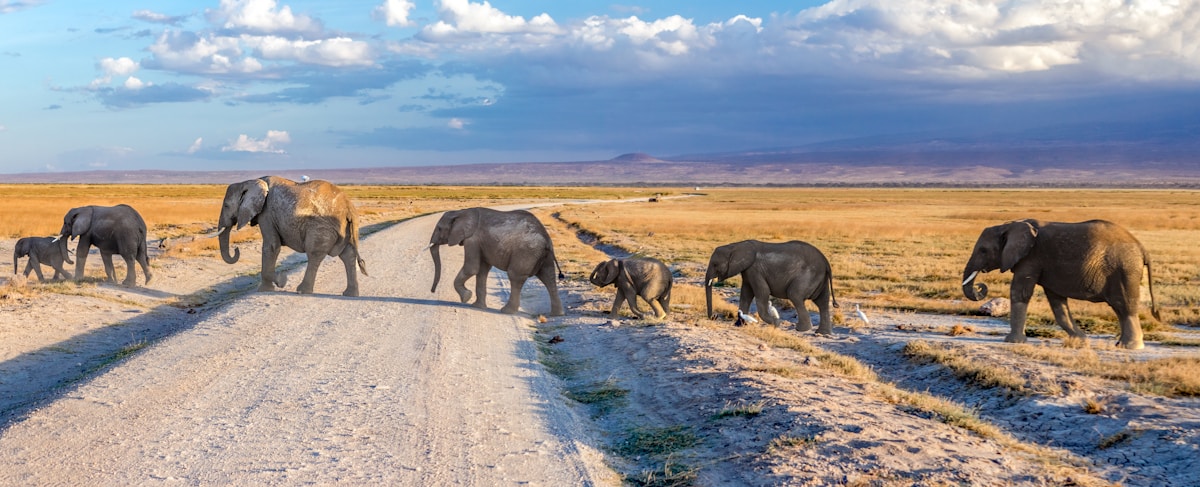
Amboseli is Kenya’s best park for elephant sightings, with herds of several hundred individuals against the backdrop of Mount Kilimanjaro. It covers 392 sq km and also has lion, cheetah, buffalo, and large numbers of zebra and wildebeest. Entry is approximately USD 43/person/day. A stay of two nights covers the park thoroughly.
Named budget-to-mid camps in or near Amboseli:
- Amboseli Sopa Lodge - mid-range, from approximately USD 120/person/night full board as of 2026; inside the park boundary
- Ol Tukai Lodge - mid-range, approximately USD 150–180/person/night; strong elephant-sighting location near the swamp
- Kibo Safari Camp - budget-friendly, from approximately USD 80–100/person/night; tented camp outside the park gate with shuttle into the park
- Sentrim Amboseli Camp - mid-range, approximately USD 100–120/person/night; park-adjacent with good rhino observation deck
The cheapest sleep-near-Amboseli option is Kimana or Loitokitok town, where local guesthouses charge USD 20–35/night - you then arrange your own transport and pay park fees separately.
Tsavo East and West
Tsavo is the largest national park complex in Kenya, covering 22,000 sq km across two sections. It is significantly less expensive than the Mara and less visited, meaning game drives feel uncrowded. Tsavo East’s flat, semi-arid landscape makes sightings easier; Tsavo West is more varied and holds the Mzima Springs (where hippos and crocs are visible through an underwater viewing window). Entry is approximately USD 35–40/person/day for Tsavo East, slightly higher for Tsavo West.
Named budget camps:
- Tsavo East: Satao Camp - mid-range, approximately USD 120–140/person/night full board; positioned near a waterhole with consistent sightings
- Tsavo East: Voi Safari Lodge - from approximately USD 100/person/night; older lodge but reliable and budget-accessible
- Tsavo West: Ngulia Safari Camp - KWS-run, approximately USD 40–60/person/night; basic bandas inside the park
- Tsavo West: Shetani Lava Lodge - budget self-catering, approximately USD 30–40/person/night; near the Shetani lava flow
Group vs Private Safari: What the Cost Difference Actually Means
Group safaris (joining a shared vehicle)
Group safaris join 4–7 travellers into one 4WD Land Cruiser or Safari van. The cost is split between passengers, which brings per-person prices down by roughly 60–70% compared to a private vehicle. The trade-off is flexibility: the driver follows a set schedule, and you cannot ask to spend an extra 40 minutes watching a lion without the group’s agreement.
Approximate group safari costs from Nairobi (as of 2026):
- 2-day/1-night Amboseli group safari: USD 250–350/person (transport, park fees, mid-range lodge)
- 3-day/2-night Tsavo East + West: USD 320–420/person
- 2-day/1-night Nairobi NP morning drive + afternoon: USD 80–120/person
Group safaris work best for solo travellers and pairs. If you are four or more, run the numbers on a private vehicle - the gap narrows quickly.
Private safaris
A private vehicle gives you full control: stop when you want, stay longer at a sighting, change routes. The vehicle hire typically runs USD 180–250/day plus park fees and accommodation. For groups of 6, private costs approach group costs. For pairs, private is roughly 2–3x more expensive per person.
Named budget group operators (verified July 2026)
- Bushtreks Safaris (Nairobi) - runs daily departures for Amboseli and Tsavo; quoted USD 270/person for 2D/1N Amboseli group as of 2026; no single supplement if the vehicle fills
- Bonfire Adventures (Nairobi) - larger operator with online booking; group Amboseli from USD 260/person 2D/1N
- Pollman’s Tours (Mombasa) - well established on the Mombasa–Tsavo corridor; 2D/1N Tsavo East from USD 220/person from Mombasa
- GetYourGuide - book vetted group safaris directly with instant confirmation
Camping Safaris: The Lowest-Cost Option
Kenya Wildlife Service operates public campsites inside most national parks. These are the cheapest legal way to sleep inside a park boundary.
KWS public campsite costs (as of 2026):
- Fee: approximately USD 15–20/person/night (non-resident)
- Park entry still applies separately
- Facilities: long-drop toilet, fire pit, sometimes running cold water - no tents or equipment provided
- You must bring your own tent, sleeping bag, and all food/water
Special campsites (also KWS) are more remote, often with only one group permitted per night. These cost approximately USD 30–50/person/night - higher than public sites but cheaper than any lodge, and the isolation is extraordinary.
What to bring for KWS camping
- A four-season tent rated for temperatures that can drop below 10°C at altitude
- Water (4 litres/person/day minimum - no drinking water at most sites)
- Gas stove and cooking equipment
- First-aid kit
- Torch and backup power bank
For travellers who don’t want to carry equipment, some Nairobi outfitters rent tents and camping gear by the day.
Self-Drive Safari in Kenya
Self-drive is possible in Kenya and cuts out the guide fee entirely. It requires a 4WD vehicle (rented in Nairobi, typically USD 80–120/day including basic insurance), confidence with off-road tracks, and advance research on park roads.
Where self-drive works well:
- Amboseli - relatively flat, well-marked tracks, park is compact
- Tsavo East - main circuit roads are reliable in dry season
- Nairobi NP - small enough to navigate independently
Where self-drive is harder:
- Masai Mara - the Mara has many tracks with no clear signage; getting lost costs time and increases risk
- Samburu - more remote, tracks deteriorate in the wet season
You must still pay all park entry fees and accommodation at the normal non-resident rate. Hire a car from Nairobi-based operators such as Budget Car Hire Kenya or Sixt Nairobi. Rental car hire for Kenya self-drive: /go/car-hire-kenya.
Self-drive cost estimate (2 people, 3 days, Amboseli):
- Car hire: approximately USD 280 (3 days, 4WD)
- Park fees: approximately USD 258 (2 adults × USD 43/day × 3 days)
- Budget camp accommodation: approximately USD 240 (2 nights, 2 pax, mid camp)
- Fuel (Nairobi–Amboseli return, approximately 400 km): approximately USD 70
- Total per person: approximately USD 425 vs approximately USD 600–700+ for a private guided safari
Realistic Budget Tiers Per Day
| Tier | Accommodation | Game Drives | Daily Cost Per Person |
|---|---|---|---|
| Shoestring | KWS public campsite | Self-drive or shared group | USD 60–90 |
| Budget | Basic tented camp (Kibo Camp style) | Group vehicle | USD 100–140 |
| Mid-range | Park-adjacent lodge (Sopa Lodge style) | Private or semi-private | USD 150–220 |
These figures include park entry, accommodation, and game drives but exclude international flights and Nairobi accommodation before and after the safari.
Tips to Reduce Costs
Travel in the shoulder season. April–May (long rains) and November (short rains) see rates at Amboseli and Tsavo drop by 20–40%. Sightings are still good - animals don’t disappear in rain. The Masai Mara gets more congested and pricier in peak season (July–October) as the wildebeest migration draws global visitors.
Book direct with camps. Many budget camps offer a 10–15% discount for direct email bookings vs booking through an aggregator. Always ask.
Combine parks in one circuit. Tsavo East and West are adjacent and share an entry system - a combined Tsavo circuit is more cost-efficient per park than visiting separately.
Eat at park canteens. Most KWS-run lodges and the Nairobi National Park gate area have canteens where a full meal costs USD 5–8. Avoiding lodge dining rooms (where meal packages inflate the price) can save USD 30–50/day for a couple.
Use Mombasa as a base for Tsavo. Tsavo East’s Voi Gate is 160 km from Mombasa - approximately a 2.5-hour drive. Staying in Mombasa and doing a Tsavo day trip or overnight is cheaper than staging from Nairobi.
Masai Mara: Public Campsite Options
The Masai Mara National Reserve (administered by the Narok County Government) has public campsites at several entry gates. These are the cheapest way to sleep inside Kenya’s most famous park.
Sekenani Gate campsites: The most used public campsite area, near the main eastern gate. Basic - drop toilets, no hot water, no electricity. Approximately USD 20/person/night as of 2026. Book via the Narok County Tourism Office in advance for peak season.
Talek campsites: Near Talek Gate on the northeastern boundary. Similar facilities. The surrounding Talek area has several budget bandas for travellers who prefer a roof.
Oloolaimutia campsites: Near the southern gate. Less commonly used - fewer other campers in peak season.
Key campsite rules:
- No campfires outside designated fire pits - dry season fire risk is serious
- Do not leave food accessible in tents - hyenas and baboons will take it
- Do not walk outside camp after dark without an armed ranger escort
- All vehicles must exit the park by 19:00
Booking: Through the Narok County Government Tourism office (+254 720 388 388) or through a Nairobi-based operator. Do not assume walk-in availability in July–October.
Mid-range options in the Mara ecosystem
For those who can stretch beyond the campsite tier, mid-range options in the Mara include:
- Mara Eden Safari Camp (Mara Triangle): from approximately USD 150/person/night full board
- Base Camp Masai Mara: from approximately USD 180/person/night, community-owned, includes two game drives
- Mara Ngenche Safari Camp: from approximately USD 200/person/night, tented camp on the Mara River
Rates rise 30–50% during peak season (July–October Great Migration).
Private conservancy camping
The conservancies surrounding the Masai Mara National Reserve - Ol Kinyei, Naboisho, Mara North, Lemek, Olare Motorogi - charge their own rates (from approximately USD 80–100/person/night for basic camping) but offer significantly fewer vehicles per sighting, night game drives (not permitted in the national reserve), and walking safaris with armed guides.
What to Bring for a Camping Safari
Packing for a camping safari differs from packing for a lodge safari:
Sleeping gear:
- Sleeping bag rated to at least 10°C (nights in the Mara and Amboseli can be cold)
- Sleeping mat if camping on the ground (check if campsites provide raised platforms)
- Pillow (lodges provide, campsites do not)
Clothing:
- Neutral colours - khaki, olive, tan. Avoid bright colours and white (dust).
- Warm fleece for early morning drives - temperatures in the Mara at 6am regularly drop to 12–15°C
- Waterproof layer for March–May and November–December wet seasons
- Hat with a brim - UV is intense at 1,500m elevation
Food and water:
- Carry at least 2 litres/person/day - dehydration is a real risk
- Self-catering campsites have no food supply. Narok town has supermarkets - stock up before entering
- A small gas stove and cooking kit if self-catering
Medical:
- Malaria prophylaxis - the Masai Mara and Tsavo are malaria zones (consult a travel clinic for Malarone, doxycycline, or mefloquine)
- Rehydration salts, ibuprofen, antihistamine cream, blister kit, sunscreen SPF50+
Best Timing for a Budget Camping Safari
July–October: Great Migration crossing season - spectacular wildlife but peak-season prices and more vehicles in the reserve.
January–February: Dry and warm. Excellent game viewing as animals concentrate around water. Quieter than peak, so campsites and budget operators are more negotiable. Calving season - high predator activity.
June and November: Shoulder months. Decent game viewing at noticeably lower prices - green-season discounts of 20–30% on many camps.
Avoid April–May (long rains): Roads to public campsites can become impassable. Confirm road access before booking.
Booking Your Budget Safari
For group safaris with instant confirmation and verified operators, GetYourGuide’s Kenya page lists day trips from Nairobi and multi-day itineraries. If you’re based on the coast, Mombasa-based tours include Tsavo packages. For Amboseli specifically, browse Amboseli safari tours.
The best budget safaris in Kenya are the ones planned in advance - last-minute group spots do exist but tend to fill in peak season. Book at least 3–4 weeks ahead for July–September travel.
Travelling soon? Check our Kenya last-minute tours for confirmed availability and instant booking.