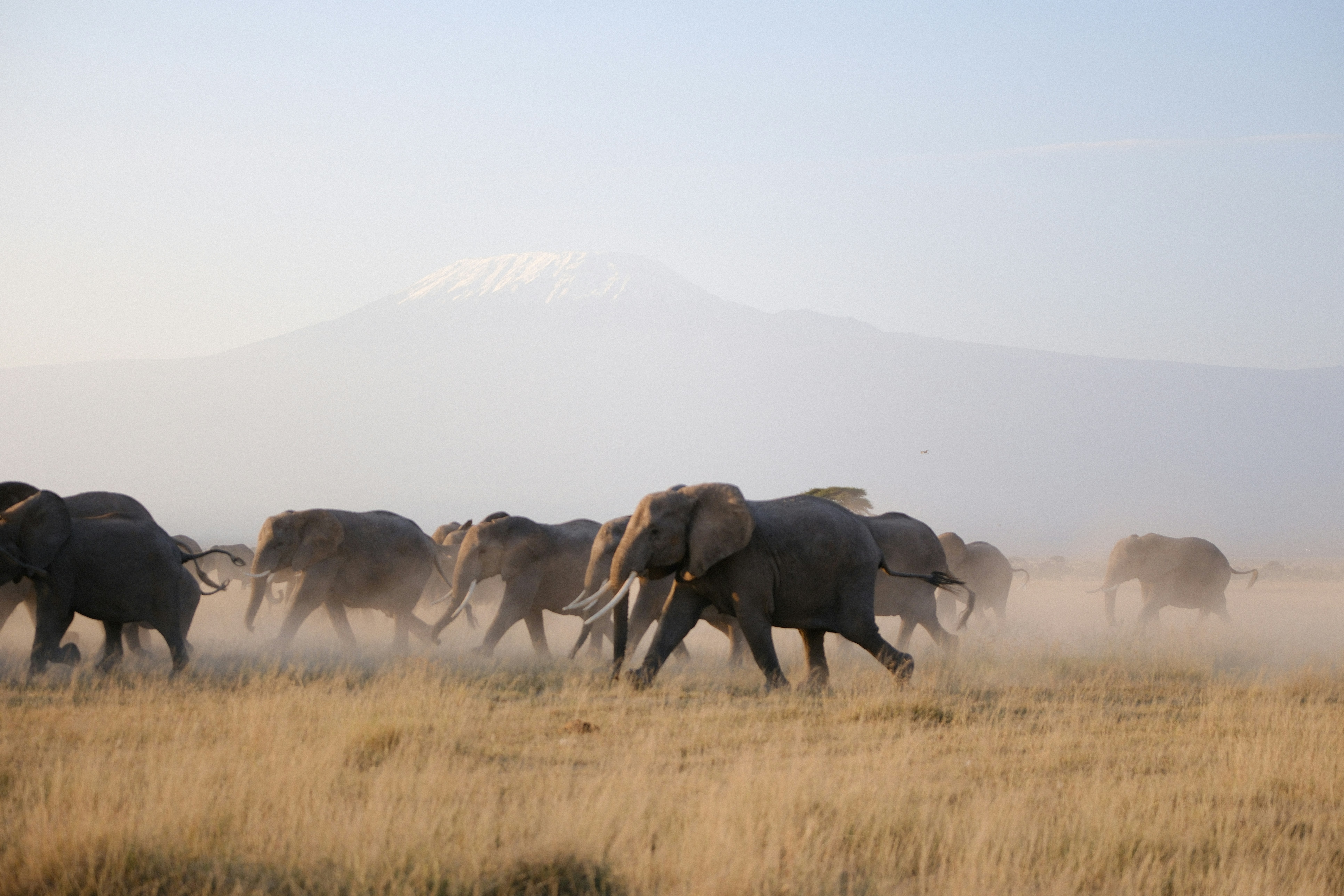
Amboseli National Park produces one of Africa’s most iconic photographs: a herd of African elephants crossing a dusty plain with Mount Kilimanjaro’s snow-capped summit rising behind them. At 392 km², the park is not Kenya’s largest, but it may be its most photographically celebrated.
Amboseli’s elephant population is among the most studied in the world. The Amboseli Elephant Research Project, founded in 1972, has tracked individual elephants across multiple generations — some research subjects are now into their 50s. This long-term data has made Amboseli central to global elephant conservation science.
Wildlife
Elephants: Amboseli’s 1,400+ elephants are the core attraction. Family herds move through the swamps, woodlands, and open plains in predictable daily patterns. Close-up viewing is exceptional here — vehicles can approach to within 10–20 metres of habituated herds without disturbance. Bull elephants often reach impressive tusk length; Amboseli is one of the last places in Kenya where you routinely see large-tusked bulls.
Big cats: Lions, leopards, and cheetahs are all present. Cheetahs are most reliably spotted on the open plains east of Ol Tukai. Lions use the lugga (seasonal drainage channels) and woodland edges. Leopards are present but harder to find.
Buffalo: Large herds gather in the swamps during dry season. The Enkiama and Longinye swamps are particularly good spots.
Wildebeest and zebra: Substantial resident populations supplement the Amboseli ecosystem year-round. They do not participate in the famous Serengeti migration — this is a separate, resident population.
Birds: Over 600 species recorded, making Amboseli one of Kenya’s premier birdwatching destinations. Highlights include the African fish eagle, martial eagle, secretary bird, grey crowned crane (Kenya’s national bird), and an extraordinary variety of waterbirds around the swamps: saddle-billed stork, yellow-billed stork, African spoonbill, and pelicans.
Hippos and crocodiles: Present year-round in the Amboseli swamps. The swampland is fed by underground springs from Kilimanjaro’s glaciers, providing permanent water even during drought.
Kilimanjaro Views
Mount Kilimanjaro is 5,895m tall and sits entirely within Tanzania, but its mass dominates Amboseli’s southern skyline. The views are weather-dependent:
- Best visibility: July to October, early morning (06:00–09:00 before cloud builds)
- Clearest months: July and August — cold, dry, and exceptionally clear
- Least reliable: April and May (long rains), when cloud covers the summit consistently
- Specific viewpoints: Observation Hill (accessible by vehicle and foot) offers a 360-degree panorama of the swamps and plains; dawn here is a reliable Kilimanjaro moment when conditions allow.
Entry Fees and Park Gates
Fees (approximate, as of 2026):
- Non-resident adult: approximately USD 90 per person per day
- Non-resident child (3–17): approximately USD 50 per day
- Kenyan citizen adult: approximately KES 1,050 per day
- Vehicle entry: approximately KES 300
Fees are paid via eCitizen before arrival. The park charges higher rates than most Kenyan parks — factor this into budget planning. A 2-night stay costs approximately USD 180 in park fees alone, before accommodation.
Main gate: Meshanani Gate on the Namanga Road (C102) is the primary entry point from Nairobi. Kimana Gate (northeast) provides access from Tsavo West via the Chyulu Hills.
Opening hours: 06:00 to 18:00 daily.
Getting There
From Nairobi (approximately 230km):
- Self-drive via A104 south through Namanga, then west on C102 — approximately 4.5 hours.
- Shared shuttles run to Namanga town (KES 600–900); arrange a transfer for the final 30km to the park separately, or pre-book through your lodge.
- Charter flights from Nairobi Wilson Airport to Amboseli Airport: approximately USD 150–250 per sector. Safarilink and Air Kenya serve this route when connected to lodge bookings.
From Tsavo West (approximately 120km via Kimana):
- Exit Tsavo West through Chyulu Gate, head north on the Loitokitok road via Kimana. The route takes around 3 hours and passes through Maasai community land — good for roadside wildlife.
Where to Stay
Accommodation at Amboseli runs from public campsites to high-end eco-lodges. Prices below are approximate, per person per night on full board (2026 estimates) and fluctuate by season.
Budget:
- KWS public campsites (Ol Tukai, Kimana): approximately USD 30–40 per person. Basic facilities — pit toilets, water tank. Self-catering essential.
Mid-range:
- Amboseli Sopa Lodge: 97-room lodge inside the park with pool and Kilimanjaro views; approximately USD 150–220 per person full board.
- Kibo Safari Camp: tented camp just outside the park with good value; approximately USD 120–180 per person full board.
- Ol Tukai Lodge: central park location, good for early morning game drives; approximately USD 180–260 per person full board.
Luxury:
- Tortilis Camp: 17-tent luxury camp on the Kitirua Conservancy bordering Amboseli; outstanding Kilimanjaro views and private conservancy access; from approximately USD 450–700 per person full board.
- Elewana Tortilis Camp: Angama Amboseli, set on the edge of the escarpment with 360-degree views; from approximately USD 600–1,000 per person full board.
Best Time to Visit
July to October (peak dry season): The Kilimanjaro views are at their clearest, game viewing is excellent as wildlife concentrates around the swamps, and temperatures are comfortable at 20–27°C. This is the busiest and most expensive period.
January to February (short dry season): A quieter, hotter alternative. Kilimanjaro views are good before noon. Accommodation rates are 15–25% lower than peak season. Temperatures reach 30–35°C.
November to December (short green season): The short rains bring lush grass and arriving migratory birds. Elephant viewing remains excellent as the swamp is a constant draw. Rates drop and crowds thin.
April to June (long rains — least recommended): Sustained rainfall makes tracks muddy, some roads impassable, and Kilimanjaro is frequently cloud-covered. Wildlife is dispersed. Some lodges offer steep discounts; a worthwhile option only for experienced birders or budget-focused visitors.
Birdwatching
Amboseli’s swamps attract one of Kenya’s highest concentrations of waterbirds. The Enkiama and Longinye swamps are the most productive. Dedicated birding game drives starting before 07:00 can yield 80–100 species in a single morning during the green season. The park is a reliable site for:
- Grey crowned crane (near-guaranteed in the swamps)
- African fish eagle (heard and seen daily)
- Secretary bird (on open plains)
- Saddle-billed stork
- Carmine bee-eater (seasonal)
- Over 47 species of raptor
Combining with Other Parks
Amboseli connects naturally with Tsavo National Park via the Kimana Gate and Chyulu road. A classic itinerary runs 2 nights Amboseli, transfer through Kimana to Tsavo West (2 nights), then Tsavo East (1 night) before exiting to Mombasa or Nairobi.
Book Amboseli Safari Tours on GetYourGuide
Browse and compare verified operators with confirmed reviews. Park entry is approximately USD 90/person/day (as of 2026) and is typically quoted separately from tour costs.
| Tour | Duration | From price | What’s included |
|---|---|---|---|
| Amboseli National Park Full-Day Tour from Nairobi | Full day | Check pricing | 4WD transfer from Nairobi, game drive, professional guide |
| 2-Day Amboseli National Park Safari | 2 days/1 night | Check pricing | Shared 4WD, 1 night camp or lodge, full-board meals, 2 game drives |
| Amboseli Day Tour with Maasai Village Visit | Full day | Check pricing | Park game drive + cultural Maasai village visit, transport from Nairobi |
For a comparison of the two parks, see our Amboseli vs Tsavo guide.