Tsavo National Park is Kenya’s largest protected area — 22,000 km² split into Tsavo East and Tsavo West. Together they cover more ground than Wales. Unlike the Masai Mara, Tsavo sees fewer crowds while still delivering exceptional wildlife: elephants, lions, leopards, cheetahs, buffalos, and over 600 bird species.
The park’s most recognisable feature is its elephants. Red soil coats their skin as they wallow and dust-bathe, producing the “red elephants” that make Tsavo instantly recognisable. These are some of the largest elephant herds remaining in East Africa, with the Tsavo ecosystem supporting an estimated 14,000–15,000 individuals.
Tsavo East vs Tsavo West
The two parks share a border along the Nairobi-Mombasa highway (A109) but have distinct characters.
Tsavo East covers the larger eastern section. The terrain is open semi-arid savanna — flat, wide, and ideal for spotting wildlife from a distance. The Galana River runs through the park and provides a reliable water source that draws large concentrations of game during dry months. The Yatta Plateau, the world’s longest lava flow at 300km, forms the park’s northern boundary.
Tsavo West is more topographically varied. Volcanic cones, kopjes (rocky outcrops), dense thickets, and the dramatic Ngulia Hills give it a wilder feel. The highlight is Mzima Springs — a crystal-clear freshwater oasis where 50 million gallons of water bubble up through volcanic rock daily. An underwater viewing chamber allows visitors to watch hippos and fish from below the surface.
Combined circuit: Most visitors do a 2–3 night itinerary that covers both parks, entering via one gate and exiting through another. Self-drive is feasible on Tsavo’s main tracks, though a 4WD is essential.
Wildlife
Elephants: Tsavo’s defining species. The red-dust-coated herds are among the largest in Kenya. Expect sightings daily during dry season, particularly around the Galana River and Aruba Dam in Tsavo East.
Lions: Tsavo has historically been home to maneless male lions, unusual among African lion populations. This is not universal — younger males may have partial manes — but the phenomenon is well documented. Lion prides are distributed across both parks.
Leopards: Present throughout but elusive. Your best chances are dawn and dusk near rocky kopjes in Tsavo West.
Cheetahs: More readily seen in Tsavo East’s open plains.
Black rhinos: Tsavo West’s Ngulia Rhino Sanctuary protects a small population of critically endangered black rhinos. The sanctuary is not open to general visitors — dedicated rhino-tracking walks are occasionally arranged through the park warden. Contact Kenya Wildlife Service (KWS) in advance if this is a priority.
Buffalo and hippos: Common. Large buffalo herds in Tsavo East; hippos at Mzima Springs and along the Galana and Tsavo rivers.
Birdlife: 600+ species recorded. Notable sightings include the carmine bee-eater (seasonal), African fish eagle, Taita falcon, and dozens of raptors riding the thermals over the Yatta Plateau.
Mzima Springs
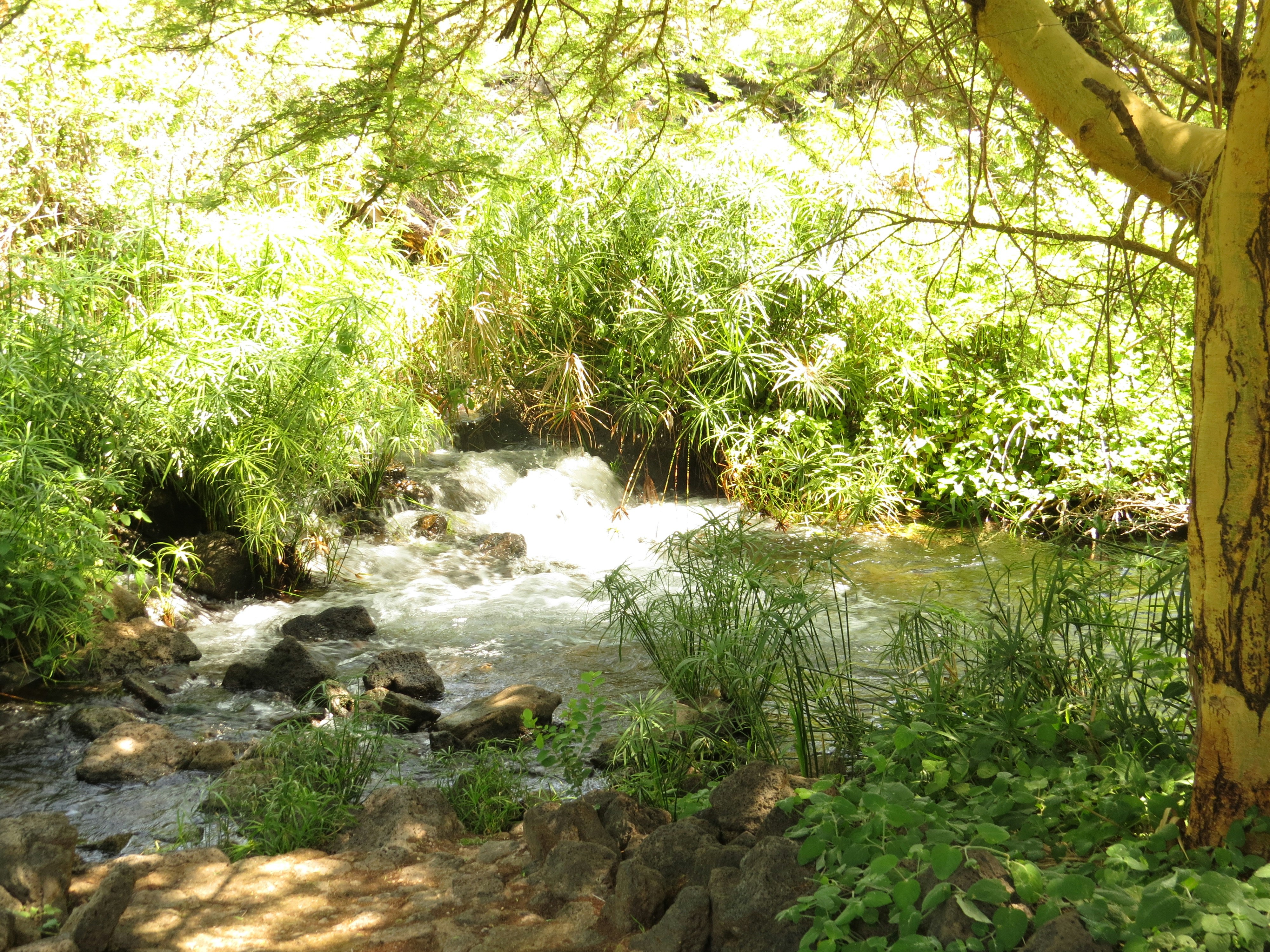
Mzima Springs is the standout natural feature inside Tsavo West. The springs are fed by rainwater filtering through Mount Kilimanjaro’s volcanic rock, emerging 50km away in Tsavo as clear, fast-moving water. The oasis supports papyrus, fig trees, hippos, crocodiles, and an extraordinary concentration of birds.
There is a raised walkway and an underwater viewing window (where visible; maintenance can affect access). Dawn visits give the best hippo-watching before they retreat to the shade. Entry to Mzima Springs is included in the general park fee — no separate ticket is required.
Opening hours align with the park: gates open at 06:00 and close at 18:00.
Entry Fees and Park Gates
Fees (approximate, as of 2026):
- Non-resident adult: approximately USD 52 per person per day
- Non-resident child (3–17): approximately USD 35 per day
- Kenyan citizen adult: approximately KES 1,050 per day
- Vehicle entry: approximately KES 200–700 depending on vehicle type
Fees are paid via eCitizen (ecitizen.go.ke) using M-PESA or bank card. Print or download proof of payment before arrival — park rangers will check.
Main gates:
- Tsavo East: Voi Gate (main), Sala Gate (southern, near coast), Manyani Gate (northern)
- Tsavo West: Mtito Andei Gate (off A109), Tsavo Gate, Chyulu Gate (near Amboseli)
Opening hours: 06:00 to 18:00 daily.
Getting There
From Nairobi (approximately 220km):
- Self-drive via A109 Nairobi-Mombasa highway takes around 4 hours to Mtito Andei Gate (Tsavo West) or Voi Gate (Tsavo East).
- Shared shuttles (Easy Coach, Modern Coast) run Nairobi-Mombasa and stop at Mtito Andei or Voi — from approximately KES 900–1,500 per seat. Arrange transfer from town to the gate separately.
- Flights: Voi airstrip (Tsavo East) and Kilaguni airstrip (Tsavo West) receive charter and scheduled light aircraft from Nairobi Wilson Airport. Air Kenya and Safarilink serve routes in conjunction with lodge bookings; expect approximately USD 180–280 per sector.
From Mombasa (approximately 130km to Sala Gate):
- Self-drive along A109 west — around 2.5 hours to Voi.
- Most Mombasa-based beach lodges offer Tsavo day-trip packages from approximately USD 120 per person.
Where to Stay
Accommodation ranges from KWS public campsites to luxury tented camps. Prices quoted are approximate, per person per night as of 2026, and vary significantly by season.
Budget / Self-catered:
- KWS public campsites (Aruba, Ndololo, Kamboyo): approximately USD 30–40 per person. Basic facilities — toilets, water, fire pit. Book via eCitizen.
- KWS bandas (self-catering cottages): approximately USD 80–120 per night for a unit. Available at several locations in both parks.
Mid-range:
- Voi Safari Lodge (Tsavo East): cliff-edge lodge overlooking a waterhole and vast plains. Rooms from approximately USD 150–200 per person per night on full board.
- Sentrim Tsavo East Camp: tented camp with good wildlife access; approximately USD 120–180 per person on full board.
- Severin Safari Camp (Tsavo West): tented camp near Mzima Springs; approximately USD 130–180 per person on full board.
Luxury:
- Finch Hattons (Tsavo West): one of Kenya’s most acclaimed bush camps, with 35 tents set beside a natural spring; from approximately USD 400–600 per person on full board.
- Satao Camp (Tsavo East): classic tented camp directly overlooking a large waterhole — nighttime animal activity is exceptional; from approximately USD 300–500 per person.
Best Time to Visit
Peak dry season: July to October. The long dry season concentrates game around permanent water. Temperatures are moderate (18–30°C), dust is constant, and tracks are good. This aligns with European summer holidays, making camps fuller and prices slightly higher.
Short dry season: January to March. Quieter, still excellent game viewing, and often lower rates. Hot (28–35°C) but manageable.
Green season: November to December and April to June. The parks are lush and birdwatching is at its peak (migratory species arrive). Wildlife is dispersed and harder to spot. Some tracks in Tsavo West can flood after heavy rain. The green season offers 20–40% lower accommodation rates and minimal crowds — a viable option for birders and experienced safari-goers.
Self-Drive Tips
- A 4WD with high clearance is essential, particularly in Tsavo West and after rain.
- Carry a paper map or download offline maps (Maps.me has Tsavo covered). Mobile signal is patchy inside both parks.
- Start game drives at 06:00 (gate opening) — morning hours produce the best light and most animal activity.
- Stick to designated tracks. Off-road driving is prohibited and carries fines.
- The Aruba Dam area in Tsavo East and the waterhole at Voi Safari Lodge are reliable late-afternoon elephant-watching spots.
- Fuel: fill up in Voi (Tsavo East) or Mtito Andei (Tsavo West) before entering. There is no fuel inside the parks.
Combining Tsavo with Other Parks
Tsavo connects easily with several other destinations:
- Amboseli National Park is accessible from Tsavo West via the Chyulu Gate and Kimana. A 2-night Amboseli + 2-night Tsavo circuit is a popular self-drive itinerary.
- The Mombasa coast is 130km east of Voi — many visitors combine a Tsavo safari with 3–4 nights at Diani Beach.
- Nairobi National Park is a feasible first or last night stop on the Nairobi end.
For a full breakdown of costs, read our Tsavo safari cost guide.
Prefer a fully arranged safari? Browse Tsavo safari tours on GetYourGuide — includes guided day trips from Mombasa, multi-day Tsavo East and West packages, and self-drive lodge combinations.
For the ecology behind the red elephants, the Yatta Plateau lava flow, Mzima Springs, and the Galana River wildlife corridor, see our Tsavo wildlife guide.