Amboseli National Park is Kenya’s most photogenic park - a place where the largest elephant families on the continent move beneath the snow-capped summit of Mount Kilimanjaro. Choosing the right lodge determines how close you sit to the iconic swamp, whether you have an unobstructed view of the mountain, and what is included in your rate. For background on the wildlife and ecosystems you will encounter, see our Amboseli wildlife guide.
This guide covers the full range of accommodation inside and around Amboseli, from ultra-luxury tented camps to KWS public campsites, with honest price ranges as of 2026.
Where the Lodges Are: Park Zones and Locations
Amboseli is a compact park - roughly 392 sq km - but lodge location still matters. The swamp-adjacent central zone gives the clearest sightlines to Kilimanjaro and the densest elephant traffic. The Observation Hill area is popular for sundowners. A handful of private conservancies border the southern and eastern edges of the park, offering off-road driving and night drives that are not permitted inside the national park itself.
Most lodges cluster in the central zone. If you want wildlife at the fence line and minimal driving time between rooms and game drives, central is the right choice. If you want a more exclusive experience with lower vehicle numbers, look at the conservancy properties outside the park boundary.
Luxury Amboseli Lodges (approximately $450–$750 per person per night)
Tortilis Camp
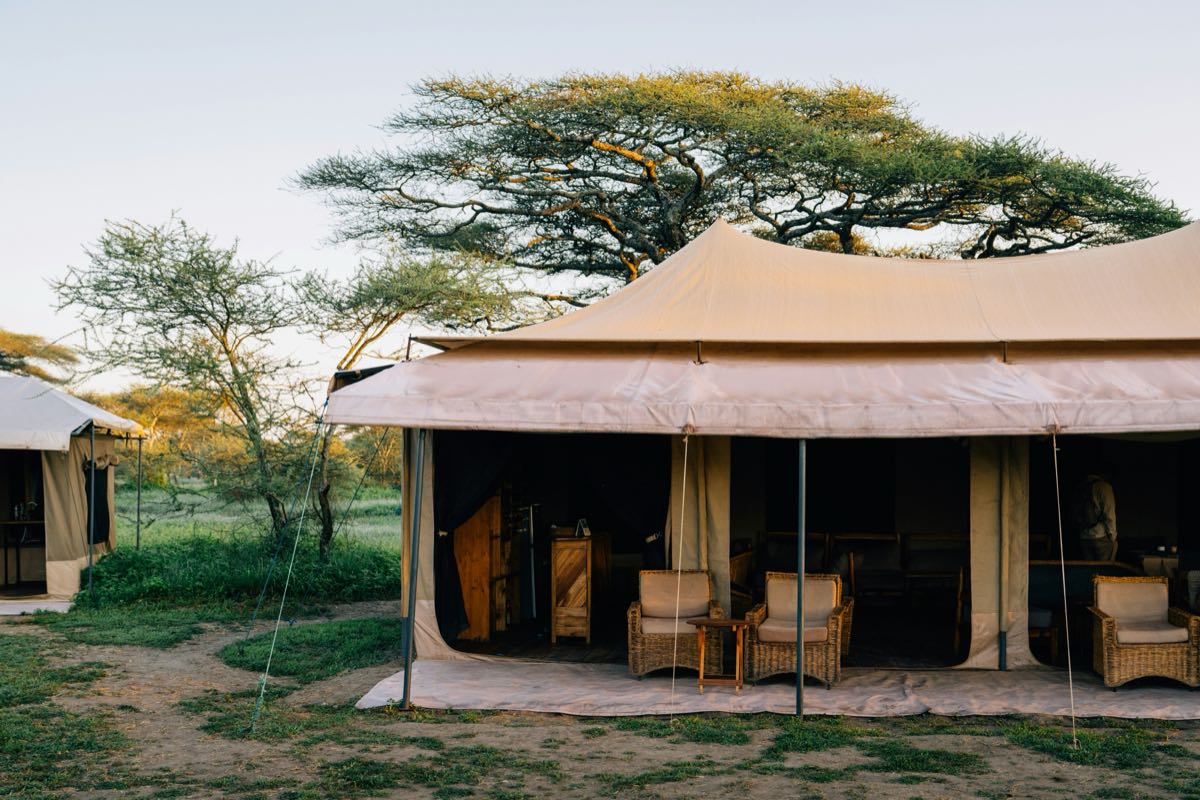
Tortilis Camp is widely considered the benchmark property in the Amboseli ecosystem. Fourteen tented suites are spread across a private acacia grove just outside the park boundary in the Kitirua Conservancy, with unobstructed views of Kilimanjaro from the main area and most rooms. Rates are approximately $600–$750 per person per night as of 2026, all-inclusive: full board, twice-daily game drives, bush walks, and conservancy fees. The camp’s elevated pool deck with Kilimanjaro framed behind the acacia canopy is a genuinely hard image to beat.
Because the camp sits in a private conservancy, guides can leave established tracks and conduct walks - two activities not permitted inside the national park. Night drives are also available, expanding the chance of encountering nocturnal species such as spring hares, porcupines, and the occasional hyena.
Tawi Lodge
Tawi is a family-owned boutique property on a 10,000-acre private conservancy adjoining the park’s southwest boundary. Nine suites each have a private plunge pool. Wildlife density in the conservancy is high - the property maintains a dedicated lion monitoring programme - and the elevated main lodge has an exceptional direct line to Kilimanjaro. Rates run approximately $500–$700 per person per night as of 2026, all-inclusive, and the conservancy fee is bundled in. Children are welcome from age six, which is less common at similar properties in the region.
Amboseli Sopa Lodge
Amboseli Sopa Lodge, set inside the national park, offers 63 rooms - larger than most Amboseli properties - built into low-rise rondavel-style blocks with good views of the Kilimanjaro massif. The price point is noticeably lower than Tortilis or Tawi: approximately $450–$550 per person per night as of 2026 on a full-board basis with game drives included. The pool faces the mountain and game drives are guided directly from the lodge.
Mid-Range Amboseli Lodges (approximately $150–$350 per person per night)
Ol Tukai Lodge
Ol Tukai Lodge is one of Amboseli’s most established properties, sitting directly in the heart of the park adjacent to the famous swamp. It is a good mid-range choice: 80 rooms at more accessible prices, and the location is unbeatable for elephant sightings - herds frequently pass between the lodge and the water’s edge. Rates are approximately $250–$350 per person per night as of 2026 on full board, with optional game drives charged separately or included in certain packages.
The rooms are comfortable if not particularly designed for luxury, and the open-fronted lounge has one of the most reliable Kilimanjaro views in the park. Early risers get the summit before morning cloud obscures it; the lodge’s proximity to the swamp means elephant activity is visible from breakfast.
Amboseli Serena Safari Lodge
Amboseli Serena Safari Lodge sits within the national park and offers 92 rooms built in a traditional circular style. Rates are approximately $200–$280 per person per night as of 2026 on a full-board basis. The property has a pool, curio shop, and cultural village visit from a nearby Maasai community as an add-on activity. Game drives are offered from the lodge but not always included in the base rate - confirm when booking.
The Serena is a reliable choice for families or groups looking for a well-managed, mid-scale property with multiple room types including family units. It lacks the intimacy of the smaller camps but compensates with good logistics and consistent service quality.
Kibo Safari Camp
Kibo Safari Camp is a permanent tented camp offering a more immersive feel at a lower price point. Located just outside the park boundary, rates are approximately $150–$220 per person per night as of 2026 on a full-board basis, with game drives available as an extra charge. The setting in open acacia scrub is pleasant and the camp is popular with families who want tented accommodation without the full luxury price tag.
Budget Accommodation and Campsites (approximately $15–$80 per person per night)
KWS Public Campsites
Kenya Wildlife Service operates several public campsites inside Amboseli National Park. Rates are approximately $15–$20 per person per night as of 2026 (non-residents), payable at the KWS gate. The campsites are basic - long-drop toilets, no showers, no power - but the locations inside the park mean game drive access is immediate and the night sky is unobstructed.
Self-drive visitors with their own tent and equipment find the public sites a genuine budget option. However, elephant activity around the campsites is significant - food should be stored securely and walking after dark is inadvisable without a KWS ranger escort.
Special Campsites
KWS also maintains a number of exclusive-use special campsites within the park for mobile operators and private groups. These must be booked in advance through KWS Nairobi headquarters. Rates are approximately $60–$80 per person per night as of 2026, plus the standard park entry fee. They suit operators running mobile safaris or private groups wanting a more secluded overnight inside the park boundary.
Booking Tips
Distance from Nairobi: Amboseli is approximately 230 km south of Nairobi via the Namanga road - around 4–5 hours by road in normal traffic conditions. Many lodges offer scheduled light aircraft transfers from Wilson Airport in Nairobi or Jomo Kenyatta International Airport, arriving at Amboseli’s small airstrip in about 45 minutes. Road transfers are cheaper and offer roadside wildlife; flying is faster and includes aerial views of the Rift Valley. Amboseli safari tours and transfers can be organised from Nairobi for those not booking through a lodge package.
Park entry fees: Amboseli National Park charges non-resident adults approximately $80 per person per day as of 2026, paid via the KWS Savannah card system. Most mid-range and luxury lodges bundle park fees into their daily rate - confirm before booking.
Kilimanjaro visibility: The summit is most reliably clear in the early morning (before 9:00–10:00 am) and again at dusk. Clouds gather over the peak by mid-morning on most days. Request a room with a direct mountain orientation when booking; eastern-facing rooms generally have the clearest line of sight.
Peak season: Amboseli’s peak visitor period runs June–October, aligned with Kenya’s general dry season and Masai Mara migration season. Rates at most properties are highest from July through September. Book luxury lodges 6–9 months in advance for this window.