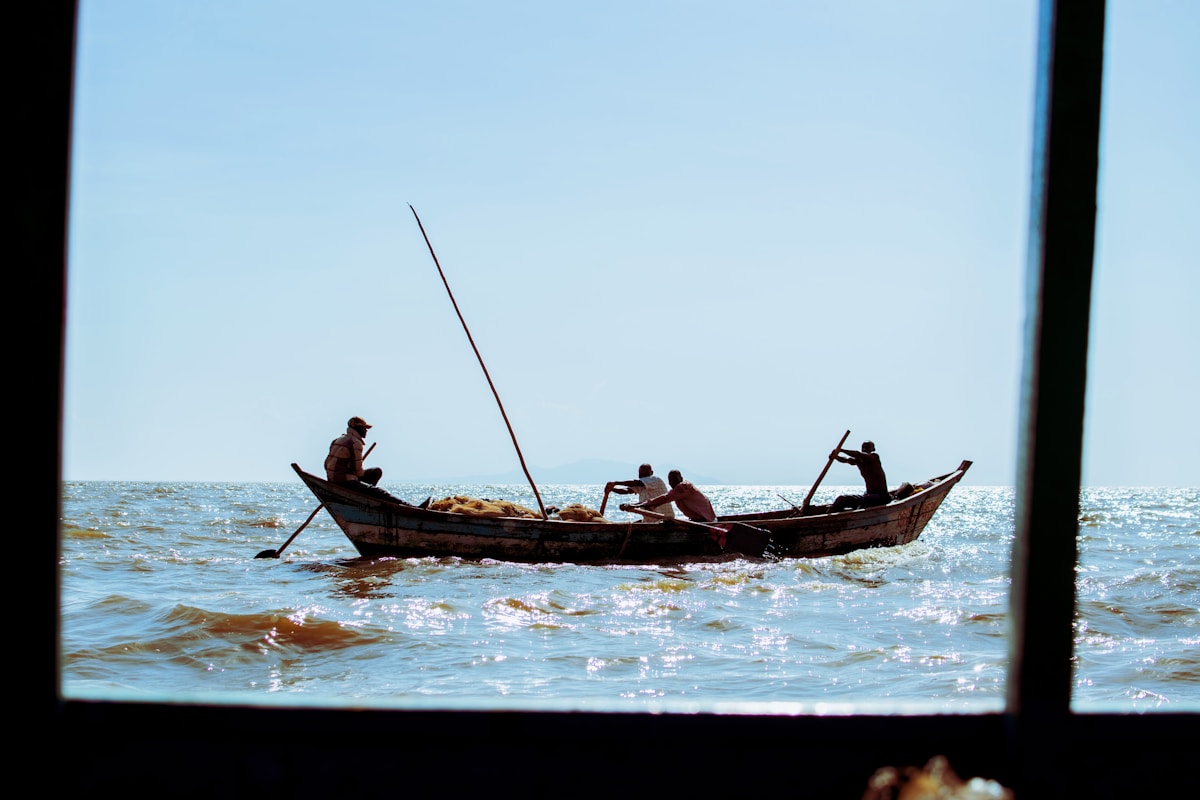
Kisumu sits on the eastern shore of Lake Victoria — Africa’s largest lake — and its entire food identity is shaped by that fact. The city of around 600,000 people eats tilapia the way coastal Kenya eats reef fish: daily, in quantity, and without apology. Add a lakeshore market scene, Luo cuisine traditions, and a growing cluster of cafes catering to university students, and Kisumu rewards any food-curious visitor willing to leave the safari route for a day.
This guide covers the essential dishes, the key venues, and the neighbourhoods where Kisumu’s food actually happens.
Tilapia: The Centrepiece of Kisumu Eating
Lake Victoria tilapia is a different creature from the farmed tilapia found in supermarkets worldwide. Wild-caught from the lake and brought in daily by the dugout canoe fleets that leave before dawn, the fish arrives at market the same morning it was swimming. It is fried whole in deep oil until the skin is crisp, or grilled over charcoal, and served with ugali (white maize polenta) and kachumbari (tomato, onion, and chilli salsa).
A full fried tilapia with ugali and kachumbari at a lakeside or market stall runs approximately KES 400–700 (around USD 3–5.50) as of 2026.
Dunga Beach is the most accessible tilapia spot for visitors. This small fishing village 3 km south of the Kisumu city centre has a string of open-air restaurants directly on the lake shore. Dunga Hill Camp and the adjacent open-air grills serve fresh tilapia in this setting for approximately KES 500–800 per fish. The atmosphere — fishermen hauling nets, pelicans waiting at the shoreline, the lake stretching to the horizon — is genuinely worth the short boda-boda or tuk-tuk ride from the centre. Note that Dunga Beach stalls are primarily lunch venues; most wind down by 5–6pm.
In the city itself, Mama Oliech’s (named for Kenya football legend Oliech’s mother, though the family link varies by account) on Jomo Kenyatta Highway near the market remains the most-cited local recommendation for tilapia. Tables inside a simple room, cash only, fish priced approximately KES 500–700 including sides. It opens from around 11am and often sells out by 3pm.
Ugali Wa Wimbi: The Kisumu Staple
While white ugali (maize-based) is eaten across Kenya, Kisumu and the Luo-speaking western Kenya region eat ugali wa wimbi — finger millet ugali — with greater frequency. The darker, denser millet version pairs particularly well with oily fresh tilapia: its slightly sour earthiness cuts through the fish fat in a way maize ugali doesn’t quite manage.
You won’t find it labelled prominently; ask at any local restaurant or market stall whether they have wimbi ugali. Many do, especially at lunch. It is typically the same price as white ugali, included in the standard fish plate.
Kisumu Market: The Street-Food Centre
Kisumu City Market on Oginga Odinga Street is the city’s central food market and the fastest way to eat cheaply and well. The market runs from around 7am to 6pm daily.
Inside and around the perimeter, look for:
- Mandazi (deep-fried dough, similar to a donut but drier and less sweet) — approximately KES 10–20 per piece from stalls at the entrance.
- Bhajia (Kenyan-Indian spiced potato fritters in batter) — approximately KES 50–100 for a portion.
- Boiled eggs with chilli salt — roadside staple, approximately KES 30–50.
- Omena (small silver lake fish, sun-dried then fried): intensely flavoured, an acquired taste, served with ugali. A plate from a market vendor runs approximately KES 150–250 (USD 1–2).
- Viazi karai (whole boiled potatoes in a thin spiced batter, deep-fried) — street snack, approximately KES 50–100.
For a sit-down market lunch, several stalls in the covered section serve fish, ugali, and greens plated to order for approximately KES 300–500. Point at what you want; there is no printed menu.
Restaurants and Mid-Range Dining
Kisumu Hotel Restaurant on Jomo Kenyatta Highway in the town centre is the city’s most established mid-range option. It serves Kenyan and Indian dishes, including biriyani (approximately KES 600–900) and grilled chicken (approximately KES 700–1,000), in a proper sit-down setting with table service. Reliable for a leisurely lunch away from the market bustle.
Kiboko Bay Resort on the lake shore north of the centre has a restaurant open to day visitors as well as guests. Fish mains run approximately KES 1,200–2,000 (USD 9–15); the setting — deck chairs, lakefront view, papyrus reeds in the water — is the best in Kisumu. It is not a budget spot, but the tilapia here is reliably well-prepared.
Imperial Hotel Restaurant on Jomo Kenyatta Highway does a daily buffet lunch for approximately KES 900–1,400 (USD 7–11) covering Kenyan, Indian, and continental dishes. Useful for groups with mixed preferences.
Indian and Coastal Influence
Like much of western Kenya, Kisumu has a significant South Asian community — descendants of railway workers and traders who settled in the late colonial period. Several Indian-owned restaurants and bakeries survive along the main commercial streets.
Seasons Restaurant near the town centre does a reliable north Indian menu — dahl makhani, butter chicken, chapati — at approximately KES 500–900 per main (USD 4–7). The biriyani is a good call if the tilapia has been your lunch already.
Mandazi and bhajia at market stalls are the most visible legacy of Indian-Kenyan food exchange; both are eaten daily across all income levels in Kisumu.
Cafes and Coffee
Kisumu’s café culture has expanded over the past five years, pushed in part by the student population of Maseno University and Kisumu’s growing technology and NGO sector.
Kaldis Coffee (a local specialty chain, separate from the Ethiopian brand of the same name) has a Kisumu branch near the town centre doing espresso drinks from approximately KES 200–450 and pastries from approximately KES 150–300. A reliable spot for a morning coffee before heading to Dunga Beach.
Backstreet Food Joint near the Kenyatta Sports Grounds is a daytime café popular with university students: rice plates, grilled chicken, and chips from approximately KES 300–600 (USD 2–5). Not a destination in itself, but a good cheap lunch spot if you’re near the sports ground.
What to Drink
Busaa is a traditionally fermented maize or sorghum beer produced at household level and sold in local pubs (referred to locally as chang’aa dens though busaa is legal). It is a milky, low-alcohol fermented drink and is very much part of western Kenya social life. You’ll find it in informal drinking spots near the market; a cup costs approximately KES 30–80 (under USD 1). It is not widely available in restaurants or formal hotels.
For something safer in terms of provenance, Tusker lager is approximately KES 280–400 in restaurants and KES 180–250 in cheaper local bars. Sodas (Coke, Fanta, Sprite) are KES 80–150 depending on venue.
Fresh mango, passion fruit, and sugarcane juice vendors operate at the market and along Oginga Odinga Street from approximately 8am–6pm; a glass of fresh juice is approximately KES 50–100 (under USD 1).
Practical Tips
- Best time to eat tilapia: Lunch, between 11am and 2pm, when fresh fish is in from the morning catch. Evening tilapia is sometimes from the previous day’s haul.
- Getting to Dunga Beach: Boda-boda (motorcycle taxi) from the town centre costs approximately KES 100–200 each way; tuk-tuk approximately KES 150–250. Negotiate before boarding.
- Cash: Most market stalls and local restaurants are cash only (Kenyan shillings). Hotel restaurants accept cards, but confirm before ordering. M-Pesa (mobile money) is widely accepted even at stalls.
- Hygiene: Stick to freshly cooked food and venues that are visibly busy — turnover means fresher ingredients. Avoid pre-cooked fish sitting out at market stalls; opt for plates made to order.
- Tipping: Not universal at street level; rounding up or leaving KES 50–100 is appreciated at local restaurants.
Kisumu is not a city that shouts about its food, but it rewards slow exploration. The market, Dunga Beach at lunchtime, and an evening at Kiboko Bay give a genuine cross-section of what western Kenya eats — and the tilapia alone is worth making the detour.