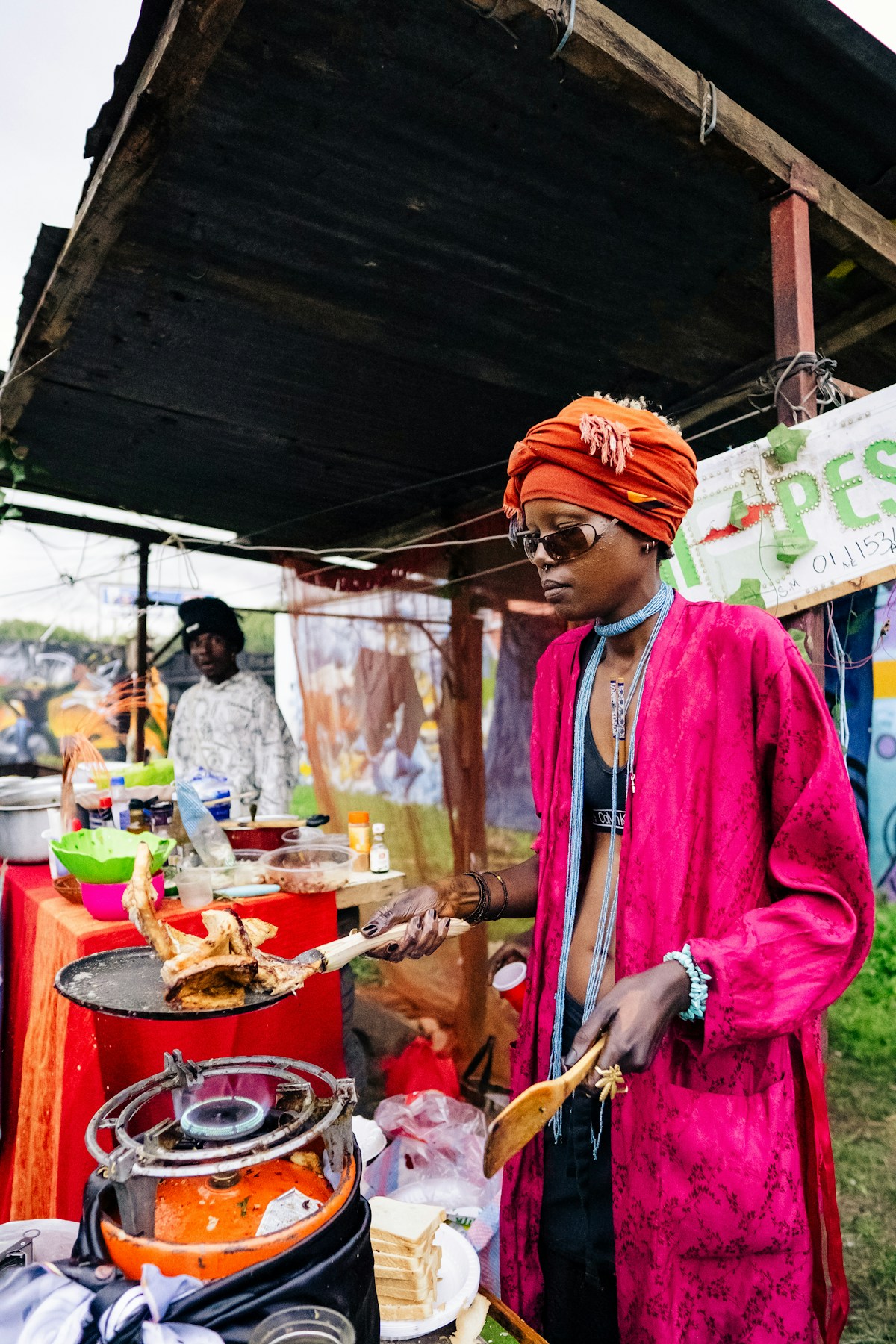
Nairobi has grown into one of East Africa’s most dynamic food cities. Safari camps and savannas aside, the capital rewards curious eaters — from smoky roadside nyama choma grills through to white-tablecloth farm-to-table restaurants in Karen. Westlands is the unofficial dining hub, Langata holds Carnivore, and the CBD keeps a lively street-food scene running from dawn to well past dark.
This guide covers the neighbourhoods, the must-order dishes, and the specific venues worth tracking down, with honest price guidance in Kenyan shillings so you can budget before you arrive.
Westlands: Nairobi’s Restaurant Hub
Westlands, on the northwest edge of the city, is where Nairobi’s restaurant scene concentrates. Waiyaki Way and the Westgate Mall precinct pull together everything from Japanese izakayas to Ethiopian injera joints within a walkable radius.
Talisman Restaurant in Karen (not technically Westlands but equally vital) is consistently named among the city’s best. Expect a garden setting, creative East African–fusion mains, and mains running approximately KES 2,500–4,500 (around USD 19–35) as of 2026. Reservations recommended at weekends.
Cultiva on Ring Road Westlands does a short, precise menu focused on wood-fired cooking. Flat-bread pizzas run approximately KES 1,200–1,800 (USD 9–14), while sharing plates like the mbuzi (goat) with chimichurri sit around KES 1,600–2,200.
The Watershed at Village Market in Gigiri is the city’s benchmark craft-beer and gastropub venue. Burgers are approximately KES 1,400–1,900 (USD 11–15); they also run an outdoor food market on weekends with rotating street-food traders.
For a lighter, cafe-style lunch, Artcaffe has multiple Westlands locations and is reliable for all-day brunch plates, avocado toast (Nairobi avocados are exceptional), and strong cold brew. Budget approximately KES 800–1,600 per person.
Carnivore: The Nairobi Landmark
No Nairobi food guide is complete without Carnivore, and it genuinely earns its reputation. Located near Wilson Airport in Langata, this all-you-can-eat nyama choma institution has been running since 1980 and remains packed most evenings.
The model is simple: a sword-wielding carver moves between tables loading your plate with whatever is coming off the grill — beef, lamb, pork, chicken, and traditionally game meats like ostrich and crocodile (game availability varies seasonally). Diners raise a flag when they’re done. The experience is cheerfully excessive.
Dinner costs approximately KES 4,500–5,500 per person (around USD 35–43) as of 2026, inclusive of unlimited meat; drinks are billed separately. Book at least a day in advance online, especially for Friday and Saturday nights. Carnivore is not the best meat you’ll eat in Nairobi on a strictly technical level — the game cuts can be variable — but the theatre of it is worth experiencing once.
Nyama Choma: Where Locals Go
Nyama choma — wood-grilled meat, typically goat (mbuzi) or beef — is the definitive Kenyan social meal. The city’s best is not in tourist-facing restaurants.
Kosewe Ranalo Foods near Kimathi Street in the CBD is a Nairobi institution for traditional Kenyan cooking: fried tilapia, ugali, sukuma wiki, and githeri. Lunch plates run approximately KES 400–700 (USD 3–5), and the line out the door at midday tells you everything you need to know. This is not a nyama choma joint strictly speaking, but it is the canonical local lunch stop.
For nyama choma specifically, head to the roadside manyattas along Ngong Road. Mama Ngina’s and the cluster of open-air grills near the Carnivore roundabout serve goat charged by the kilogram — approximately KES 800–1,200 per kilo (USD 6–9) as of 2026. Order ahead by at least 30 minutes as the meat is cooked to order; sides (kachumbari tomato salsa, ugali) are included.
Nyama Mama in the Village Market has packaged Kenyan comfort food in a Westlands-accessible setting for visitors who want the flavours without a long drive. Think nyama choma wraps, spiced pilau, and bhajia (battered potato fritters) in a casual 300-KES street-food format.
Indian and Asian Influence
Nairobi’s South Asian population — rooted in the railway-building era of the early 1900s — left a permanent mark on the city’s food culture. Several areas around Parklands and Westlands retain strong Indian-owned restaurants.
Habesha Ethiopian Restaurant in Westlands (Ethiopian, not Indian, but worth noting alongside international options) is the city’s most reliable Ethiopian joint: tibs, kitfo, and sharing platters on injera run approximately KES 1,500–2,500 for two (USD 12–19).
For Indian food, Trattoria in the CBD doubles as an Italian-Indian hybrid and does both convincingly — pasta alongside dahl and biriyani at mid-range prices (mains approximately KES 1,200–2,000).
CBD Street Food
The Central Business District does not have the gloss of Westlands, but it has the energy. Kenyatta Avenue and Moi Avenue see roaming mutura vendors — a Kikuyu blood sausage grilled over charcoal — from around 4pm onwards. A full portion runs approximately KES 50–150 (under USD 2).
Roast by Carnivore at Westgate Mall is the grab-and-go offshoot of the Langata flagship, serving nyama choma sandwiches, chicken wraps, and chips from approximately KES 400–900 (USD 3–7). Solid for a quick city lunch.
Zuri Restaurant inside the Nairobi Safari Club on University Way offers a hotel buffet lunch (approximately KES 2,500–3,500 as of 2026) that covers Kenyan, Indian, and international stations — a practical option if you’re in the CBD and want variety.
Rooftop Bars and Sundowners
Nairobi’s altitude (1,660 m) means evenings cool off sharply, but the sundowner culture is still strong. Several rooftop venues have opened across Westlands and Kilimani over the past five years.
Sky Bar at Ole Sereni Hotel near the national park perimeter has a legitimate claim to Nairobi’s best view: the western fence of Nairobi National Park is visible from the terrace, and if you’re lucky (typically early morning rather than evening) you’ll spot giraffe or zebra from the rooftop. Cocktails run approximately KES 1,200–2,000 (USD 9–15). No cover charge; smart casual required after 7pm.
The Den at Trademark Hotel in Westlands is a relaxed rooftop with rotating DJ sets Thursday–Saturday. Cocktails from approximately KES 900–1,600; food menu runs from KES 1,200 (sharing platters).
Pepino’s Pizzeria on the upper floor of the Junction Mall, Dagoretti Corner, does wood-fired pizza with city views. Pizza approximately KES 1,400–2,200 (USD 11–17); the terrace is genuinely pleasant for a late lunch.
Café Culture and Specialty Coffee
Kenya grows some of the world’s most prized Arabica coffee — notably from the AA grade estates around Nyeri and Kirinyaga — yet the domestic café culture is still developing. Several specialty roasters have opened city locations.
Nairobi Brew at the Two Rivers Mall in Runda is the city’s most ambitious craft beer and specialty coffee complex. Single-origin pour-overs run approximately KES 400–600; a tasting flight of local beers is approximately KES 900.
Java House is the ubiquitous national chain and a reasonable standard-bearer: reliable espresso, free wifi, and an all-day food menu from approximately KES 600–1,500 per person. Multiple Westlands and CBD locations. Not special, but consistently decent.
Dormans on Mama Ngina Street in the CBD roasts its own Kenyan beans and has been doing so since the 1950s. A filter coffee of single-estate Kenyan AA costs approximately KES 350–500. The retail counter sells bags to take home.
Vegetarian and Vegan Options
Nairobi eats well if you don’t eat meat, with some caveats. Ugali (white maize polenta), sukuma wiki (kale), githeri (beans and maize), and irio (mashed peas and potato) are all naturally plant-based Kenyan staples.
Tree Canopy Café in Karen specialises in whole-food plant-based cooking with an emphasis on locally sourced vegetables. Mains run approximately KES 900–1,500 (USD 7–12). Booking ahead is advised as it is small.
For a quick vegetarian lunch in Westlands, Fogo Gaucho is a Brazilian churrascaria but maintains a full salad bar that functions as a substantial plant-based meal; the salad-bar-only option runs approximately KES 1,800 (USD 14) as of 2026.
Practical Tips
- Tipping: 10% is standard at sit-down restaurants; rounding up or leaving KES 50–200 is typical for street food.
- Timings: Lunch service runs 12–3pm; dinner from 7–10pm. Street food runs from around 7am to 8pm in the CBD; nyama choma joints often serve until midnight at weekends.
- Safety: Westlands, Karen, Langata, and the area around Village Market are safe and well-lit. The CBD is fine by day; use a taxi or ride-hailing app (Uber and Bolt both operate reliably) after dark.
- Ride-hailing: Uber and Bolt fares from Westlands to Langata run approximately KES 400–700 (USD 3–5) depending on traffic. Nairobi traffic can be severe between 5–8pm — build extra time if heading to Carnivore for dinner.
- Alcohol: Nairobi is relatively permissive; most restaurants serve beer, wine, and spirits. The Tusker lager (approximately KES 300–450 in restaurants, USD 2–3.50) is the default local beer.
The food scene moves quickly — new places open and close regularly. The areas described here have been stable for several years, but individual restaurants are always worth a quick Google Maps check before visiting.