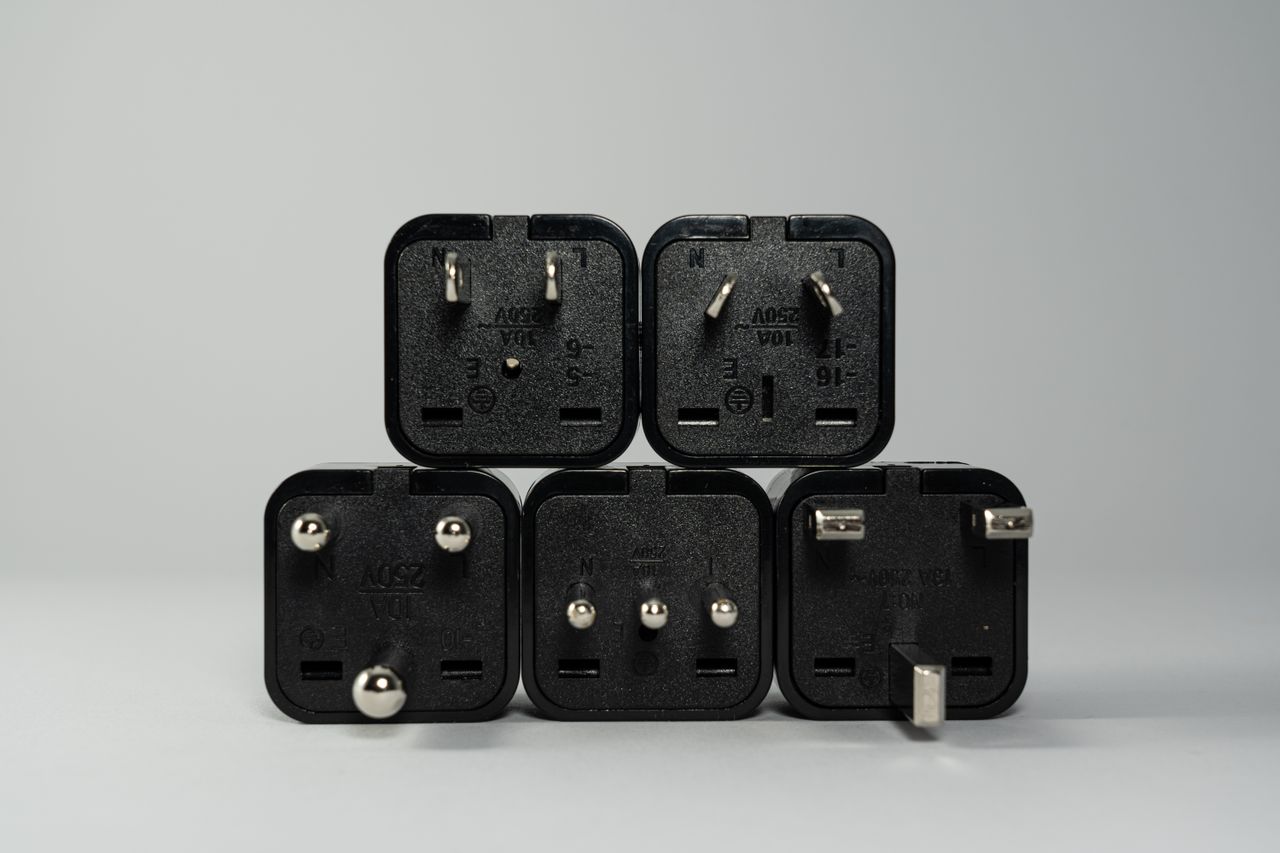
Charging your phone should be the least stressful part of a trip to Kenya, and it is, as long as you pack the right adapter. Kenya uses the British-style three-pin plug, the voltage is higher than in North America, and on safari the power supply works differently from what you get at home. This guide covers the plug type, voltage, which devices need more than an adapter, and how to keep cameras and phones running between Nairobi, the Masai Mara and the coast.
The short answer
| Item | Kenya standard |
|---|---|
| Plug and socket | Type G (three rectangular pins) |
| Voltage | 240V |
| Frequency | 50Hz |
| Utility | Kenya Power (KPLC) |
If you come from the UK, Ireland, Malta, Cyprus, Singapore or Hong Kong, your plugs already fit. Everyone else needs a Type G adapter. Visitors from the US and Canada also need to check voltage, as covered below.
Type G plugs explained
Type G has three flat rectangular pins in a triangle: two lower pins carry power and a larger top pin is the earth. Most modern Kenyan sockets are switched, so flip the switch on the wall plate after you plug in. Some older sockets in budget guesthouses are loose or worn, so a heavy travel adapter with a charger on top can sag. Use a compact, one-piece adapter rather than a bulky multi-country block with a large charger on it.
Adapters change the pin shape only. They do not change voltage. That is the part that catches North American travellers out.
Voltage: when an adapter is not enough
Kenya runs at 240V. The US and Canada use around 120V. What matters is what is printed on the device or its charger.
- Input 100-240V, 50/60Hz: safe in Kenya with just an adapter. This covers almost every phone charger, laptop brick, tablet, e-reader, drone charger, camera battery charger and power bank.
- Input 110-120V only: needs a step-down transformer, which is heavy and not worth carrying. Leave these items behind.
The usual problem items are hair dryers, curling irons, beard trimmers and travel kettles. Many hotels in Nairobi, Mombasa and Diani supply hair dryers in the room. For electric razors, bring a rechargeable model with a 100-240V charger instead.
Frequency (50Hz against 60Hz) rarely matters for modern electronics. It can affect old clocks and some motor-driven appliances, so ignore it for travel gear.
What to pack
- One or two Type G adapters. One for the room, a spare so two people can charge at once.
- A multi-port USB charger (ideally 45W or more). One adapter then powers a phone, camera charger, headphones and power bank together. This matters most at safari camps with a single socket.
- A short extension lead or compact travel strip with Type G input. Useful when the only socket sits behind the bed. Check it is rated for 240V.
- A power bank of 10,000 to 20,000mAh. It will carry you through game drives, long transfers and the occasional outage. Airlines require power banks in carry-on bags, never checked luggage.
- A charging cable for each device, and a spare. Cables fail on rough roads more often than chargers do.
Our Kenya packing list covers the rest of your kit, and our eSIM and SIM card guide explains how to stay connected once the phone is charged.
Power cuts and surges
Kenya’s grid is generally reliable in Nairobi, Mombasa and the larger towns, but brief outages and voltage swings happen, particularly during heavy rain and in smaller coastal and rural towns. Better hotels have a backup generator that switches on within a minute or two. In practice, plan for it rather than worry about it:
- Charge devices whenever you are near a working socket.
- Keep a head torch or phone torch within reach at night.
- Unplug laptops and expensive chargers during storms, or use a surge-protected strip.
Charging on safari
Safari charging is the biggest difference from city travel. Lodges and camps in places like the Masai Mara, Amboseli and Samburu often run on solar systems or generators, and some limit power to certain hours or to a charging station in the main tent or lodge reception.
What to expect, in rough order from most to least convenient:
- Large lodges usually have sockets in the room, and often several.
- Tented camps may offer a socket inside the tent, or a shared charging point in the dining or lounge area, sometimes with set hours.
- Mobile and fly camps typically have little or no mains power, so rely on spare batteries and a power bank.
Safari vehicles are also worth asking about. Many operators fit a 12V socket or USB point in their 4x4s, so you can top up a phone or camera battery during the drive. Ask your operator when booking, as it varies by company. If you are comparing options, read our guide to group and private safaris in Kenya.
Photographers should plan on at least two or three spare camera batteries, plenty of memory cards, and a charger that runs from 240V. A busy morning and afternoon game drive can drain a battery quickly, especially with video or long lenses. Dust is also a factor in dry seasons, so keep chargers and adapters in a zipped pouch.
For more on what to expect from park lodges, see our Masai Mara guide and plan accommodation in Nairobi before your flight on the Nairobi hotels page.
Buying an adapter in Kenya
If you forget one, you can buy a Type G adapter in Nairobi at electronics shops and supermarkets in malls, often for a few hundred Kenyan shillings (approximately KES 300 to 800 as of 2026). Hotels and lodges will often lend you one at reception, but they run out in high season, so do not count on it. Mombasa and the larger coastal towns have similar shops. Smaller towns and park gates do not, so buy before you leave home.
Quick checklist
- Pack a Type G adapter, plus a spare.
- Read every charger label for 100-240V.
- Leave 110-120V hair dryers and shavers at home.
- Bring a power bank and extra camera batteries for safari.
- Use a USB multi-port charger to save sockets.
- Keep devices charged before every transfer day.
After your gear is sorted, you can browse Nairobi tours to plan your first days in the city.