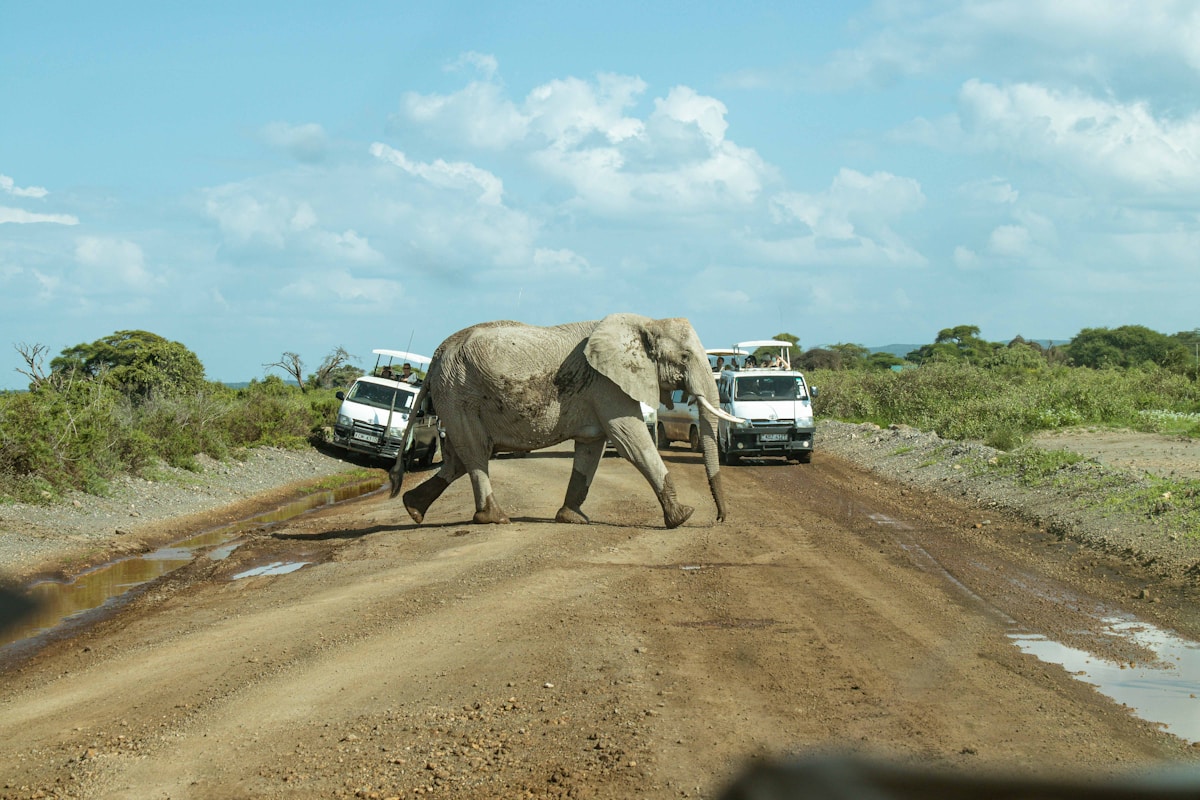
Self-driving in Kenya gives you freedom the tour vehicle schedule can’t - leave the camp at dawn before the game drives roll out, stop wherever wildlife appears, and set your own pace along the coast road. It also requires more preparation than renting in Europe or North America. This guide covers everything you need to know.
Search hotels in Kenya on Booking.com
Car Hire Agencies in Kenya
International Brands
Avis Kenya operates from Jomo Kenyatta International Airport (JKIA) and has a city desk in Westlands, Nairobi. Saloon cars from approximately USD 70–90/day; Toyota Land Cruiser and similar 4WDs from approximately USD 130–180/day. Well-established breakdown cover is included in most contracts.
Budget Kenya has desks at JKIA and several Nairobi hotels. Pricing is similar to Avis - saloons from approximately USD 65–85/day, 4WDs from approximately USD 120–170/day. Pre-booking online typically saves 10–20% off walk-up rates.
Hertz Kenya operates at JKIA and a handful of Nairobi locations. Pricing is broadly in line with Avis and Budget. Hertz has a more limited 4WD fleet - confirm availability when booking for safari routes.
Local Agencies
Market Car Hire (Nairobi) is one of the longest-established local operators. Rates are lower than the international brands - saloons from approximately USD 40–55/day, 4WDs from approximately USD 90–120/day. The trade-off is less formalised breakdown assistance outside Nairobi; check what the breakdown procedure is before signing.
EasyDrive Kenya offers competitive pricing on both saloons and 4WDs, with vehicles available from JKIA and a Westlands office. Rates from approximately USD 45–60/day for saloons. Customer reviews generally positive for city use; confirm 4WD condition before long safari drives.
Bandari Car Hire caters to longer-term rentals (a week or more) and offers slightly lower daily rates on volume. Good option if you’re spending 10+ days on a self-drive circuit.
You can compare rates across agencies and book online through our Kenya car hire page.
4WD: When You Need It
The single biggest mistake first-time self-drivers make in Kenya is booking a saloon car and discovering the last 70km to the safari gate is unpaved murram.
Routes that require a 4WD:
- B3 (Narok to Masai Mara gates): Paved to Narok, then murram for approximately 70km to the Sekenani, Talek, and Musiara gates. In dry season, a high-clearance 2WD can sometimes manage - in the rains (April–June, November), the road is rutted and 4WD is non-negotiable.
- C103 (Amboseli approach from Emali): Rough dirt road. 4WD required year-round.
- Samburu/Buffalo Springs approach roads: Unpaved laterite tracks. 4WD required.
- Tsavo West (Mtito Andei gate access): The approach road is paved; tracks inside the park are unpaved and benefit from 4WD, especially in wet season.
- Lake Turkana circuit: Remote northern routes. 4WD mandatory; carry extra fuel.
Routes manageable in a saloon car:
- Nairobi to Mombasa (A109) - paved, generally good condition
- Nairobi to Nakuru (A104) - paved, good
- Nairobi to Kisumu (A104) - paved
- Mombasa North Coast (B8) - paved
- Nairobi to Naivasha (A104) - paved, good
If your itinerary includes any park driving, book a 4WD. The cost difference over a week is modest compared to the cost of a tow or getting stuck.
Driving Licence Requirements
Kenya requires a valid driving licence to rent and drive. The requirements:
- Your domestic licence: Must be current and not expired. If it is in a language other than English, you will need the IDP as a translation.
- International Driving Permit (IDP): Strongly recommended for all foreign visitors. Obtain one from your national automobile association before travel (AA, AAA, ADAC, RAC, etc.) - it cannot be obtained in Kenya. Costs approximately USD 20–30 in most countries.
- Minimum age: Most agencies set the minimum rental age at 23–25 years. Some charge a young driver surcharge for under-25s.
Police checkpoints are common on major highways, particularly on the A109 Nairobi–Mombasa road. Having both your domestic licence and IDP prevents delays.
Fuel Costs and Where to Fill Up
Kenya sells petrol (gasoline) and diesel. Most 4WDs run on diesel. Petrol cars are standard for saloons.
Fuel prices as of mid-2026: Approximately KES 180–210 per litre for petrol; KES 160–190 per litre for diesel. Prices fluctuate monthly - check the Energy and Petroleum Regulatory Authority website for current regulated prices.
Approximate route fuel costs:
- Nairobi to Masai Mara and back (approx 530km): approximately KES 7,000–10,000 in a Land Cruiser
- Nairobi to Mombasa (approx 480km): approximately KES 5,500–8,000 in a 4WD
- Nairobi to Amboseli and back (approx 440km): approximately KES 6,000–9,000 in a 4WD
Filling up: Nairobi has hundreds of petrol stations - fill up before leaving the city. On the A109 to Mombasa, stations are every 50–100km. On the B3 to the Mara, fill up completely in Narok - the last reliable station before the park. For northern routes (Samburu, Turkana), carry a jerrycan.
Road Conditions by Region
Central Highlands and Nairobi: Roads in and around Nairobi are paved but traffic is heavy. The Southern Bypass significantly improves transit around the city. The Nairobi Expressway (toll road, KES 200–400) cuts travel time to Westlands. CBD driving is slow - budget double the time Google Maps suggests.
Rift Valley (Naivasha, Nakuru, Eldoret): A104 is well-maintained and one of Kenya’s better highways. Watch for trucks near Limuru and Kikuyu.
South Coast (Diani, Shimba Hills): The road south of Mombasa after the Likoni Ferry is paved but increasingly rough south of Ukunda. Accessing the interior (Shimba Hills) benefits from 4WD.
North Kenya (Samburu, Laikipia): Once you leave Nanyuki or Isiolo, roads are unpaved laterite - dusty in dry season, slippery in rain. A 4WD and high clearance are essential. Tell your agency where you are going; most agencies restrict vehicles to specific regions.
Night driving: Do not drive after dark outside cities. Cattle and goats on the road, missing road furniture, and inconsistent lighting make night driving dangerous. Factor this into your route planning.
Insurance
Car hire in Kenya includes basic third-party liability insurance by law. What varies is the excess (deductible) and collision damage cover:
- Collision Damage Waiver (CDW): Offered by all agencies, reduces your liability for vehicle damage to a fixed excess (typically USD 500–2,000). Without CDW, you are fully liable for repair costs - which can be very high for 4WD vehicles.
- Theft Protection: Separate from CDW; covers vehicle theft. Standard in most packages.
- Personal accident cover: Covers occupant injury. Check whether your travel insurance already covers this before paying twice.
Recommendation: Always take CDW. Kenya’s road conditions and wildlife hazards make minor body damage a real possibility, even for careful drivers. Check the vehicle carefully before signing and photograph all existing damage - disputes at return are common without documentation.
Excess reduction: Some agencies offer excess reducer products (typically USD 8–15/day) that bring the deductible to near zero. Worth considering for long itineraries or challenging park driving.
Practical Tips
- Book early for peak season (July–October) - 4WD stock is limited and prices rise close to departure
- Return tank full: Agencies charge inflated refuelling fees if the tank is not returned full
- Check the spare tyre: Verify it is inflated and fits the vehicle before leaving the lot - punctures on murram roads are common
- Download offline maps: Google Maps offline (download Nairobi, Narok, Amboseli areas) before you leave connectivity. Mobile data is unreliable in parks
- Emergency contacts: Save the agency’s emergency number and the Kenya Police (999 or 112) before departure
For a broader overview of transport options in Kenya, see our getting around Kenya guide. If you are arriving at JKIA and need a transfer to your hotel before picking up your hire car the next day, see our Kenya airport transfers guide.
Plan Your Trip
✈️ Book your flights to Kenya 🛡️ Get travel insurance 📱 Stay connected with an eSIM 🚗 Rent a car