Kenya Budget Safari Guide: Camping in the Masai Mara and Beyond
Book an experience
Book this activity
These are the top-rated activities for this area — book ahead to lock in your preferred date.
Contents
- Understanding the Budget Tiers
- Budget: approximately USD 50–100 per person per day
- Mid-range: approximately USD 150–300 per person per day
- Luxury and private conservancy: USD 400+
- Public Campsites in the Masai Mara
- Amboseli and Tsavo: Budget Safari Alternatives
- Private Conservancy Camping
- Getting to the Parks Without a Tour
- What to Bring for Camping Safari
- Best Time for a Budget Camping Safari
- Realistic Total Budget
A Kenya safari does not have to cost USD 500 a night. The country’s national parks and conservancies include a range of sleeping options — from Kenya Wildlife Service public campsites at under USD 40 per person per night through to private conservancy camps that sit in the mid-range — and the wildlife is the same regardless of where you sleep. This guide walks through the realistic budget tiers, the best camping areas, what to book in advance, and what to bring.
Understanding the Budget Tiers
Budget: approximately USD 50–100 per person per day
At this level, you are staying in a KWS public campsite or a basic tented camp, eating self-catered or at park canteens, and booking a shared 4WD safari vehicle rather than a private one.
What is included at this price:
- Park entry fee: approximately USD 35–40/day (non-resident adult, as of 2026)
- Public campsite fee: approximately USD 15–20/person/night
- Shared game drive: approximately USD 40–60/person for a half-day
What is not included: guided night drives (not permitted in most national parks), meals at lodges, en-suite facilities.
Mid-range: approximately USD 150–300 per person per day
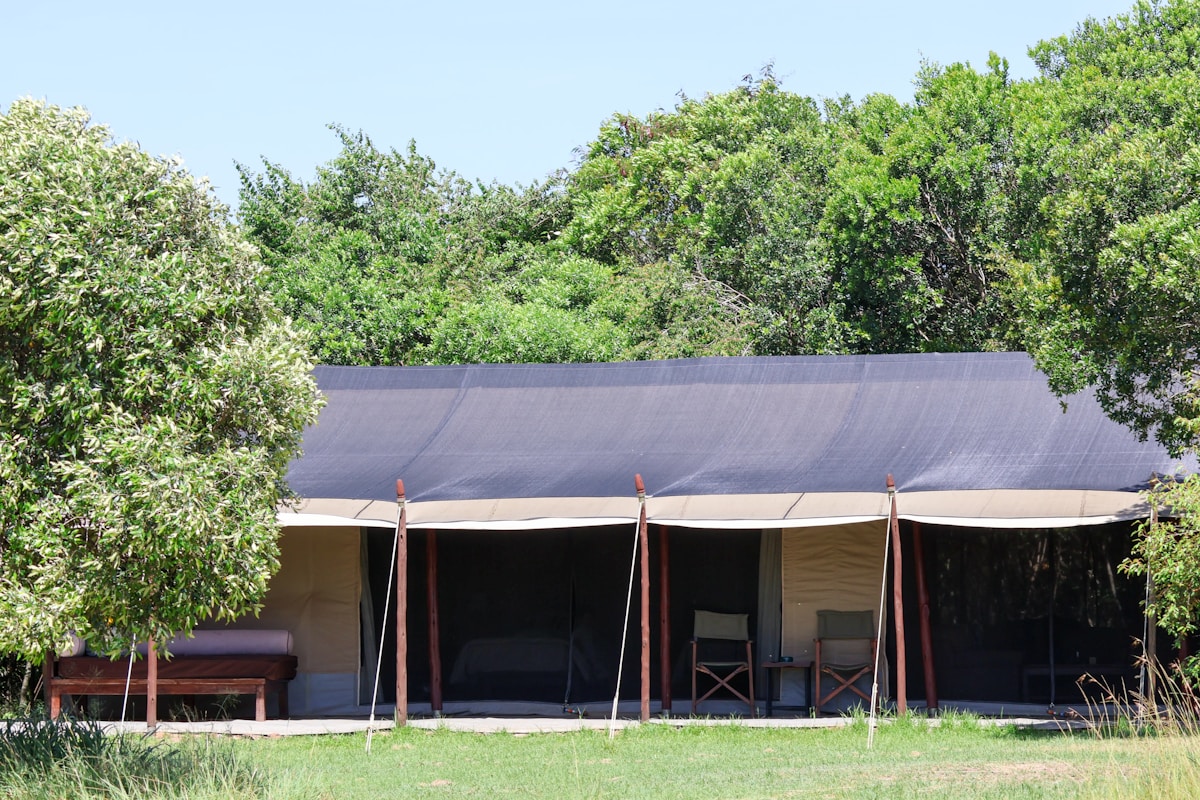
Mid-range camps are semi-permanent tented structures with proper beds, en-suite bathrooms, and meals included. Some include a game drive or two. You give up the exclusivity of private conservancies but get far better facilities than a public campsite.
Representative options in the Masai Mara ecosystem:
- Mara Eden Safari Camp (Mara Triangle): from approximately USD 150/person/night full board
- Base Camp Masai Mara: from approximately USD 180/person/night, community-owned, includes two game drives
- Mara Ngenche Safari Camp: from approximately USD 200/person/night, tented camp on the Mara River
Prices vary significantly with season — peak season (July–October, Great Migration) commands a 30–50% premium over the low season.
Luxury and private conservancy: USD 400+
Private conservancies surrounding the Masai Mara National Reserve — Ol Kinyei, Naboisho, Olare Motorogi, Mara North — charge premium rates but offer genuinely exclusive conditions: fewer vehicles, night drives (not allowed in the national reserve itself), walking safaris, and fly camping.
At this level, rates start around USD 400–600/person/night all-inclusive. These camps cap vehicle numbers per sighting, so you will not share a lion kill with 20 other vehicles.
Public Campsites in the Masai Mara
The Masai Mara National Reserve is administered by the Narok County Government. There are public campsites at multiple entry gates.
Sekenani Gate campsites: The most used public campsite area, near the main eastern gate. Basic — drop toilets, no hot water, no electricity. Approximately USD 20/person/night as of 2026. Book via the Narok County Tourism Office in advance for peak season.
Talek campsites: Near Talek Gate on the northeastern boundary. Similar facilities to Sekenani. The surrounding Talek area has several budget bandas and simple guesthouses for travellers who want a roof rather than a tent.
Oloolaimutia campsites: Near the southern gate. Less commonly used, which means fewer other campers in peak season.
Key rules at public campsites:
- No campfires outside designated fire pits — dry season fire risk is serious
- Do not leave food accessible in tents — hyenas and baboons will take it
- Do not walk outside camp after dark without an armed ranger escort
- All vehicles must exit by 19:00 (7pm) — game drives end at sunset
Booking public campsites: Through the Narok County Government Tourism office (+254 720 388 388) or through a Nairobi-based tour operator. Do not assume walk-in availability in July–October.
Amboseli and Tsavo: Budget Safari Alternatives
The Masai Mara is the most visited park, but not always the most affordable for budget travellers.
Amboseli National Park offers a powerful alternative: extraordinary elephant sightings (the park has one of the highest elephant densities in Africa), clear views of Mount Kilimanjaro on cloudless mornings, and lower gate fees. Public campsites at Amboseli: approximately KES 3,000 (approximately USD 23) per person per night as of 2026. The park entrance: approximately USD 35/day non-resident.
Tsavo East and West together form Kenya’s largest protected area — 22,000 sq km. Public campsites in Tsavo East charge approximately USD 15/person/night. Game is abundant (elephant, buffalo, lion, cheetah, gerenuk), and the red dust landscape is distinctive. Far fewer visitor vehicles than the Mara.
Both are accessible by direct bus from Nairobi, making them more cost-effective for self-organising independent travellers without a rental vehicle.
Private Conservancy Camping
The conservancies surrounding the Masai Mara National Reserve (Ol Kinyei, Naboisho, Mara North, Lemek, Olare Motorogi) are privately managed and charge their own entry and accommodation fees. They are generally not cheaper than the reserve itself — conservancy rates start around USD 80–100/person/night for basic camping — but they offer:
- Significantly fewer vehicles per sighting (conservancies cap vehicle numbers)
- Night game drives (not permitted in the national reserve)
- Walking safaris with armed guides
- Fewer crowds during peak migration season
For travellers who can stretch to the mid-range tier, a conservancy stay rather than a national reserve stay often delivers a qualitatively better experience.
Getting to the Parks Without a Tour
Most budget safaris in Kenya go through a tour operator in Nairobi who provides the vehicle, driver-guide, park fees, and sometimes accommodation in a package. This is the most practical route for first-time visitors and often the most cost-effective when shared between 4–6 people.
Nairobi-based budget operators worth checking:
For a broader comparison of group departures and prices, Kenya safari tours are listed with verified reviews and departure dates.
- Easy Travel Kenya (easily searchable) — shared group safaris, Mara from approximately USD 280/2 nights
- Gecko Safari — budget-to-mid-range group packages
- Discover Kenya Tours — frequently used by backpackers and budget travellers
Comparison shop: Get quotes from at least three operators, ask specifically what is included in the park entry fee, guide costs, campsite fee, and meals. Some operators quote excluding park entry fees — this can add USD 70/day per person to the headline number.
Direct to Tsavo by bus: Mombasa-Nairobi buses pass through Tsavo. The Tsavo East gates at Voi are accessible from the Voi junction. For independent travellers, it is possible to arrange a self-drive or hire a driver-guide locally in Voi, though this requires advance planning.
What to Bring for Camping Safari
Packing for a camping safari differs from packing for a lodge safari. The key additions:
Sleeping gear:
- Sleeping bag rated to at least 10°C (nights can be cold at altitude, especially Mara and Amboseli)
- Sleeping mat if camping on the ground (most campsites provide a raised platform or cot, but check)
- Pillow (lodges provide, campsites do not)
Clothing:
- Neutral colours — khaki, olive, tan. Avoid bright colours and white (dust) in the field.
- Warm fleece or jacket for early morning drives — temperatures in the Mara at 6am regularly drop to 12–15°C
- Waterproof layer for the March–May and November–December wet seasons
- Hat with a brim — UV is intense at 1,500m elevation
Food and water:
- Carry at least 2 litres of water per person per day — dehydration is a real risk in hot, dry conditions
- Self-catering campsites have no food supply. Narok town (the main gateway to the Mara) has supermarkets. Stock up before entering the park.
- A small gas stove and cooking kit if self-catering. Firewood is usually available at campsites.
Medical:
- Malaria prophylaxis — the Masai Mara and Tsavo are malaria zones. Start medication before travel (Malarone, doxycycline, or mefloquine — consult a travel clinic)
- Rehydration salts, ibuprofen, antihistamine cream, blister kit
- Sunscreen SPF50+
Best Time for a Budget Camping Safari
July–October: The Great Migration crossing season brings wildebeest and zebra to the Mara River crossings. Spectacular wildlife. Downside: peak-season prices across all accommodation tiers, more vehicles in the reserve.
January–February: Dry and warm. Excellent game viewing as animals concentrate around water sources. Quieter than peak season, so campsites and budget operators are more negotiable on price. Calving season in the Serengeti/Mara ecosystem — predator activity is high.
June and November: The shoulder months before and after peak season. Decent game viewing at noticeably lower prices. Green-season discounts of 20–30% on many camps.
Avoid April–May (long rains): Roads to public campsites can become impassable in wet season. Some operators suspend operations. If travelling in this period, confirm road access before booking.
Realistic Total Budget
For a 3-night camping safari to the Masai Mara from Nairobi, self-organising:
| Item | Approximate cost (per person) |
|---|---|
| Park entry (3 days) | USD 105–120 |
| Public campsite (3 nights) | USD 60 |
| Shared safari vehicle (3 days) | USD 120–180 |
| Food (self-catered) | USD 30–40 |
| Transport to/from Nairobi | USD 20–30 |
| Total | approximately USD 335–430 |
This assumes a group of 4–6 sharing a vehicle. A solo traveller joining a group tour from Nairobi can achieve a similar budget more easily, as operators spread vehicle costs across participants.
All prices are approximate and as of 2026 — confirm current rates with operators and KWS before booking.
For a deeper breakdown of overall safari costs, see our Kenya budget guide. Our best safari lodges Kenya guide covers mid-range and upmarket alternatives for when the budget increases. The Masai Mara safari guide provides full park information for the most popular camping destination. For comparing parks, see our Masai Mara vs Serengeti guide.
Ready to explore?
Browse hundreds of tours and activities. Book securely with free cancellation on most options.
Browse on GetYourGuide →We may earn a small commission — at no extra cost to you.