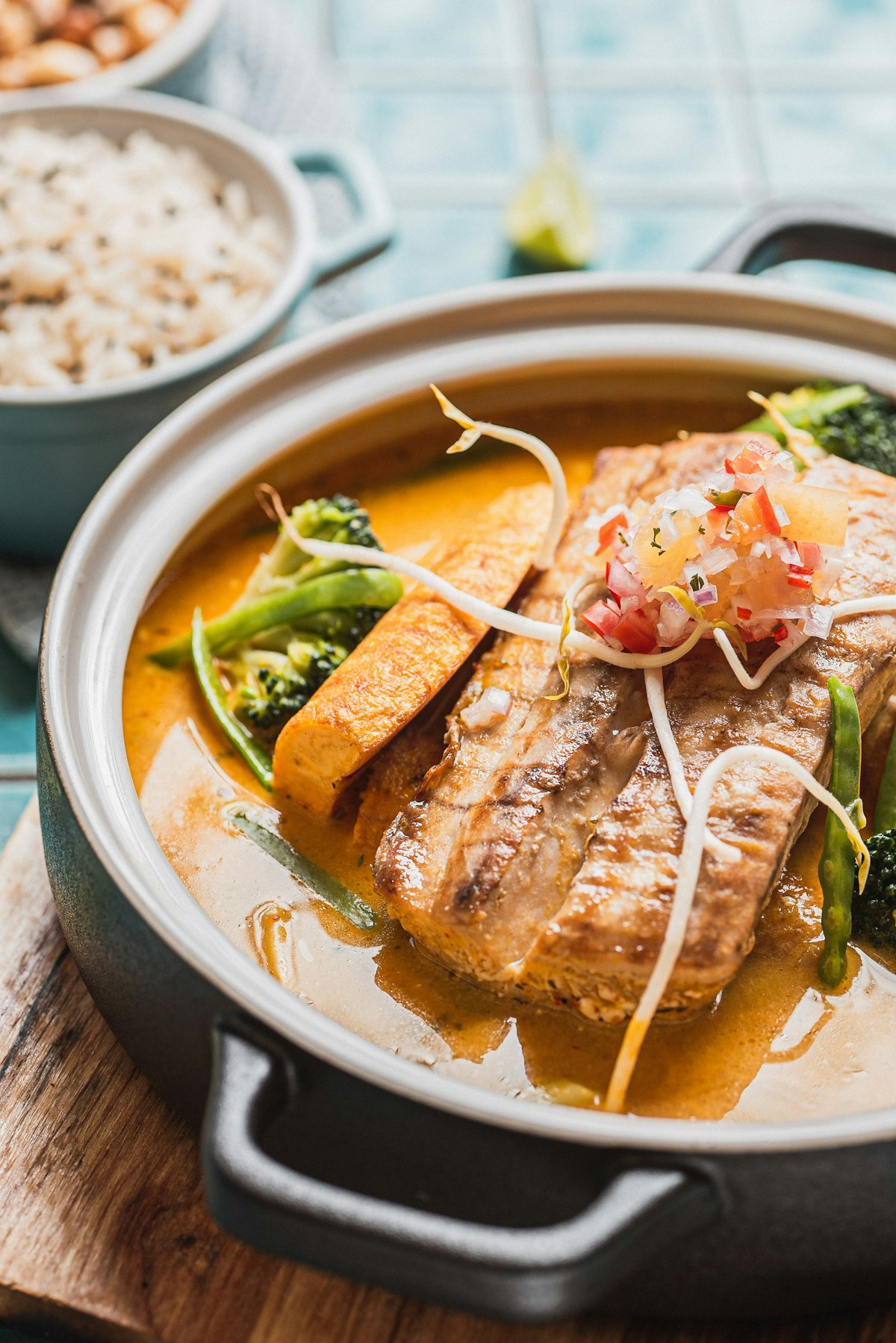
Mombasa is Kenya’s oldest trading city, and its food tells that story in every mouthful. Arab merchants, Indian traders, Portuguese sailors and Bantu communities all left their mark on what the coast cooks today. The result is Swahili cuisine - a distinct food culture built on coconut, spice, and the ocean - and it is one of the most underrated food scenes in East Africa.
This guide covers the dishes you need to try, where to find the best versions in Mombasa, and how to eat well at every price point.
The Essential Dishes
Pilau
Pilau is the cornerstone of Swahili cooking. Long-grain rice is cooked with whole spices - cardamom, cumin, cloves, cinnamon and black pepper - then layered with slow-braised meat (usually beef or chicken) and fried onions. The result is deeply fragrant, with a savoury warmth that builds through the meal. Unlike biryani, pilau is cooked as a single pot: the spiced broth is absorbed into the rice rather than served alongside.
A plate of pilau with kachumbari (fresh tomato and onion salsa) costs approximately KES 200–350 at a local restaurant and around KES 450–700 at a smarter spot in Old Town.
Biryani (Mombasa Style)
Mombasa biryani differs from the South Asian original. Local cooks use coconut milk in the cooking liquid, add a layer of fried raisins and cashew nuts on top, and serve the dish with a slow-cooked meat curry poured over the top at the table. The coastal version is sweeter and richer than the Nairobi adaptation. Portions are large - plan to share if you order at lunch.
Expect to pay KES 400–600 for a half portion and KES 700–950 for a full serve at sit-down restaurants.
Samaki wa Kupaka (Coconut Fish)
This is arguably the signature dish of the Mombasa coast. Whole fish - red snapper, kingfish or tuna are the most common - is marinated in tamarind and lime juice, charcoal-grilled until the skin crisps, then finished with a thick coconut and spice sauce poured over the top. The sauce contains grated fresh coconut, garlic, chilli, turmeric and lemon grass.
The dish originated along the Swahili coast centuries ago as a way to preserve both the fish and the coconut milk through cooking down. Today it is served at nearly every seafood restaurant in Old Town and along the Nyali beachfront. Prices run approximately KES 600–1,200 depending on the fish size and venue.
Urojo - Mombasa Mix
Urojo is the street food Mombasa is most famous for, and visitors almost universally describe it as impossible to understand until you taste it. The dish is a tangy, tamarind-based soup served in a bowl, into which the vendor ladels bhajia (chickpea fritters), fried cassava, boiled eggs, diced potato, coconut chutney and crushed papdi crackers. A squeeze of lime goes in at the end.
Every vendor has a different ratio - Old Town has families who have been making urojo from the same recipe for four generations. A bowl costs KES 80–150 at a street stall, making it the cheapest meal in this guide and arguably the best.
Mahamri
Mahamri are sweet coconut doughnuts fried in deep oil and eaten for breakfast or as a snack with chai. The dough contains coconut milk, sugar, cardamom and yeast. They are shaped into triangles or circles, and the best ones have a slightly crispy exterior and a soft, pillowy interior. Eat them hot from the fryer - they go tough as they cool.
Mahamri sell at street stalls throughout Old Town from around 5am. Four pieces cost KES 40–80.
Mkate wa Ufumba
Mkate wa ufumba is a steamed coconut rice cake cooked in a banana leaf. The batter is made from rice flour, coconut milk, sugar and cardamom, then wrapped and steamed until firm. The banana leaf infuses a subtle grassy aroma. It is eaten as a breakfast sweet or an afternoon snack with tea. Less visible to tourists than mahamri but worth seeking out - ask any local shop in Old Town and they will point you toward a vendor.
Kaimati
Deep-fried dough balls coated in cardamom-spiced syrup. Associated with Eid but sold year-round at coastal bakeries for approximately KES 20-40 each.
Wali wa Nazi (Coconut Rice)
Rice cooked in coconut milk instead of water, served beside fish dishes and meat curries. Richer and slightly denser than plain rice.
Mishkaki
Spiced beef or goat skewers grilled over charcoal, sold at evening street stalls around Old Town and the ferry area for approximately KES 50-100 per skewer.
What Food Costs in Mombasa
| Category | Price range | Examples |
|---|---|---|
| Street food | KES 30-200 | Mahamri, mishkaki, urojo |
| Local eatery | KES 300-700 | Pilau, biryani, fish with coconut rice |
| Mid-range restaurant | KES 800-2,500 | Seafood and grills on the north coast |
| Upmarket | KES 2,500-6,000 | Fine-dining seafood |
Prices are approximate as of 2026.
Where to Eat These Dishes
Looking for named restaurants, opening hours and prices venue by venue? Our where to eat in Mombasa guide covers Old Town, the North Coast and Diani. For the wider area, see our Old Town Mombasa guide. For Swahili cuisine across the rest of Kenya, see our Kenyan cuisine guide.
Food Tours in Mombasa
If you want context alongside the food, a guided street food walk is worth the time. Local guides know which urojo vendor has been operating from the same corner for thirty years and which biryani kitchen to visit on a Friday (when the full ceremonial version is cooked). You can also compare guided food and culture tours in Mombasa before choosing.
Magical Kenya Old Town Food Walk operates small group tours through Old Town from approximately USD 35–45 per person, including tastings at five to seven stops. Tours run in the morning when the street food vendors are freshest.
Mombasa Urban Adventures offers a half-day food and culture walk combining Old Fort Jesus history with Old Town food stops. Price is approximately USD 55–70 per person. Book via their website or at most Mombasa hotels.
Several guesthouses in Old Town, including Swahili House and Old Town Guesthouse, can arrange private cooking classes where you learn to make pilau, samaki wa kupaka and mahamri from a resident cook. Prices are approximately USD 50–80 per person for a two-hour session including the meal.
When to Eat
The best food in Mombasa is available at lunch, not dinner. Many of the local restaurants cook one large pot of pilau or biryani starting from early morning and sell through until it runs out - usually by 2pm. Street food stalls for urojo peak between 11am and 1pm. Mahamri and chai vendors operate from dawn.
For dinner, the beach restaurants along Nyali and the sit-down spots in Old Town are the reliable options. Avoid eating from street stalls in the evening unless you know the vendor - food safety standards vary more at night when crowds are thinner.
Practical Notes
Mombasa’s Old Town is compact enough to walk end-to-end in twenty minutes. The main food street runs parallel to Fort Jesus. Most restaurants do not take card payments - carry KES cash. Prices in this guide reflect 2026 rates and should be treated as approximate figures, as seasonal fish prices fluctuate.
During Ramadan, many of the Muslim-owned restaurants in Old Town close during the day but open for iftar at sunset, when a spread of snacks, dates, samosas and fresh juice lines the streets. If your visit coincides with Ramadan, sunset in Old Town is one of the best food experiences the city offers.
To explore Mombasa’s Swahili food scene properly, plan for at least two nights - one for Old Town and one for the north or south coast restaurants. See our Mombasa hotels guide for areas and options, or search Mombasa hotels on Booking.com to find accommodation close to Old Town or along the Nyali beachfront.