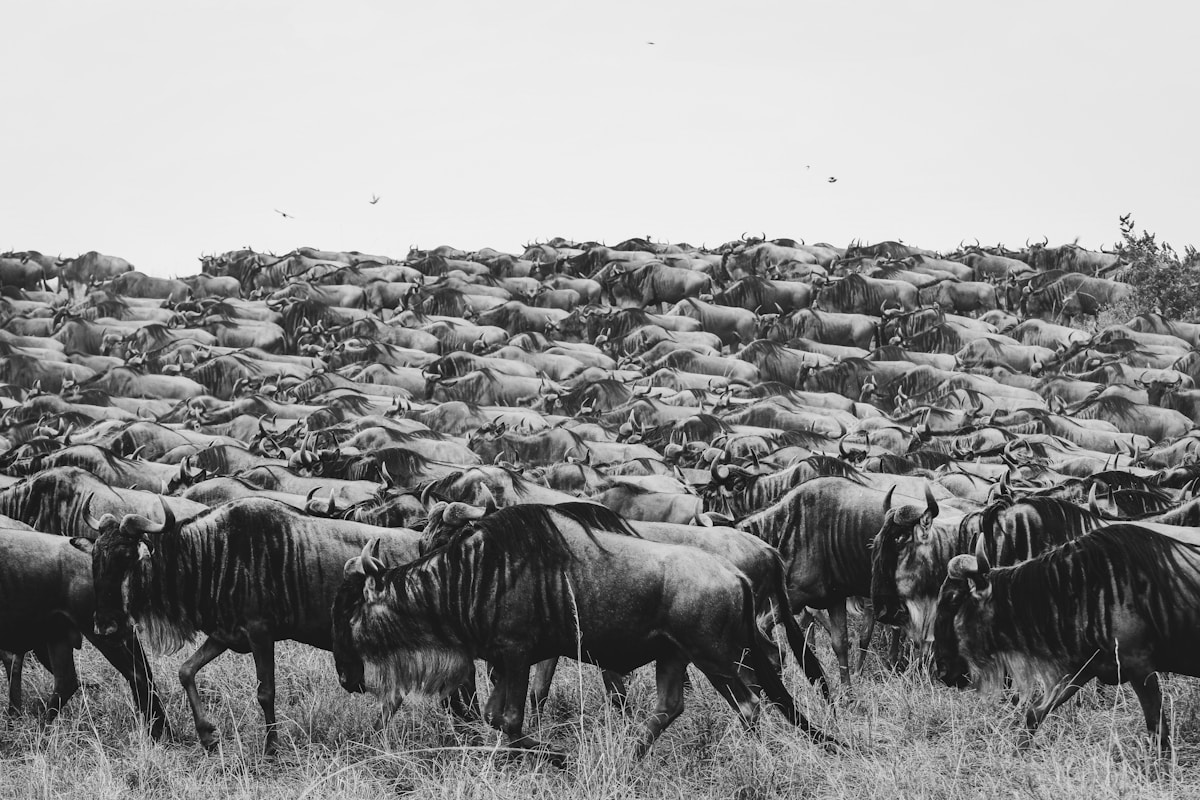
The first wildebeest crossings of 2026 were recorded at Tanzania’s Grumeti River on 5 June, confirming that the annual Great Migration is now actively under way. Experienced trackers and field guides monitoring the Serengeti in real time are forecasting that the lead herds will cross the international border into Kenya’s Maasai Mara by mid-July - roughly a week earlier than the long-term average - driven by heavier-than-usual rainfall through April and May that accelerated grass growth across the northern Serengeti and drew the herds north faster than in recent seasons.
For travellers, the earlier forecast has practical implications. Visitors with July camp bookings along the Mara River triangle are well-positioned, and operators tracking herd movements in real time are already seeing significant concentrations north of the Grumeti. Trackers note, however, that if rainfall tapers in the coming weeks, the bulk of the famous Mara River crossings - where the wildebeest plunge through crocodile-filled water as part of their circuit - could shift toward late July or early August, which historically delivers the highest density of crossing action. Both windows are worth targeting.
The Great Migration is broadly considered one of the world’s most dramatic natural events. An estimated 1.5 million wildebeest, joined by around 500,000 zebra and gazelle, make the annual 1,800-kilometre circuit between Tanzania’s Serengeti and the Kenyan Mara. The river crossings are the most sought-after spectacle, but significant wildlife encounters - large predator sightings, enormous resident herds - are possible throughout the reserve during migration season on any given day.
Visitors booking last-minute safaris in the Mara for July and August face a highly competitive accommodation market. Many premium and mid-range camps are booked months in advance for peak season, and availability is thinning quickly. Nairobi is the main hub for domestic connections to Maasai Mara airstrips, with multiple daily flights operating from Wilson Airport. The Kenya safari guide on this site covers camp types, budget ranges, logistics, and booking advice for first-time and returning visitors.