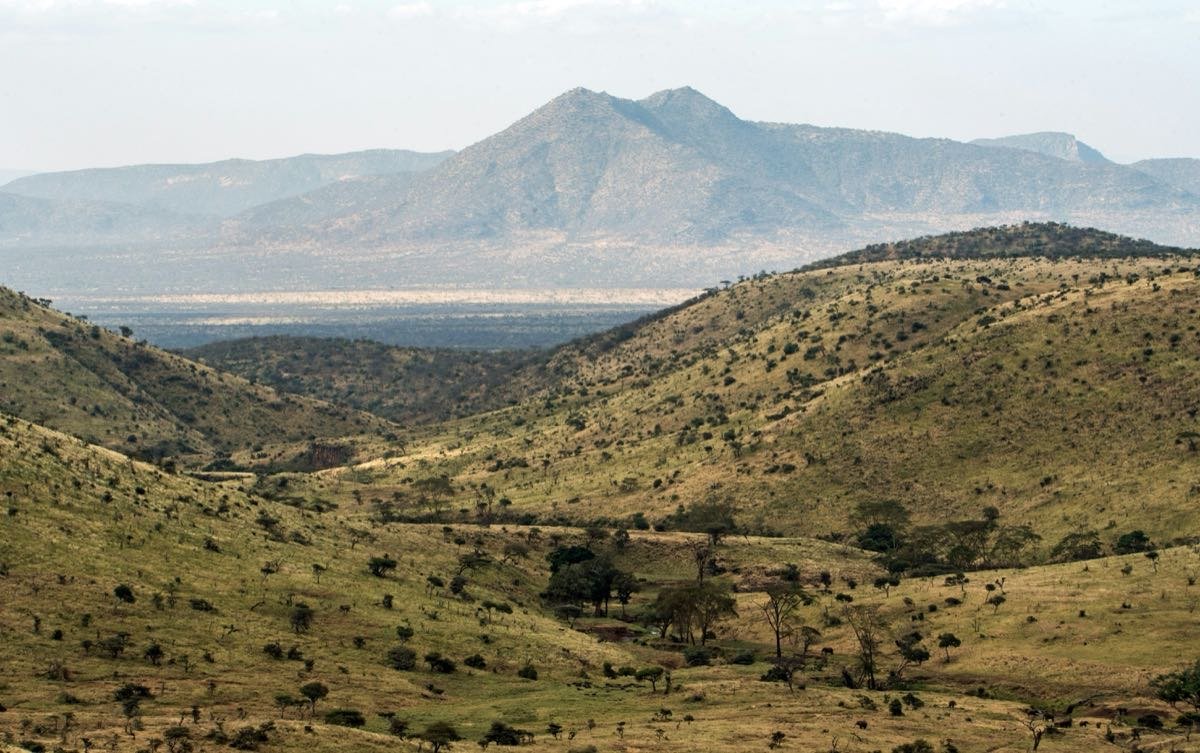
The Ngong Hills are the closest proper ridge hike to Nairobi: a line of peaks along the edge of the Rift Valley escarpment, reaching around 2,460m, with wide views west over the Maasai plains and, on a clear morning, a glimpse of Kilimanjaro to the south. Most people walk the ridge as a one-way traverse in 4-5 hours. It is the most accessible hiking day out from the capital, and a good warm-up for tougher climbs such as Mount Longonot.
Ngong Hills at a Glance
- Distance from Nairobi: about 25 km southwest, roughly 40 minutes by car
- Peaks: seven summits along the ridge (the Ngong Hills are often described by their “knuckles”)
- Highest point: around 2,460m
- Typical traverse: 4-5 hours, roughly 10-12 km depending on where you start and finish
- Difficulty: moderate; repeated steep ups and downs rather than one long climb
- Managed by: Kenya Forest Service (KFS), as the Ngong Hills Forest Reserve
- Start and finish: commonly Ngong town side to the Kona Baridi gate, or the reverse
The Route: Seven Peaks, One Ridge
The classic traverse runs along the crest from the Ngong town end toward Kona Baridi. The trail rises and falls over each peak, so total climbing is greater than the modest height suggests. Expect to be exposed on open grass the whole way, with short sections of eucalyptus and pine on the lower slopes.
Start (Ngong town side). Most groups begin early in the morning and register at the gate. The first peaks come quickly, and the first hour is the steepest.
Middle peaks. The ridge opens out. Wind turbines from the Ngong wind farm sit along the crest and give a useful sense of scale. This is the best stretch for views west across the Rift Valley floor.
Kona Baridi end. The path drops toward the Kona Baridi gate, where a vehicle can meet you. Arrange a pickup in advance, because phone signal and ride-hailing availability can be patchy.
If time or energy is short, turn around after the second or third peak. You still get the main views for 2-3 hours of walking.
Entry Fee (Verify Before You Go)
We could not find a published official KFS tariff for 2026, and the sources we checked disagree. Reported non-resident fees range from about KES 600 up to USD 10-25. Kenyan citizens and residents pay much less, and children and students are generally charged half. Some sources say the gate takes cash; others say payment is cashless by M-Pesa or card. Carry a little cash and have mobile money ready as a backup. Check the current rate and payment method with Kenya Forest Service before travelling, and treat any figure here as approximate.
Ranger Escort
Visitors are normally asked to hike with a KFS ranger, arranged at the gate. The ranger covers security on the ridge and helps with wildlife. Tip at the end of the walk; approximately KES 500-1,000 is customary for a group. Do not set off without registering, and do not leave the marked ridge path.
Wind, Weather and Buffalo
- Wind: the ridge is exposed and the wind is strong and cold even on sunny days. Bring a windproof layer and a hat that stays on. The name Kona Baridi is Swahili for roughly “cold corner”.
- Weather: clouds often build by late morning. Start at first light for clearer views and cooler walking. Dry months (December-March and July-October) give the best conditions; the long rains (March-May) make the trail slippery.
- Buffalo: buffalo are present on the slopes. If you see one, stop, keep your distance, and let the ranger decide how to proceed. Do not approach for photos.
- Sun: at this altitude the UV is high; bring sunscreen even when it feels cool.
What to Bring
Water (at least 2 litres per person), a snack or packed lunch, sturdy shoes with grip, a windproof jacket, sunscreen, a small first-aid kit, and some cash. Leave valuables at your hotel and travel in a group.
Getting to Ngong Hills from Nairobi
By car or taxi: about 25 km from the centre, around 40 minutes outside peak traffic, via Ngong Road. A ride-hail to the gate typically costs approximately KES 1,500-2,500 each way as of 2026, and for a one-way traverse it is easiest to hire a driver for the day and have them meet you at the finishing gate.
By matatu: matatus run along Ngong Road to Ngong town (approximately KES 70-100 from the CBD), then you can take a boda-boda to the gate. This is the cheapest route but the slowest, and the return trip is harder to time.
Guided option: if you would rather not organise transport, browse Nairobi day tours and hikes that include pickup and a guide.
Plan the Rest of Your Day
Ngong Hills pairs well with other Nairobi day trips: finish the traverse by lunchtime, then head to Karen for food or the Giraffe Centre. If you are planning an overnight base, our Nairobi hotels guide covers where to stay. For a bigger challenge, move on to the Mount Longonot crater hike in the Rift Valley.
Tips
- Start by 7am so you finish before afternoon cloud and wind.
- Weekends are busier; weekdays can be almost empty.
- Go in a group and with a ranger, and tell your accommodation your route and expected return time.
- Check conditions and fees with KFS before you travel, since both change.
For how this ridge compares with Longonot, Hell’s Gate and Mount Kenya, see our 6 best hikes in Kenya.