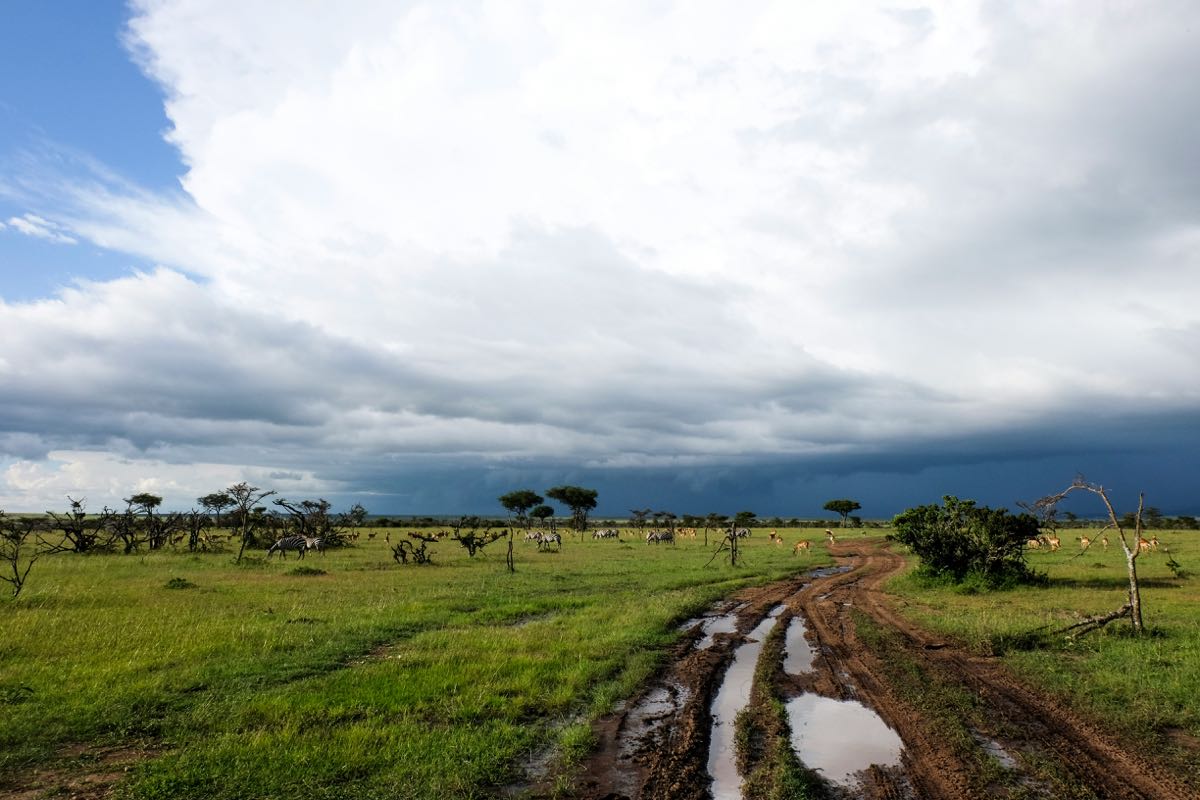
April is the heart of Kenya’s long rains - the wet season that transforms the savanna from dusty brown to vivid green. Most mainstream safari visitors avoid April, which means it is Kenya’s emptiest and cheapest month. Whether it is worth visiting depends entirely on what you want from the trip.
Weather in April
| Region | Avg High | Avg Low | Rainfall | Notes |
|---|---|---|---|---|
| Nairobi | 23°C | 14°C | 220mm | Wet; daily afternoon and evening rains |
| Masai Mara | 25°C | 14°C | 200mm | Heavy rains; some park roads impassable |
| Amboseli | 27°C | 16°C | 180mm | Heavy rains; dust-free but muddy |
| Samburu | 30°C | 18°C | 100mm | Less rain than south; still viable |
| Kenya Coast | 31°C | 23°C | 220mm | Long rains arrive; some resort closures |
| Mount Kenya (base) | 17°C | 10°C | 200mm | Trekking not recommended |
What April Is Like
Landscape: Extraordinary. The brown savanna turns vivid green within days of the rains beginning. Wildflowers bloom across the Mara plains. Waterfalls in the Aberdares are at full flow. This is Kenya at its most photogenic from a landscape perspective.
Wildlife: Animals disperse as water becomes available everywhere. Concentrated waterhole sightings diminish. But calving season is active - zebra, wildebeest, and impala babies everywhere. Predators are well-fed and active.
Roads: This is the main challenge. The Masai Mara’s black cotton soil becomes sticky mud after heavy rain. Some internal tracks are impassable without serious 4WD and recovery equipment. Well-established lodges have graders to maintain their main tracks - ask your lodge about current conditions before arriving.
Search hotels in Kenya on Booking.com
Accommodation: Many smaller camps close for April and May for maintenance. Large lodges stay open but occupancy is low. Rates drop 30–50% from peak season.
Who Should Visit in April
Yes, consider April if:
- You are on a tight budget and want the Masai Mara at half price
- You are a serious landscape photographer who wants green, misty, dramatic skies
- You are visiting Kenya for reasons other than safari (coast, Nairobi, Lamu)
- You are a repeat visitor who has already done dry season
Avoid April if:
- This is your only Kenya trip and you prioritise concentrated wildlife sightings
- You are visiting specifically for the coast (the long rains make beach conditions poor)
- You have mobility limitations or strong road-quality preferences
Samburu in April
Samburu in the north receives significantly less rain than the south - April is still viable here. The Ewaso Ng’iro River keeps wildlife concentrated, and the landscape is more pleasant with the green flush without the extreme mud of the Mara. See our Samburu National Reserve guide for what to expect. Worth considering as an April alternative.
April Pricing
- Masai Mara lodges: 40–60% below peak season rates typical
- Coastal resorts: Some closures; those open offer low-season discounts
- Internal flights: Normal pricing but flights are less full
April Budget Guide
Safari costs (per person/night, full board, green season rates):
- Budget camp, Masai Mara: approximately KES 8,000–14,000
- Mid-range lodge, Masai Mara: approximately KES 18,000–35,000
- Samburu budget lodge: approximately KES 7,000–12,000
Nairobi costs:
- Budget guesthouse: approximately KES 2,000–4,000/night
- Mid-range hotel: approximately KES 7,000–13,000/night
- Meals (mid-range restaurant): approximately KES 700–1,400 per person
April’s green season rates represent the steepest discounts of the year - typically 40–60% below the July–August peak. The trade-off is rain, road challenges, and dispersed wildlife. Browse Kenya safari tours to find operators who run green-season departures at lower rates.
What to Pack for April
- High-quality waterproof jacket and waterproof over-trousers
- Waterproof hiking boots or gaiters with trail shoes
- Dry bags for camera equipment and electronics
- Light daytime clothing - temperatures are warm (23–30°C) but humid
- Insect repellent and antimalarials as recommended by your travel health clinic
- Quick-dry towels
FAQs
Is it worth visiting Kenya in April? Depends on priorities. For budget-conscious travellers and landscape photographers, April has real appeal - cheap, empty, and extraordinarily green. For first-time visitors wanting optimal game viewing, wait for July–September or January–February.
What is the difference between the long rains and short rains in Kenya? Kenya has two rainy seasons. The long rains (masika) run March–May, with April being the heaviest month. The short rains (mvuli) run October–November, lighter and more intermittent. Most safari visitors avoid April–May; the short rains are less disruptive.
Does Nairobi flood in April? Parts of Nairobi experience flooding during the heaviest April rains - low-lying roads and informal settlements are affected. Allow extra travel time and avoid the city’s flood-prone lower areas during heavy rain events.
For the full monthly breakdown, see our best time to visit Kenya guide. Our Nairobi city guide covers what to do during a Nairobi-focused April visit. For budget travel options in low season, our Kenya budget guide covers the best April deals. For the camping safari approach that keeps costs down in any season, see our Kenya budget safari guide.
Plan Your Trip
✈️ Book your flights to Kenya 🛡️ Get travel insurance 📱 Stay connected with an eSIM 🚗 Rent a car