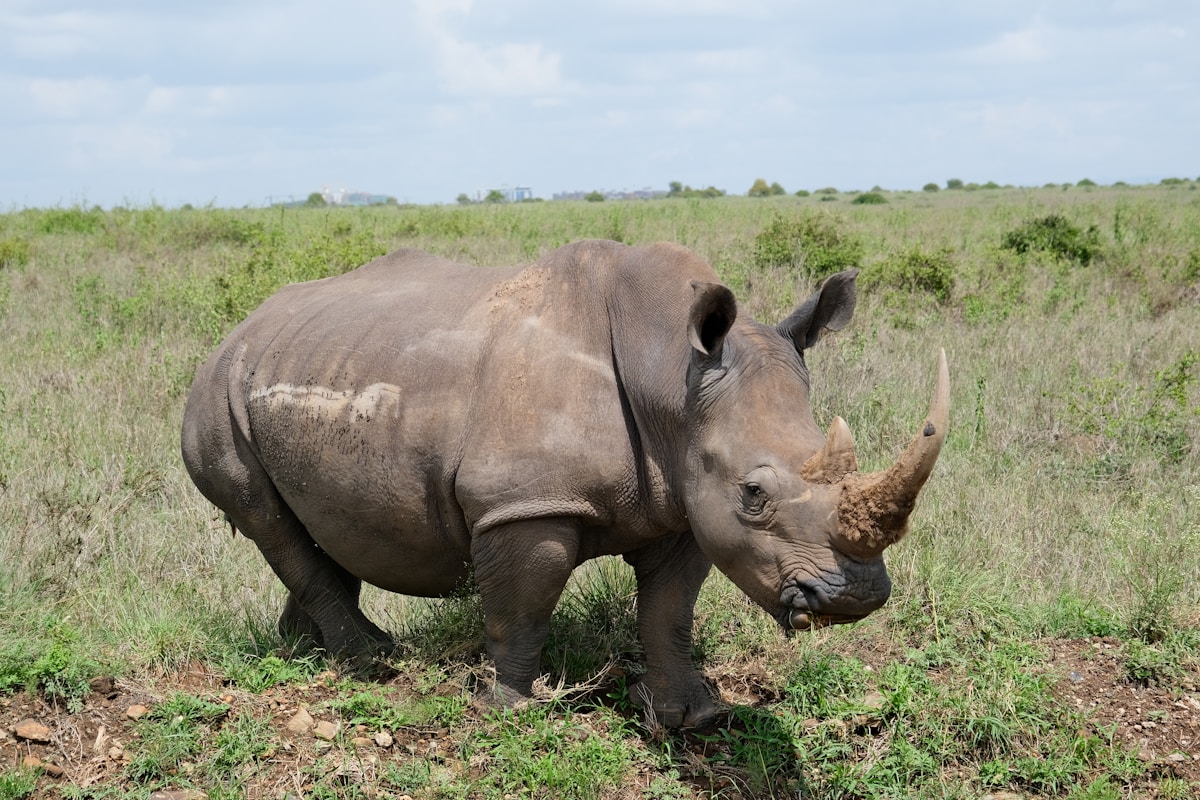
Ol Pejeta Conservancy sits in the Laikipia Plateau in central Kenya, 236km north of Nairobi and 15km west of Nanyuki at the foot of Mount Kenya. At 364km², it is the largest black rhino sanctuary in East Africa and the only place on the planet where you can see the last two northern white rhinos alive.
It is not a national park. Ol Pejeta is a non-profit conservancy run under private management, which means better roads, lower vehicle density, night game drives, and bush walks — activities not permitted in Kenya’s national reserves.
The Northern White Rhinos
Najin and Fatu, a mother and daughter, are the last two northern white rhinos (Ceratotherium simum cottoni) in existence. Both live at Ol Pejeta under 24-hour armed guard by a dedicated ranger team. They cannot reproduce naturally. Scientists are working on IVF techniques using preserved genetic material to save the subspecies, but as of 2026, the outcome remains uncertain.
Visitors with a standard conservancy entry ticket can access the fenced northern white rhino enclosure during scheduled morning and afternoon windows. Rangers accompany every group and give detailed briefings on the subspecies, the poaching crisis, and the science behind the IVF programme. This is one of the most powerful wildlife encounters in Africa — plan at least an hour here.
Black Rhinos
Beyond the two northern whites, Ol Pejeta holds over 140 black rhinos (Diceros bicornis), the largest population in East Africa. Black rhinos are browsers rather than grazers — shorter, faster, and notoriously more aggressive than white rhinos. Guided rhino tracking on foot is available through the conservancy (book in advance, limited numbers per session). Sightings are not guaranteed but the density of rhinos in the conservancy makes close encounters genuinely likely.
Wildlife
Ol Pejeta supports all of the Big Five. Lions are present in resident prides; leopards are often spotted around the Ewaso Nyiro River at dusk. Elephants move freely across the conservancy in herds of up to 40. Cape buffalo are abundant near the wetland areas. The conservancy also holds some of the last populations of Grevy’s zebra and reticulated giraffe in Kenya — both endangered species more typically associated with the north of the country.
African wild dogs, one of Kenya’s rarest predators, have been reintroduced and are occasionally tracked by researchers. Cheetahs are resident, and the open short-grass plains near the centre of the conservancy offer good sightlines for hunting behaviour. Night game drives reveal civets, aardvark, African wild cat, and common genet.
Chimpanzee Sanctuary: Ol Pejeta runs the only chimpanzee sanctuary in Kenya. Chimps are not native to East Africa; these animals were rescued from illegal trade and cannot be returned to the wild. The sanctuary houses around 40 individuals in a semi-wild setting. A viewing platform provides close-range observation during feeding times. Entry to the sanctuary is included with the standard conservancy ticket.
Entry Fees and Costs
| Visitor type | Fee (as of 2026) |
|---|---|
| Adult non-resident | Approximately USD 90 per day |
| Child non-resident (3-12) | Approximately USD 45 per day |
| Kenyan adult | Approximately KES 2,000 per day |
| Chimp sanctuary | Included in entry |
| Guided rhino tracking on foot | Approximately USD 65 per person |
| Night game drive | Approximately USD 45 per person (via lodge) |
Conservation fees are included in all lodge and camp rates. Camping guests pay the daily entry fee on top of campsite fees.
Confirm fees at olpejetaconservancy.org before visiting — rates are reviewed annually and the above figures are approximate.
Getting There
By air (recommended for tight schedules): Safarilink and AirKenya fly from Nairobi Wilson Airport to Nanyuki Airstrip daily. Flight time is under 60 minutes. Return fares typically USD 130-200 per person one way. The conservancy’s main gate is approximately 30 minutes from the airstrip by road; most lodges arrange transfers.
By road: The A2 highway via Nyeri to Nanyuki is well-surfaced and takes approximately 3.5 hours from Nairobi in normal traffic. From Nanyuki town, the Ol Pejeta Gate is 15km west on a dirt track; a standard saloon car is fine in the dry season. Inside the conservancy, a 4WD is preferable though not always essential on main tracks.
A day trip from Nairobi is possible but long — plan for 7 hours of driving round trip. One or two nights in the conservancy gives far more time for game drives and the rhino encounters.
Accommodation
Budget/mid-range (approximately USD 80-200 per person per night, full board):
- Ol Pejeta Bush Camp — basic tented camp inside the conservancy, modest facilities, game drives available, approximately USD 120-160 per person per night full board
- Ol Pejeta Campsite — public campsite with showers and fire pits, approximately USD 25-35 per person per night (entry fee additional)
Mid-range to upper (approximately USD 200-450 per person per night, all-inclusive):
- Sweetwaters Serena Camp — established tented camp with swimming pool and good facilities on the Ewaso Nyiro River, approximately USD 280-400 per person per night all-inclusive; good balance of quality and price for this destination
- The Stables at Ol Pejeta — boutique property with an equestrian focus, horse riding available in addition to standard game drives, approximately USD 350-450 per person per night
Self-catering: Ol Pejeta has a basic store at the main gate. Stock up in Nanyuki town (30 minutes away) for a full self-catering stay.
Best Time to Visit
Ol Pejeta is productive year-round — it has permanent water sources (the Ewaso Nyiro River and several dams) that keep wildlife concentrated even in the dry season. Wildlife viewing is excellent in every month.
| Period | Conditions | Notes |
|---|---|---|
| Jan-Mar | Dry and warm | Best for predator sightings; photogenic short grass |
| Apr-May | Long rains | Green and lush; some tracks muddy; fewer tourists |
| Jun-Oct | Dry and cool | Peak season; excellent visibility; book camps in advance |
| Nov-Dec | Short rains | Migratory birds arrive; landscape green; good availability |
The dry seasons (January-March and June-October) concentrate wildlife at water points and make for easier spotting in the open grassland. Night drives run year-round.
Photography
The short-grass plains in the centre of the conservancy give clean sightlines comparable to the Masai Mara. For rhino photography, the dedicated enclosures mean predictable, close encounters without vehicle congestion. Morning light (6-8am) hitting the Aberdares range in the background creates strong compositional opportunities. Bring a telephoto lens of 300mm or longer for cats and a mid-range zoom (70-200mm) for the rhino enclosures where subjects are closer.
Planning Your Visit
A minimum of two nights allows comfortable time for: one morning/afternoon game drive pair, the northern white rhino visit, the chimpanzee sanctuary, and an evening night drive. Three nights adds a guided rhino tracking walk and more flexibility. Ol Pejeta works well as the first stop after Nairobi before continuing to the Masai Mara or Samburu.
For wider Kenya safari planning, see our Kenya safari guide and Big Five Kenya overview. For accommodation in the wider Nanyuki area, see where to stay in Nanyuki.
For guided tours to Ol Pejeta from Nairobi — including day trips and overnight packages — browse Nanyuki and Ol Pejeta tours on GetYourGuide.