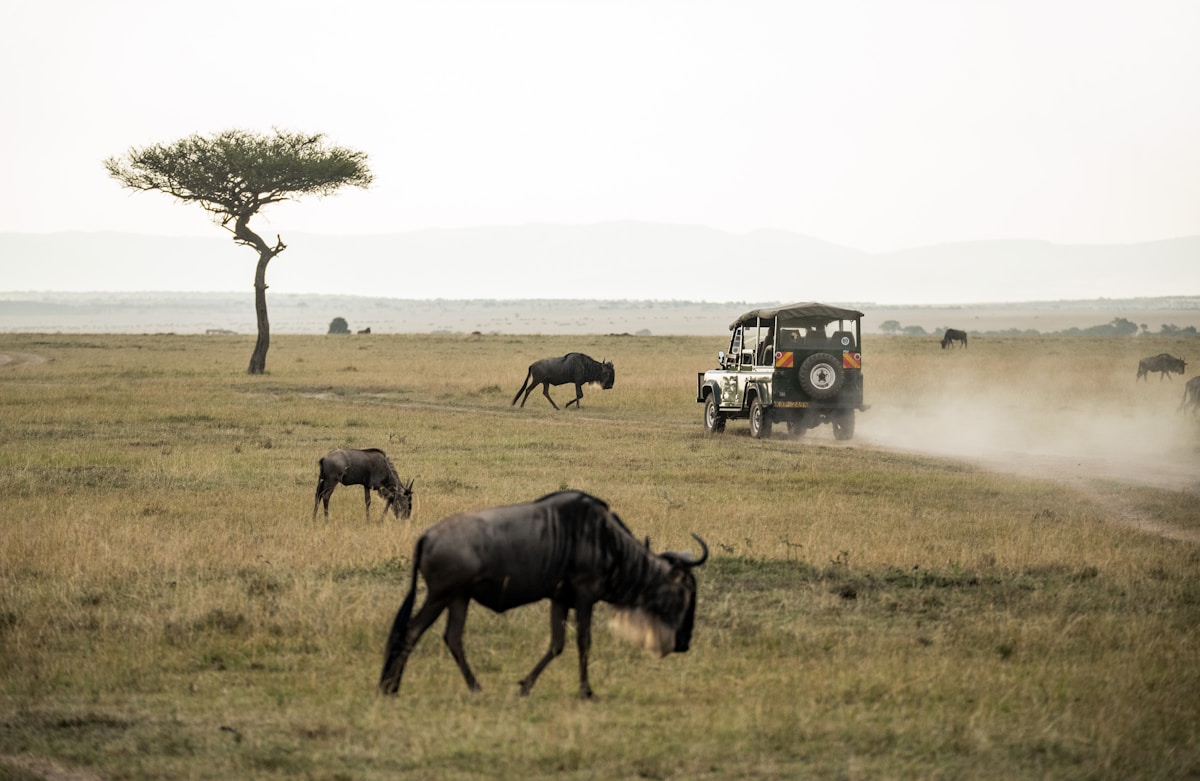
The Masai Mara is Kenya’s most visited wildlife destination - and for good reason. The combination of the Big Five, open grassland visibility, and the annual Great Migration river crossings makes it the benchmark African safari experience. Choosing the right tour format depends on your budget, available days, and what you want to prioritise.
Types of Masai Mara Tours
Game Drives
The standard Masai Mara experience. Open-sided 4WD vehicles (typically Toyota Land Cruisers or Land Rovers) with pop-up roofs give unobstructed views and allow guides to navigate off-road. Most packages include morning and afternoon drives (approximately 6–10am and 4–7pm), which is when predators are most active.
Morning drives consistently outperform afternoon drives for cat sightings - lions and cheetahs are active at dawn before the heat. Leopard sightings are less predictable but more frequent in the Mara Triangle section of the reserve.
Full-day drives with a packed lunch allow you to stay out during the midday period - useful for following wildlife events and finding kills. Most camps offer this on request.
During July–October, full-day drives are worth the additional cost: the river crossing window is unpredictable and you may need to wait several hours at a crossing point for wildebeest to commit. For a detailed breakdown of timing, our Great Migration guide covers the crossing calendar.
Hot Air Balloon Safaris
A dawn balloon flight above the Mara is one of Kenya’s signature experiences - approximately one hour at treetop height watching the landscape unfold below. The silence, scale, and perspective of wildlife movement is genuinely different from a game drive. Prices run approximately USD 420–500 per person, including a bush breakfast in the field. We cover this in full in our hot air balloon Masai Mara guide.
Walking Safaris
Available in the Mara conservancies (not inside the National Reserve). A guided walk with an armed ranger and Maasai guide gives a completely different ecological engagement - tracking, reading signs, understanding plant use. Walking safaris are typically 2–3 hours in the morning. Not primarily for game sighting (predators avoid people on foot) but for learning the ecosystem at ground level.
Operators offering walks: Angama Mara, Mara Bush Camp, Rekero Camp, and most conservancy camps. Usually included in conservancy camp rates or bookable as an add-on.
Night Game Drives
Allowed in the conservancies (not the National Reserve). Spotlighting at night reveals nocturnal species - aardvark, bat-eared fox, porcupine, civets, and occasionally hunting leopards and hyenas. Available at camps in the Mara North, Naboisho, and Olare Orok conservancies.
Cultural Village Visits
A Maasai manyatta (village) visit with a guide gives context on pastoral Maasai culture, traditional structures, and daily life. Usually 1–2 hours, approximately USD 30–60 per person, typically arranged through your camp or lodge. Quality varies significantly - better operators work directly with specific villages rather than tourism show operations.
Tour Packages: Budget vs Luxury
Budget Camping Safaris (from approximately USD 200–350/person/night)
Targeting the backpacker and budget traveller segment. These run from Nairobi in shared minibuses (typically 8–12 people) with public campsite accommodation and tented camp dining. Standards vary considerably - read reviews carefully.
Reputable budget operators:
Basecamp Explorer - sustainability-focused operator running camps in the Mara North Conservancy. Prices from approximately USD 300/person/night for the camp. Strong community and conservation credentials.
Gamewatchers Safaris - one of Kenya’s most established operators, running Porini camps across multiple conservancies. Budget to mid-range options in Ol Kinyei and Olare Orok. Approximately USD 350–500/person/night.
Bonfire Adventures - Nairobi-based operator with strong budget safari packages, running 3-night Mara trips from approximately USD 600–750 per person from Nairobi (land only, road transfer). Midrange lodges included.
Acacia Holidays Kenya - popular for budget camping safaris. 3-day Mara camping from approximately USD 500–650 per person from Nairobi, road transfer, public campsite accommodation.
Mid-Range Lodges (approximately USD 400–700/person/night)
The widest range of accommodation quality. Semi-permanent tented camps and lodges with en-suite bathrooms, restaurant dining, and guided activities included.
Mara Serena Safari Lodge - centrally located in the reserve. Well-run, reliable, with good game drive access to the Mara River crossing points. Approximately USD 450–600/person/night high season.
Mara Simba Lodge - in the reserve buffer zone. Good value for the mid-range tier. Approximately USD 350–500/person/night.
Fig Tree Camp - on the Talek River. Reliable for the mid-range bracket with solid guiding. Approximately USD 400–550/person/night.
Luxury Camps (from approximately USD 900/person/night)
All-inclusive rates covering accommodation, all meals, game drives, and most activities. Some also include conservancy fees and transfers.
Angama Mara - above the Rift Valley escarpment with the most dramatic views in the Mara. Outstanding guiding and photography programmes. From approximately USD 1,200/person/night.
Governors’ Camp - the original Mara camp, operating since 1972, on the Mara River. Six camps in the portfolio ranging from the main lodge to the exclusive Private Camp (minimum 6 guests). From approximately USD 900/person/night. Book via governorscamp.com.
andBeyond Kichwa Tembo - two camps in the Mara Triangle with strong Big Cat research access. From approximately USD 1,000/person/night.
Sanctuary Olonana - eco camp on the Mara River with excellent guiding. Approximately USD 950–1,400/person/night.
For a full breakdown of where to stay across budget tiers, see our Masai Mara accommodation guide.
Multi-Day Packages
3-Night Minimum
Three nights is the minimum to meaningfully experience the Mara. Two full days of game drives, the possibility of a balloon flight, and enough time for the reserve to reveal itself. Most operators and camps offer 3-night packages as their entry point.
Nairobi–Mara Combinations
The most popular Kenya itinerary pairs Nairobi (1–2 nights, Nairobi National Park morning game drive) with 3–4 nights in the Mara. For a complete Nairobi-first itinerary, our Nairobi to Masai Mara guide covers transport logistics and day-by-day planning.
Mara + Amboseli or Lake Nakuru
Wildlife circuit combinations are efficient for time-limited travellers. Amboseli (known for elephant herds under Kilimanjaro) pairs well with the Mara on a 7-day itinerary. Lake Nakuru (flamingos, black and white rhino) is 3–4 hours from Nairobi and workable as a circuit stop between Nairobi and the Mara. See our 7-day Kenya itinerary for a route that includes both.
Day Tours from Nairobi
Technically possible but not recommended. The 5–6 hour road journey each way leaves only 3–4 hours in the reserve. Fly-in day trips are available through some operators at approximately USD 550–750 per person (including the flight and game drive), which is a more useful experience. For a commitment-free preview, browse Masai Mara tours on GetYourGuide where day and overnight options are listed with verified reviews.
Booking Logistics
What’s typically included: Ground/air transfer, accommodation, all meals (full board), twice-daily game drives, park fees, and guiding. Balloon safaris, cultural visits, and alcohol are usually priced separately.
Booking lead time: July–September (peak/Migration) requires 3–6 months advance booking for quality camps. January–February (calving season) books up 2–3 months ahead. Low season (April–May) is bookable with 2–4 weeks’ notice.
Online booking: Masai Mara safari tours on GetYourGuide aggregate verified operators with review scores and confirmed pricing. For multi-night stays, booking direct with the camp is often better value at the luxury end.
Park fee payments: Most operators handle park fees as part of the package, but verify this when comparing quotes - budget safari operators sometimes quote exclusive of fees, which adds approximately USD 70–80 per person per day to the headline price.
Best Season Summary
| Season | Months | Conditions | Highlights |
|---|---|---|---|
| Peak (Migration) | Jul–Oct | Dry, cool nights | River crossings, wildebeest herds, big cats |
| Shoulder | Nov, Jun | Some rain | Good value, green Mara, good birding |
| Calving | Jan–Feb | Mostly dry | Predator action on newborn wildebeest, fewer crowds |
| Green season | Mar–May | Long rains | Cheapest rates, photography light, lush landscapes |
For help planning across Kenya’s full wildlife calendar, our Kenya wildlife calendar covers what to expect at each reserve by month.
Book Masai Mara Safari Tours on GetYourGuide
Browse and compare verified operators with real reviews. Prices are per-person “from” rates as of 2026 — July–October peak season typically runs 20–30% higher. Park entry fees are quoted separately by most budget operators (approximately USD 118–236/person/day as of 2026).
| Tour | Duration | From price | What’s included |
|---|---|---|---|
| 3-Day Masai Mara Group Safari from Nairobi | 3 days/2 nights | From $210 | Shared 4WD with pop-up roof, 2 nights camping, full-board meals, road transfer from Nairobi |
| Masai Mara Hot Air Balloon Safari & Bush Breakfast | ~1 hour + breakfast | From $450 | Dawn balloon flight, champagne toast, full bush breakfast in the field |
| 4-Day Masai Mara Safari with Game Drives | 4 days/3 nights | From $280 | Shared 4WD, 3 nights accommodation, multiple game drives, full board |
| 3-Day Private Masai Mara Safari in 4x4 | 3 days/2 nights | From $390 | Private 4WD vehicle, 2 nights accommodation, all game drives, full board |
Travelling soon? Check our Kenya last-minute tours for confirmed availability and instant booking.
For the complete Masai Mara wildlife and ecology guide — Big Five species behaviour, migration science, best camps by conservancy, and when to visit — see our Maasai Mara safari guide.