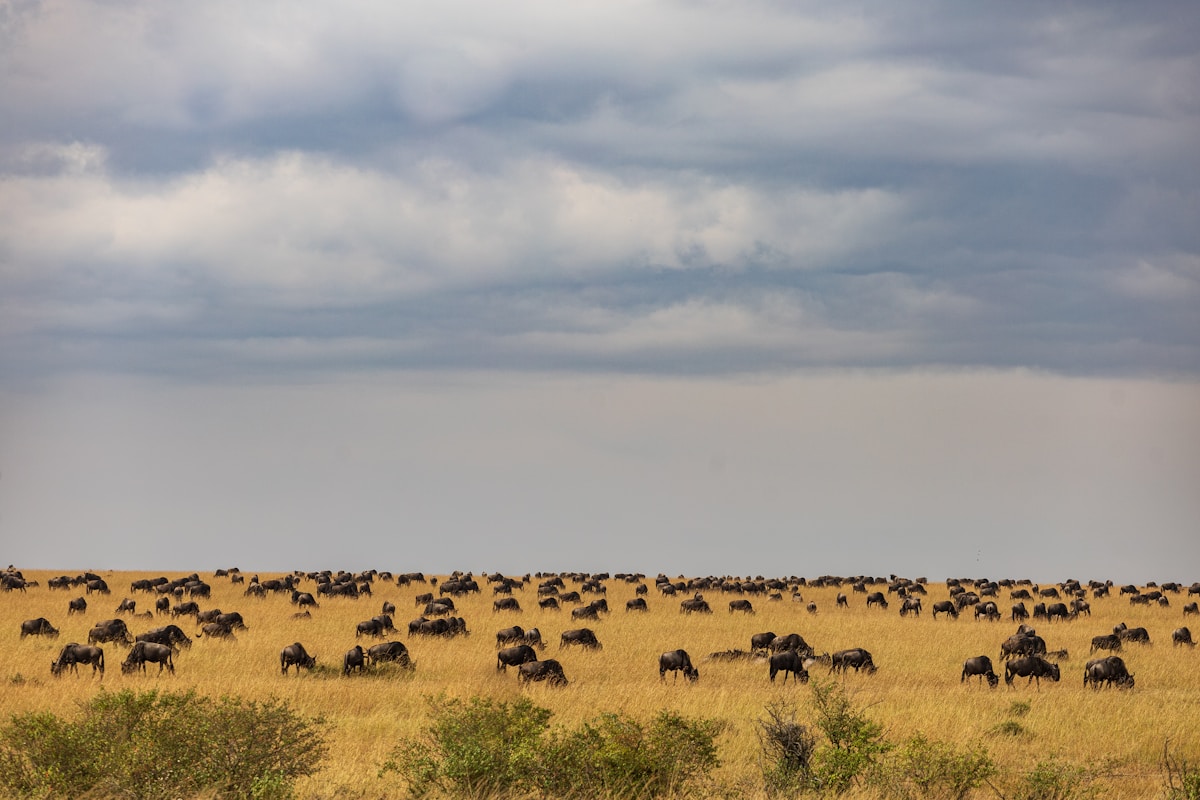
The Masai Mara has a clear hierarchy of seasons - and the best time to visit depends entirely on what you’re prioritising. If the Great Migration river crossings are the goal, the answer is narrow: August and September. If big cats with fewer crowds and lower prices are the priority, January through March is equally compelling. If maximum value is the aim, the November shoulder season delivers.
For broader Kenya wildlife timing, see our Kenya wildlife calendar.
The Masai Mara’s Two Main Seasons
Dry season (July–October, January–March): Game viewing is concentrated and productive. Grass is short, water sources dry out, and animals congregate at permanent rivers. This is when the Great Migration crosses into the Mara (July–October) and when big cat tracking is easiest.
Wet season (November–June): The long rains (April–June) bring difficult road conditions and temporary camp closures. The short rains (October–November) are generally brief - usually afternoon showers - and don’t seriously disrupt game drives. The landscape turns green and lush, and some wildlife (particularly birds) is better represented.
Month-by-Month Masai Mara Guide
January
Rating: Excellent - underrated and underpriced
January is the Masai Mara’s best-kept secret. The Christmas crowds leave after January 2 (and with them, the peak season prices), and the dry conditions hold through February. The short grass from the dry season makes big cats highly visible - lion tracking in January is as good as any month of the year.
- Migration: Absent (wildebeest in Tanzania’s Serengeti for calving)
- Big cats: Excellent - open plains and short grass make spotting easier
- Elephants: Good; herds move through the ecosystem
- Visitors: Low from January 3; peak until January 2
- Prices: High season for December 20 – January 2; shoulder/high from January 3
Best for: First-time safari visitors who want good wildlife without peak-season prices and crowds. Ideal for couples, photographers (good light, clear skies), and those extending from a Christmas itinerary at better rates.
February
Rating: Very Good - quiet and affordable
February continues January’s conditions. The Mara is dry, visibility is excellent, and visitor numbers are among the year’s lowest. The conservancies in February are particularly appealing - small visitor numbers, off-road access, and reliable big cat sightings. Calves born during the Serengeti calving season begin returning north in late February with their mothers.
- Migration: Absent; calving season in southern Serengeti
- Big cats: Excellent - lions, cheetah, leopard all reliably seen
- Prices: Shoulder season at most camps - good value
- Visitors: Very low
March
Rating: Good - transitional
March is the Masai Mara’s last reliably dry month before the long rains. Game viewing remains very good through the first half. Late March can see the first significant rain, which begins to soften tracks and complicate off-road driving.
- Migration: Absent
- Big cats: Good in early March; slightly harder in late March as grass begins to grow
- Prices: Shoulder to low season - best value for dry-season conditions
April–June
Rating: Low Season - for wet weather specialists
The long rains run April–June. April and May are the wettest months; June begins to dry. Roads in the main reserve become difficult, some conservancy camps close entirely, and certain airstrips are temporarily unusable. The Mara is lush and the birding is exceptional, but for a first safari this is not the right window.
- Prices: 40–60% below peak at open camps
- Wildlife: Present but harder to spot in long grass; calves and breeding activity visible
- Best for: Experienced safari visitors, birdwatchers, budget travellers with flexibility
July
Rating: Excellent - migration beginning
The first wildebeest and zebra herds typically cross the Tanzanian border into the Masai Mara ecosystem in late June or early July. Crossings at the Mara River begin in July, though timing varies year to year - early July crossings are less certain than August. Visitor numbers are climbing.
- Migration: Arriving; Mara River crossings possible from mid–late July
- Big cats: Very good; predators active around wildebeest herds
- Prices: High season; peak from late July
- Visitors: Rising sharply through July
For current migration timing, see our Great Migration Kenya guide.
August
Rating: Peak - best for migration crossings
August is the Masai Mara’s headline month. The wildebeest and zebra herds are at full strength, Mara River crossings can happen multiple times per day (though timing remains unpredictable and never guaranteed), and predator activity around the herds is intense. Lion kills, cheetah hunts, and dramatic crossings define August game drives.
The downsides: this is also the most expensive month (peak rates at all camps, no exceptions), the most crowded (20–30 vehicles at popular river crossing points during busy days), and requires the most advance booking - quality camps are fully committed by March–April.
- Migration: Full strength; multiple crossing points active
- Big cats: Excellent - actively hunting around herds
- Prices: Peak season - highest of the year
- Visitors: Maximum
- Booking lead time: 4–6 months minimum for quality camps
September
Rating: Excellent - migration continuing, slightly fewer visitors than August
September continues August’s migration spectacle. Crossings remain active, predator activity is high, and - marginally - visitor numbers are slightly below August’s maximum. Rates are still peak. September is many experienced safari visitors’ preferred month.
- Migration: Active; river crossings continuing
- Big cats: Excellent
- Prices: Peak season
- Visitors: High but marginally below August
October
Rating: Very Good - migration tailing off, prices beginning to ease
The wildebeest begin their return south to Tanzania in October. Early October can still see crossing activity; by late October the herds have largely gone. Rates start to ease as the formal peak season ends. October is a good value month - better wildlife than the post-migration months but without August’s price premium.
- Migration: Departing; last crossings typically mid-October
- Big cats: Very good, particularly as the grass shortens
- Prices: Transitioning from peak to high season
November
Rating: Good - short rains, shoulder season
November brings the short rains - typically afternoon showers rather than all-day rain. Game viewing is rarely seriously affected; the main impact is briefly greener grass and some afternoon track softening. Visitor numbers are low and rates are among the year’s best for a month when wildlife is reliably present.
- Migration: Absent (departed south)
- Big cats: Good
- Prices: Shoulder season - good value
- Visitors: Low
December
Rating: Very Good - dry season quality, split between quiet (Dec 1–22) and peak (Dec 23–Jan 2)
The short rains end in November, leaving December predominantly dry. December 1–22 is one of the quietest and most undervalued periods on the Mara calendar - excellent big cat visibility, moderate visitor numbers, and high-season rather than peak-season pricing. The Christmas-New Year period (December 23–January 2) flips this: visitor numbers spike, rates reach their second-highest peak of the year, and advance booking is essential.
For December-specific detail, see our Masai Mara in December guide.
Summary: Best Times by Priority
| Priority | Best months | Avoid |
|---|---|---|
| Great Migration crossings | August, September | Any other month |
| Big cat viewing | January–March, August–October | April–June |
| Low crowds | January–March, November, December 1–22 | July–October, Dec 23–Jan 2 |
| Best value | November, February, March | July–October |
| Peak experience (everything) | August | April–May |
Recommended: First-Time Visitors
For most first-time visitors, we recommend January (excellent wildlife, affordable, clear skies, minimal crowds) or September (migration still active, slightly calmer than August). Both avoid the worst price points while delivering consistently high-quality game viewing.
If budget allows and the migration is the primary draw, August is the obvious choice - book 5–6 months in advance and manage expectations around vehicle numbers at crossing points.
Practical Information
Getting there: Safarilink and AirKenya operate scheduled flights from Nairobi Wilson Airport to Masai Mara airstrips (approximately 45 minutes, USD 130–220 one-way as of 2026).
For the full seasonal context across all of Kenya’s parks, see our Kenya wildlife calendar and Masai Mara overview.
Tours: Browse options at GetYourGuide · Flights: compare on Aviasales · Travel insurance: EKTA