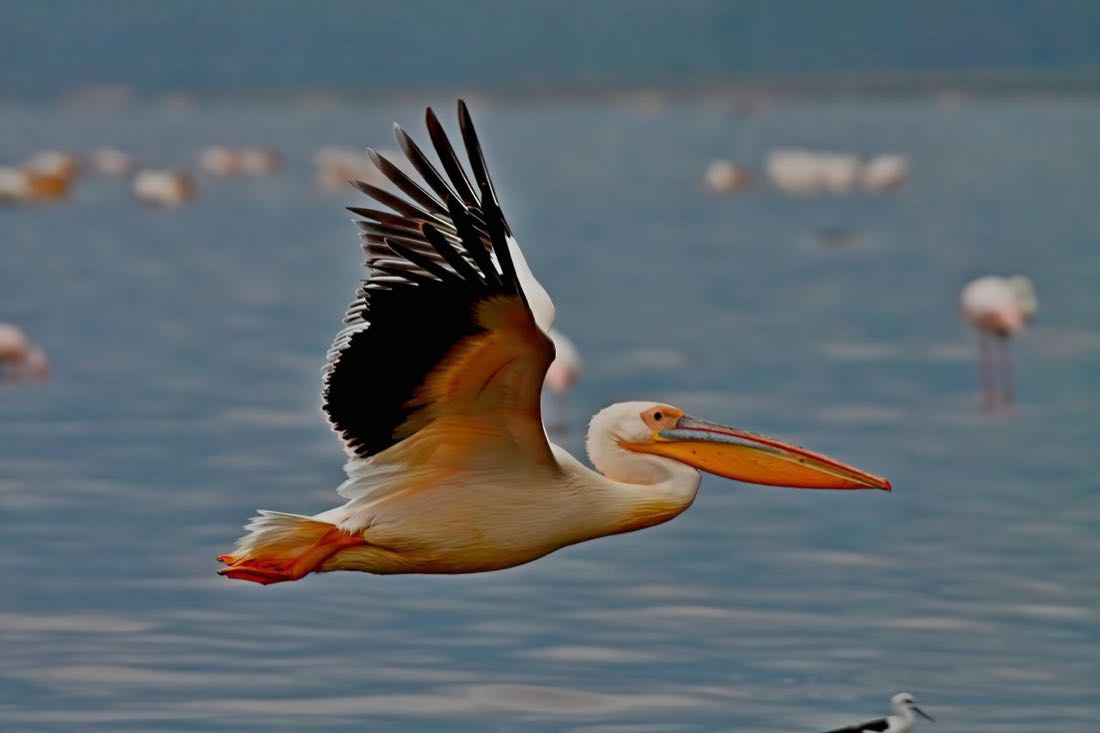
Lake Bogoria and Lake Baringo sit at the northern end of the string of Rift Valley lakes that begins with Magadi, Elmenteita and Nakuru. Both are far quieter than the Mara or Amboseli, and they answer different questions. Bogoria is a saline soda lake with flamingos, hot springs and geysers. Baringo is a freshwater lake with hippos, crocodiles and one of the richest bird lists in Kenya. Together they make a rewarding two-day detour north of Nakuru.
Lake Bogoria: flamingos, hot springs and geysers
Lake Bogoria National Reserve is a narrow, steep-sided alkaline lake in a semi-arid basin, flanked by the steep cliffs of the Rift wall. Its water is too salty for fish, but it grows the blue-green algae (Arthrospira) that lesser flamingos feed on. When the algae thrives, flamingos gather in tens or even hundreds of thousands along the shore, and from the road the edge of the water looks like a pink ribbon.
Hot springs and geysers
Along the western shore, near the southern gate, steam rises from dozens of vents, and several springs boil at close to 100 degrees Celsius. The most visited group is a short walk from the parking area, where boardwalks and marked paths lead past bubbling pools and small geysers. Some springs empty straight into the lake, so flamingos stand a few metres from boiling water. Two rules matter: stay on the marked path because the crust is thin, and never dip a hand in. Local guides sometimes boil eggs in the springs for visitors, which is a fun stop.
Wildlife beyond flamingos
The surrounding scrub is one of the more reliable places in Kenya to see greater kudu, with their spiralled horns and white flank stripes, especially around the hills above the springs in the early morning. You may also see impala, Grant’s gazelle, klipspringer on the rocks, and buffalo. Birders add African fish eagle, pelicans, and migrant waders from November to March.
Flamingos and water levels: what to expect
Flamingo numbers at Bogoria are not constant. They depend on how salty the water is and how much algae it holds. Heavy rains dilute the lake and can crash the algae; drought concentrates it. Since the early 2010s, high water in the Rift lakes has pushed flamingos between Nakuru, Elmenteita and Bogoria, and at times to lakes further north such as Logipi. As a rule of thumb, treat Bogoria as the better bet when Nakuru’s water is high, but never promise flamingos to anyone. A few days before you travel, ask a Nakuru lodge, a driver or a tour operator what is on the shore today. Our Lake Nakuru wildlife guide covers the same variability from the Nakuru side, and the Rift Valley overview shows how the lakes link.
Best viewing is early morning, roughly 7am to 10am, when the light is soft and the birds are feeding close to shore. Midday haze and heat make photography harder and the springs oppressively hot.
Lake Baringo: boat trips, hippos and birding
About 45 minutes north of Bogoria by road, Lake Baringo is a fresh, shallow lake edged by acacia, with the Tugen Hills rising to the west and the steep Rift cliffs to the east. The lake is muddy brown, home to hippos and big Nile crocodiles, and is among the best birding sites in East Africa, with more than 470 species recorded.
Boat trips
A boat trip is the main activity. Local operators and lodge boats run morning and late-afternoon trips of one to two hours, usually KES 2,000 to 3,500 per person or around KES 3,000 per hour for a boat as of 2026. Expect hippos surfacing near papyrus, crocodiles on the banks, and fish eagles that guides entice to the water with fish. Boatmen also visit the rocky island with hot springs. Agree the price, duration and number of people before you board, and ask for life jackets.
Birding
Baringo is famous for species that are hard to find elsewhere in Kenya, including Jackson’s hornbill, Hemprich’s hornbill, northern masked weaver, and the Goliath heron in the reeds. Night walks sometimes turn up Verreaux’s eagle-owl, spotted thick-knee and several nightjar species. A good local birding guide for a morning walk adds a lot; budget roughly USD 40 to 100 as of 2026 depending on length. Peak months are November to March when Palearctic migrants join the residents.
Community and culture
The lake is home to the Il Chamus (Njemps) people, who fish in small balsa boats, and Pokot and Tugen communities in the hills. Some lodges arrange village visits and a walk in a nearby conservancy with Rothschild’s giraffe.
Getting between the lakes
Distances give you the shape of the trip:
| Leg | Distance | Time |
|---|---|---|
| Nakuru to Bogoria gate | about 90 km | 1.5 to 2 hours |
| Bogoria to Baringo | about 35 to 45 km | about 45 minutes |
| Baringo back to Nakuru | about 110 km | 2 to 2.5 hours |
| Nairobi to Nakuru | about 160 km | 2.5 to 3.5 hours |
Roads are mostly paved to Marigat and the lake turnoffs, with rougher gravel inside the reserve. After heavy rain, ask locally about conditions; a 4x4 or high-clearance car is wise on wet days.
Day trip from Nakuru, or an overnight
From Nakuru you can reach Bogoria for the early-morning flamingo window if you leave around 6am. Our Nakuru city guide covers hotels, taxis and where to eat. A reasonable plan:
- Day trip (Bogoria only): Depart Nakuru 6am, reach the gate by 8am, flamingos and springs until 11am, lunch at Marigat, back by 4pm.
- Overnight (Bogoria and Baringo): Day one for Bogoria and the drive to Baringo, an evening boat trip, and a lodge stay. Day two for an early birding walk and a morning boat trip, then return to Nakuru or continue to Eldoret.
If you are weighing the water-based sites in the valley, our Lake Nakuru vs Lake Naivasha comparison helps decide how Bogoria fits in. Book flexible transport with a Nakuru tour operator or compare Kenya tours, and use our Nakuru where to stay guide if you want to base yourself in Nakuru for both parks.
Costs and entry
Entry to Lake Bogoria National Reserve is managed by the county and KWS. Recent listings show around USD 50 per non-resident adult and USD 20 per child per day, plus a vehicle fee, but rates and payment methods have changed in recent years, so check the official Kenya Wildlife Service website before you go. Lake Baringo has no park gate: you pay for boats, guides and any conservancy walks directly, and lodges charge their own day-visitor fees. Fees are approximate as of 2026.
What to pack
Wear closed shoes with grip for the spring areas, a hat, sunscreen and at least two litres of water per person. Bring binoculars (8x42 is ideal) and a long lens if you photograph birds. The area is hot and dry, with little shade between the lakes. Kenya’s rules and prices for the lakes change, so confirm details with your lodge a few days before arrival.
Where to stay
There are no lodges inside Bogoria; the reserve has a basic KWS campsite. Most visitors sleep at lodges and campsites on the Baringo shoreline, or in Marigat and Nakuru. We do not name specific properties here because availability changes. Compare options on our Nakuru accommodation page if you plan to return to town each night.
These lakes are one of the picks in our 6 underrated places for wildlife in Kenya.