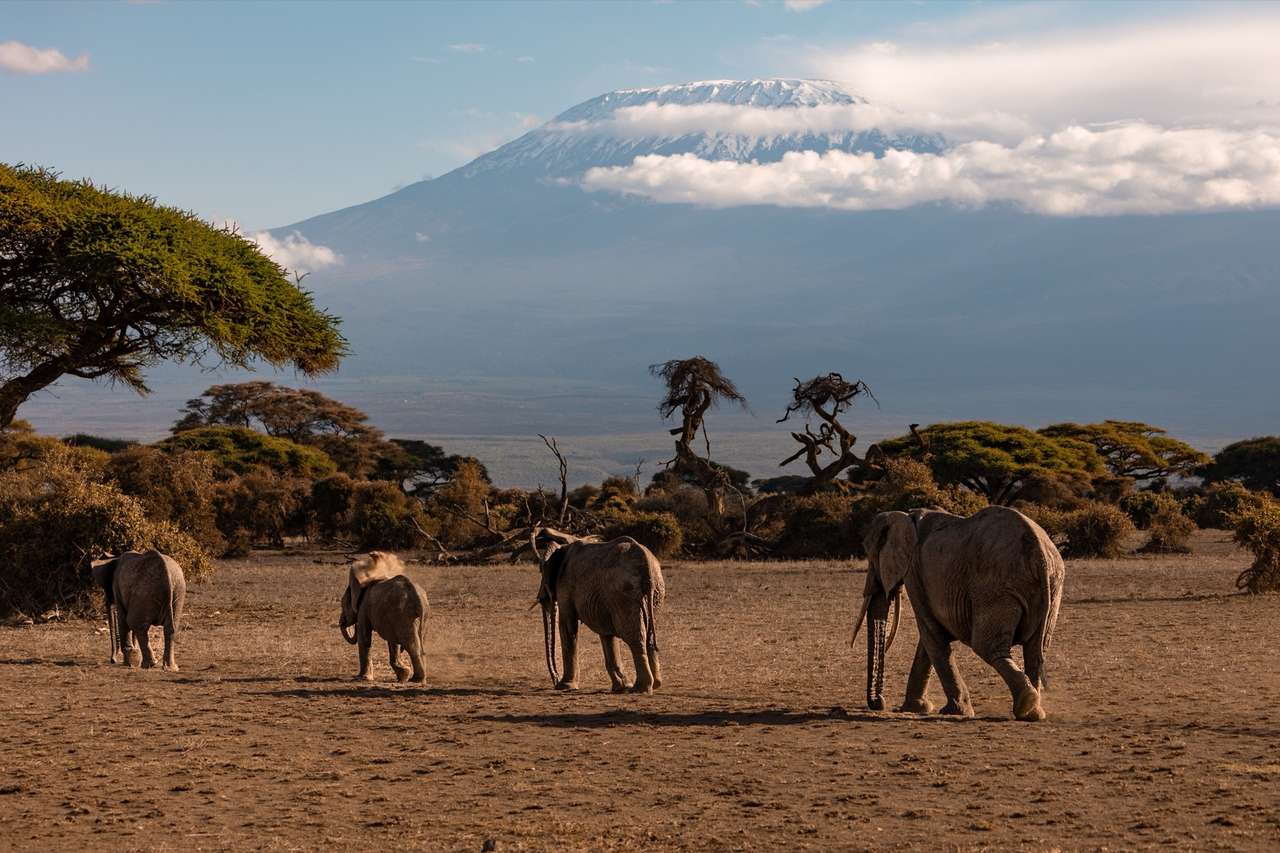
Masai Mara and Amboseli are Kenya’s two most iconic safari parks - and the two most common choices for first-time visitors. Both are accessible from Nairobi, both hold the Big Five, and both can be combined in a single 10-day trip. But they feel completely different on the ground, and the right choice depends on what you actually want to see.
For deeper park guides, see our Masai Mara guide and Amboseli guide. This page is the head-to-head comparison.
The Short Version
- Masai Mara: Kenya’s top park for big cats, high wildlife density, and the spectacle of the Great Migration (July–October). Larger, busier in peak season, and the benchmark for African safari.
- Amboseli: Kenya’s top park for elephants, with the unmistakeable backdrop of Mount Kilimanjaro. Smaller, more intimate, and excellent year-round thanks to permanent swamp water.
Park Basics
| Factor | Masai Mara | Amboseli |
|---|---|---|
| Size | 1,510 km² (reserve) + 2,000+ km² private conservancies | 392 km² |
| Entry fee (non-resident) | ~USD 100/person/day as of 2026 | ~USD 90/person/day as of 2026 |
| Distance from Nairobi | ~270km (5–6 hrs by road; 45 min by scheduled flight) | ~230km (4 hrs by road; 40 min by scheduled flight) |
| Terrain | Open grassland, riverine forest, Mara River | Dry lakebed, swamp, open savanna, acacia woodland |
| Signature wildlife | Lion, cheetah, wildebeest herds, leopard | Elephant (tuskers), buffalo, waterbirds |
| Kilimanjaro views | No | Yes - Amboseli’s defining feature |
| Night drives | Yes - in private conservancies bordering the reserve | Not permitted inside the national park |
| Walking safaris | Available in private conservancies | Limited (with KWS ranger at specific areas) |
| Crowds in peak season | High (July–October) | Moderate |
Wildlife
Masai Mara
The Mara has the highest density of large predators of any park in Kenya. Lion prides number in the dozens - some with 20+ individuals - and the open grassland makes sightings reliable rather than lucky. Cheetah are seen regularly, often in action chasing Thomson’s gazelle across the short-grass plains. Leopard are spotted frequently in riverine forest along the Mara River.
The Great Migration is the Mara’s headline event: approximately 1.5 million wildebeest move north from the Serengeti each year, arriving in the Mara roughly July–August and crossing the Mara River in dramatic, crocodile-watched scenes through October. Nothing else in African wildlife watching compares for sheer scale.
Year-round, the Mara holds large elephant herds, cape buffalo, hippo, and Nile crocodile. Black rhino are present but rarely seen in the reserve - better sightings come from private conservancies such as Ol Kinyei or Naboisho.
Amboseli
Amboseli’s elephant herds are among the most studied in the world - the Amboseli Elephant Research Project has tracked individuals since 1972. Bulls carrying enormous tusks, once common across Africa but now rare, are still seen in Amboseli with some regularity. The open, short-grass plains and permanent swamp make sightings effortless - you’ll be photographing elephants within minutes of entering the park.
The permanent water from Kilimanjaro’s snowmelt supports a year-round concentration of hippo, buffalo, and more than 370 bird species. Lion and cheetah are present but less reliably encountered than in the Mara - Amboseli’s draw is depth of elephant experience, not predator diversity.
Scenery and Photography
Masai Mara’s endless golden grassland and wide skies suit dramatic landscape photography. River crossing scenes during the Migration are extraordinary - dozens of wildebeest launching themselves into croc-filled water, chaos compressed into a single frame.
Amboseli’s signature is the snow-capped cone of Mount Kilimanjaro rising above elephant silhouettes on the dry plains. This image - Africa’s highest peak, elephant herds, acacia trees - is only reliably achievable in Amboseli. Morning is the window: Kilimanjaro is typically clear at dawn and cloud-covered by mid-morning.
Entry Fees and Costs
Masai Mara National Reserve:
- Non-resident adults: approximately USD 100/person/24-hour period as of 2026
- Resident Kenyans: approximately KES 1,100 as of 2026
- Children (5–18): approximately USD 30 as of 2026
Amboseli National Park:
- Non-resident adults: approximately USD 90/person/24-hour period as of 2026
- Kenyan and East African citizens: KES 1,500; Kenya residents: KES 2,025 (as of 2026)
- Children and students (5-17): USD 45 non-resident, KES 750 citizens, KES 1,050 residents (as of 2026)
Check current rates at the Kenya Wildlife Service eCitizen portal before visiting - fees adjust periodically and the portal is the authoritative source.
Note: many Masai Mara camps sit in private conservancies outside the reserve boundary. Conservancy fees (typically USD 50–150/person/night) are often bundled into camp rates and cover unlimited game drives, night drives, and walking - better value for serious wildlife watchers than the reserve alone.
Where to Stay
Masai Mara
- Governors’ Camp: classic Mara camp on the river; from approximately USD 500/person/night all-inclusive as of 2026.
- Mara Bushtops: luxury tented camp with private plunge pools; from approximately USD 900/person/night as of 2026.
- Kicheche Mara Camp: mid-weight camp in Olare Motorogi Conservancy; from approximately USD 550/person/night as of 2026.
- Mara Serena Safari Lodge: the most accessible mid-range option inside the reserve; from approximately KES 45,000/person/night (USD 350) as of 2026.
Search camps and lodges in the Masai Mara
Amboseli
- Tortilis Camp: luxury tented camp; from approximately USD 700/person/night all-inclusive as of 2026. Best Kilimanjaro views of any Amboseli property.
- Ol Tukai Lodge: well-established mid-range lodge directly inside the park; from approximately KES 35,000/person/night (USD 270) as of 2026.
- Amboseli Serena Safari Lodge: popular all-inclusive option; from approximately KES 38,000/person/night (USD 295) as of 2026.
- Kibo Safari Camp: solid budget-to-mid option; from approximately KES 25,000/person/night (USD 195) as of 2026.
Who Should Choose Which?
Choose Masai Mara if:
- Big cat sightings are your top priority (lions, cheetah, leopard)
- You’re visiting July–October and want the Great Migration
- You want night drives and walking safaris (via private conservancies)
- Wildlife density and variety matters more than a single iconic image
- It’s your first African safari and you want the classic all-round experience
Choose Amboseli if:
- Elephants are your priority - particularly large-tusked bulls
- You want the Kilimanjaro backdrop for photography
- You’re travelling outside peak season (Amboseli is strong year-round)
- You prefer a smaller, quieter park with a more intimate atmosphere
- You have limited time - 2 nights in Amboseli gives a complete experience
Combine both for the definitive Kenya safari. Three nights in the Mara (big cats, Migration) plus two nights in Amboseli (elephants, Kilimanjaro) covers Kenya’s two signature experiences. See our 10-day Kenya safari itinerary for a worked route that includes both parks.
More Kenya Comparisons
- Amboseli vs Tsavo - southern Kenya parks compared
- Masai Mara vs Serengeti - Great Migration parks compared
- Kenya vs Tanzania Safari - East Africa rivals compared
- Group vs Private Safari - cost crossover explained
- Kenya Safari Cost Guide - full budget breakdown
For official information, we recommend Kenya Wildlife Service and Kenya Ministry of Tourism.
Plan Your Trip
✈️ Book your flights to Kenya 🛡️ Get travel insurance 📱 Stay connected with an eSIM 🚗 Rent a car for a self-drive safari