Search hotels in Kenya on Booking.com
Choosing between Kenya and Tanzania for a safari is one of the most common questions travellers ask before booking an East Africa trip. Both countries share the same extraordinary ecosystem - and in some cases, the same national parks divided only by a border - yet they offer meaningfully different experiences in terms of logistics, cost, and wildlife density.
This guide cuts through the noise to help you decide which destination suits your trip.
Quick Verdict
| Category | Kenya | Tanzania |
|---|---|---|
| Accessibility | Better - Nairobi is a major hub | More effort - multiple airports |
| Infrastructure | Stronger roads and lodges | More remote, more rugged |
| Cost | ~10–20% higher overall | Better value, especially on budget |
| Wildlife density | Excellent, especially Masai Mara | Exceptional - Serengeti, Ngorongoro |
| Great Migration crossings | July–October (river crossings) | Full annual circuit Jan–July |
| First-time safari | Easier choice | Better for experienced travellers |
| Wilderness feeling | Good | Outstanding |
Neither country is the wrong answer. Kenya is easier to organise. Tanzania rewards the extra effort.
Climate and Best Time to Visit
Both Kenya and Tanzania share broadly similar climates, shaped by two rainy seasons. The long rains fall from March to May and the short rains from October to December. The dry seasons - June to October and January to February - are the best windows for safari in both countries.
The key difference is the Great Migration calendar. From January to February, approximately 1.5 million wildebeest calve in the southern Serengeti in Tanzania. The herds then move gradually north through Tanzania, with the most dramatic river crossings happening when the migration enters Kenya’s Masai Mara, typically from July to October. If river crossings are your priority, Kenya between August and October gives you the best odds.
For mountain views, Kenya’s Amboseli National Park offers unobstructed sightlines to Kilimanjaro and is best visited during the dry months of June to October and January to February when the skies are clearest.
Cost Comparison
Kenya consistently runs 10–20% higher than Tanzania for comparable safari experiences, though both countries span a very wide price range.
Budget safaris: Tanzania from approximately USD 200 per person per day; Kenya from approximately USD 250. These typically cover group game drives in shared vehicles, basic tented camps, and full board.
Mid-range: USD 350–600 per person per day in Tanzania; USD 400–700 in Kenya. Expect smaller groups, more comfortable lodges, and better-positioned camps.
Luxury: Both countries have camps in the USD 800–2,500+ per person per night range. Tanzania’s private conservancies in the Serengeti and Kenya’s Masai Mara conservancies outside the national park command the highest prices - and justify them with exclusivity and density of wildlife.
Visa costs are negligible in the overall budget: Kenya’s eVisa costs approximately USD 51 (as of 2026), while Tanzania’s eVisa is approximately USD 50. Both are straightforward to obtain online before arrival.
Top Experiences
Kenya’s headline parks:
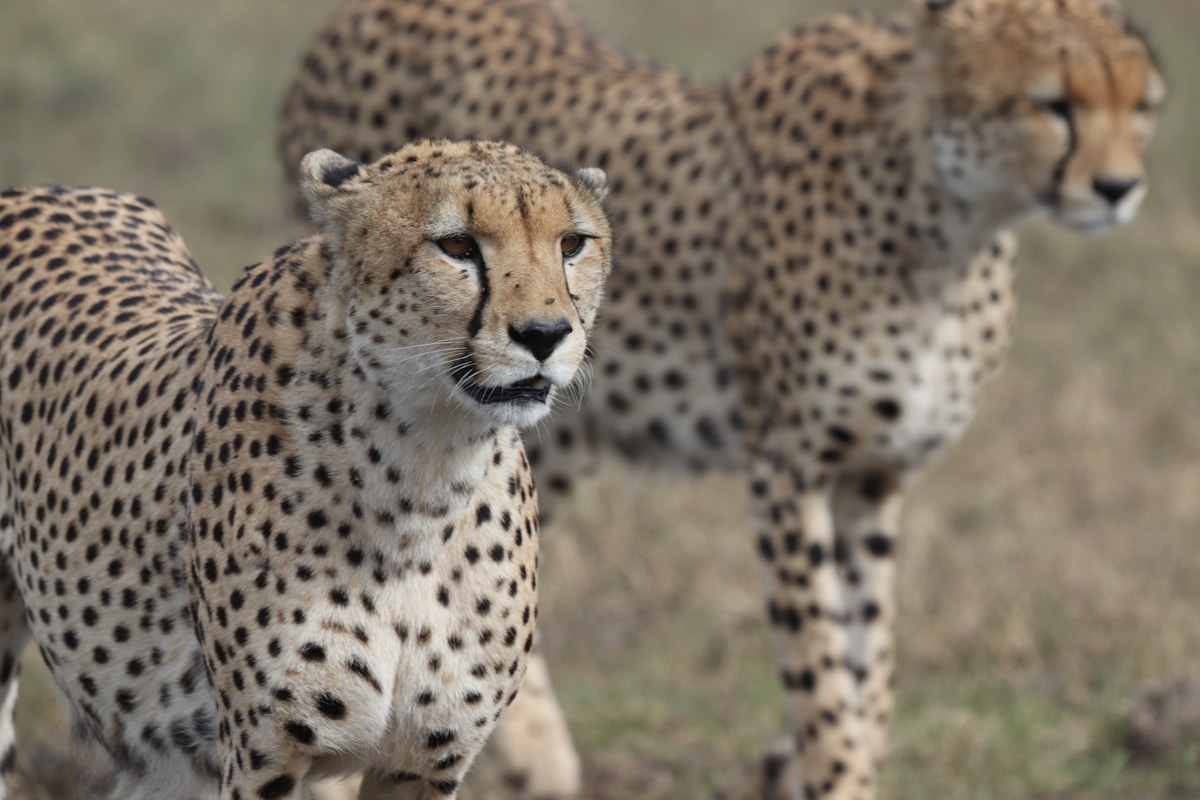
Masai Mara National Reserve is Kenya’s most iconic safari destination - the northern section of the Serengeti ecosystem. Big Five sightings year-round, exceptional lion and cheetah density, and the world-famous river crossings from July to October.
Amboseli National Park delivers the iconic image of elephants drifting across open savannah with Kilimanjaro rising behind them. No other park in Africa offers this combination reliably.
Samburu National Reserve in northern Kenya hosts species found nowhere else on the standard East Africa circuit: Grevy’s zebra, reticulated giraffe, Somali ostrich, and gerenuk. For travellers who have done Masai Mara before, Samburu adds a completely different dimension.
Tanzania’s headline parks:
The Serengeti National Park covers 14,763 square kilometres - over twice the size of Masai Mara - which means lower tourist density even during peak season. Predator sightings, particularly wild dog and lion, are consistently impressive.
Ngorongoro Crater is a UNESCO World Heritage Site and one of the most concentrated wildlife habitats on Earth. The 260 square kilometre crater floor holds approximately 25,000 large animals year-round, including one of Africa’s densest black rhino populations. Entry fees are approximately USD 200–250 per vehicle as of 2026.
Selous Game Reserve (now Nyerere National Park) and Ruaha National Park in southern Tanzania are for travellers who want genuine wilderness. Both parks see a fraction of the tourist numbers of the Serengeti and are better reached by fly-in safari from Dar es Salaam.
Culture and History
Safari culture differs between the two countries in subtle ways. The Maasai people straddle the Kenya-Tanzania border and are present in both countries, particularly around Masai Mara and the Serengeti. Community visits and cultural engagements are available from most camps in both countries, though quality varies significantly - choose operators who pay directly to communities rather than offering superficial performances.
Nairobi is a more cosmopolitan base than Arusha. If you have time before or after a safari, Nairobi has better restaurants, stronger infrastructure, and the excellent David Sheldrick Wildlife Trust elephant orphanage, which is worth half a day.
Getting Around
Kenya has a clear logistics advantage. Nairobi is a major international hub with direct flights from London, Amsterdam, Dubai, and multiple US cities. Flights from London average around £450 return (as of 2026, route dependent). Multiple domestic airlines connect Nairobi to Masai Mara airstrips and other parks in under an hour.
Tanzania requires more planning. Kilimanjaro International Airport (near Arusha) serves the northern circuit, while Julius Nyerere International Airport (Dar es Salaam) serves the southern parks. Connecting flights between European hubs and Kilimanjaro are less frequent than to Nairobi. Road transfers from Arusha to the Serengeti take 7–9 hours - most travellers on a tight schedule fly in from Arusha, adding approximately USD 200–350 per leg.
Who Should Choose Each?
Choose Kenya if: (browse Masai Mara tours)
- It is your first safari and you want reliable logistics
- The Great Migration river crossings are a priority (July–October)
- You want to add Nairobi city time, the elephant orphanage, or a Kenyan coast extension
- Samburu’s rare northern species are on your list
Choose Tanzania if:
- You want maximum wilderness and fewer vehicles at game drives
- Ngorongoro Crater is non-negotiable (it is unlike anywhere else)
- Budget is a consideration and you are happy to invest more time in logistics
- You want to explore the lesser-visited southern circuit (Selous, Ruaha)
Final Verdict
For most first-time safari travellers, Kenya is the easier, faster, and more forgiving choice. Nairobi’s connections, the concentrated wildlife of Masai Mara, and the added draw of Amboseli and Samburu make it a complete safari destination without crossing a border.
Tanzania is the choice for travellers who have done East Africa once and want to go deeper - into bigger wilderness, quieter camps, and one of the most singular landscapes on the planet at Ngorongoro. It rewards the additional planning with experiences that genuinely feel less touched.
If your budget allows and you have 12 days or more, combining both countries into a single itinerary remains one of the finest wildlife journeys available anywhere in the world.
For Kenya-specific planning, see our Masai Mara safari guide, Great Migration Kenya guide, and Kenya safari guide. Our Masai Mara vs Serengeti guide is a more focused comparison of the two main migration parks. Browse Kenya tours to find an operator for your chosen itinerary.
Plan Your Trip
✈️ Book your flights to Kenya 🛡️ Get travel insurance 📱 Stay connected with an eSIM 🚗 Rent a car